Declared Dead at 18, Flying Legend at 19: The Untold Miracle of Indra Lal Roy

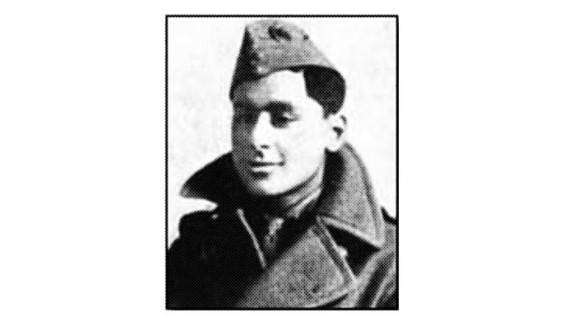
Long before the Indian Air Force was even founded in 1932, a teenage boy from Kolkata defied death and carved his name across the battle-scarred skies of Europe. Born on December 2, 1898, Indra Lal Roy, also known as “Laddie Roy,” was declared dead, and yet he survived. Rejected from joining the Royal Flying Corps as a fighter pilot due to “defective” eyesight, he overcame odds to become a pilot. At just 19, he faced rejection, escaped death, and rose to dominate the skies of a foreign nation. His story is as incredible as it is true.
Let us understand the amazing story of this young boy who conquered a failed eye test, almost lost his life, and became India’s only “Flying Ace” — all in his mere 19 years of age.
Indra Lal Roy, fighter pilot | Image Source: The Print
The Eye Test That Nearly Ended His Dreams
Born on December 2, 1898, Roy got into Oxford University through a scholarship, yet his heart was set on flying. Determined to become a fighter pilot, Roy applied to the Royal Flying Corps (RFC), presently known as the Royal Air Force, only to be rejected due to “defective eyesight” in early 1917. Had it been someone else, they would have accepted their defeat, but Roy didn’t.
He sold his motorbike to be able to consult Britain’s top eye specialist, cleared the eye test, and appealed his rejection. On 5th July 1917, the determined 18-year-old Roy was commissioned into the Royal Flying Corps.
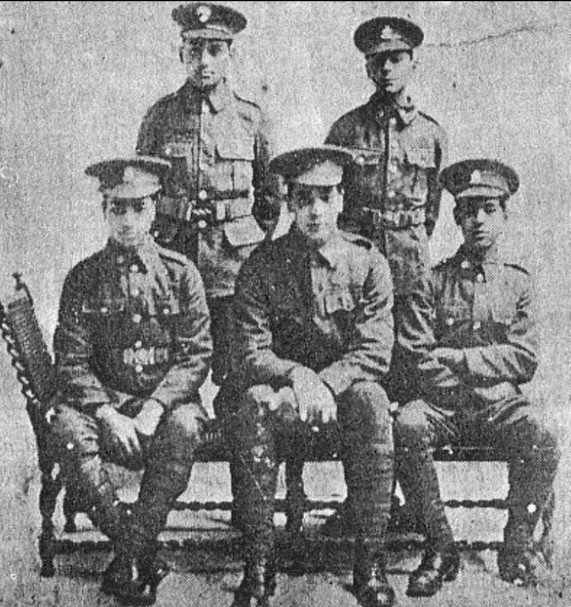
Indra Lal Roy joins the Royal Force Corps | Image Source: indiatimes.com
Fallen Fighter Pilot Rises From the Morgue
But his flying journey had always been fateful. Roy’s career as a fighter pilot almost ended before it even started!
On 6th December 1917, during a combat mission, Roy’s aircraft crashed. He was pulled out unconscious and was assumed dead. He was taken to the morgue, but the boy rose from the dead. At the morgue table, Roy, who was assumed dead, sat upright, shocking everyone. Yes, he was alive. However, he was not immediately cleared to fly.
So, the young boy turned into an artist. During the 6 months of his recovery, all he did was sketch aircraft and combat scenes, some of which survive and are displayed at the Indian Air Force Museum in Delhi.
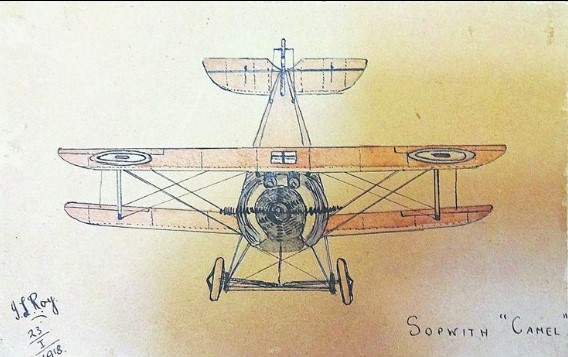
Aircraft sketch by Roy | Image Source: Indian Air Force Museum
Finally, it was on June 22, 1918, that he was ready to fly and fight again, and so he rejoined the 40th Squadron of the Royal Air Corps.
The Making of India’s “Flying Ace”
The second time, he flew with a totally another level of enthusiasm, displaying extraordinary skill, precision, and bravery. In just a matter of two weeks, between July 6th and July 19th of 1918, the 19-year-old fighter pilot shot down 10 German aircraft, including three in a single afternoon.
One of those he fought was a Fokker D.VII, Germany’s most advanced combat aircraft of the war; it was a rare achievement. His spectacular feat earned him the name “The Indian Hawk”, as the Germans called him.
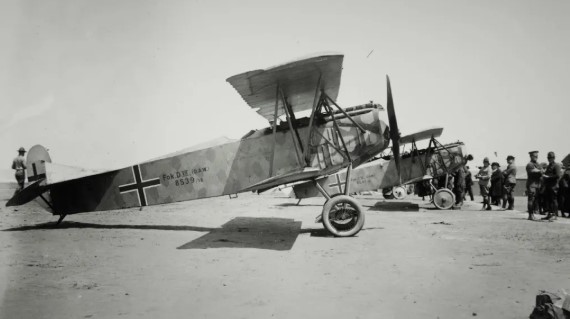
The Fokker D.VII: WWI German Aerial Superiority aircraft | Image Source: YouTube
His flamboyant journey was short-lived. Just exactly a year after starting to fly and barely a week after scripting history, on July 22, 1918, Roy died after his aircraft crashed in a battle. Nonetheless, in just a short span of his career, he achieved what only a few pilots achieved in their entire careers.
He became India’s first “Flying Ace” in July 1918, an elite title awarded to only those who shot down five or more enemy aircraft in aerial combat. He was also the only Indian to receive the “Distinguished Flying Cross” on September 21, 1918, for gallantry in World War 1 posthumously. His official RAF citation read, “An officer of exceptional ability, who displayed courage of the highest order.”
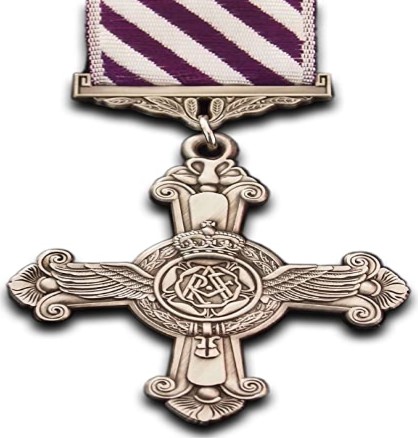
Distinguished Flying Cross (DFC) | Image Source: Amazon.com
In December 1998, to mark the 100th anniversary of his birth, the Indian postal service issued a commemorative stamp in his honour. Another Stamp was released in 2019.
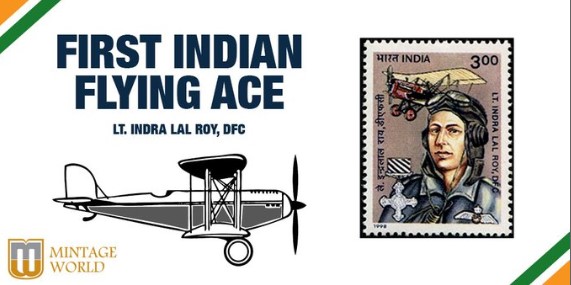
Stamp released in December 1998, to mark the 100th anniversary of Indra Lal Roy’s birth | Image Source: Twitter @MintageWorld
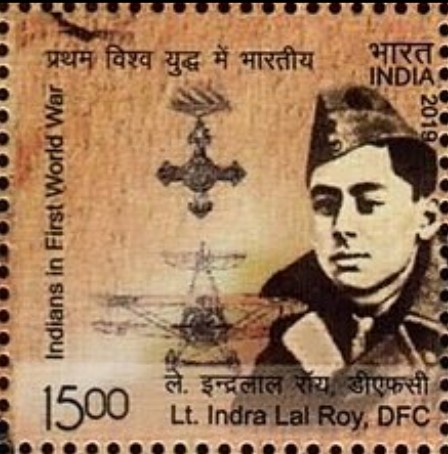
Stamp released in 2019 to honour Indians of WWI | Image Source: Wikipedia
At a time when India was under British colonial rule, and opportunities for Indians in elite military services were rare, Indra Lal Roy proved his skills in the toughest facets of war. Though Roy might have lived for just 20 years, he soared high enough to remain immortal.
.png)