Sam Manekshaw’s World War II Heroic: When He Survived 9 Bullets & Recaptured Pagoda Hill

February 1942. The banks of the Sittang River in Burma became the stage for a deadly battle. Capturing the strategic railway bridge on that river was crucial for India's defense. Taking this responsibility on his shoulders, the young, 27-year-old Captain Sam Manekshaw led his troops from the front, risking his life. Just a short distance from the target, enemy machine-gun fire struck him, and 9 bullets pierced his body. Even as he collapsed in a pool of blood, he ordered his soldiers not to retreat. The story of this brave man still gives us goosebumps. On the occasion of his birth anniversary on April 3rd, let us learn about this invincible hero who returned from the brink of death during the Battle of Pagoda.
The Sittang Bridge: Japan’s Sudden Attack!
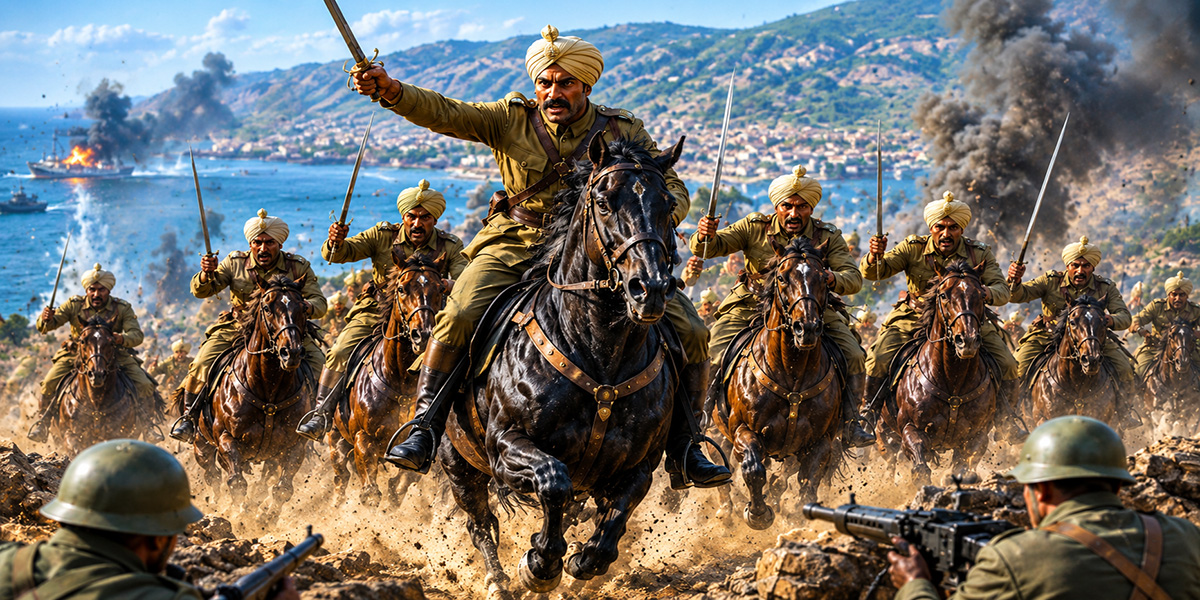
It was during World War II. Pagoda Hill, near the Sittang River bridge in Burma, acted as a defensive shield for the Allied forces. While a small number of troops from the ‘3rd Burma Rifles’ were defending it, on February 22, 1942, Japanese forces (1/215 Regiment) suddenly emerged from the forests and captured this hill along with the nearby Buddha Hill. Because of this, the bridge routes across the river fell into enemy hands. To fix the situation, young Captain Sam Manekshaw, serving as the 'A' Company Commander in the 4/12 Frontier Force Regiment, entered the field with his troops.

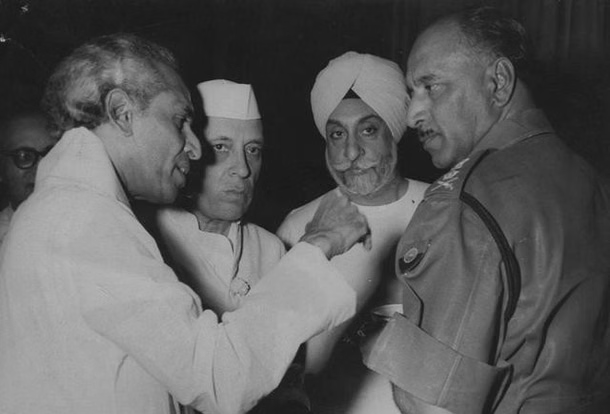
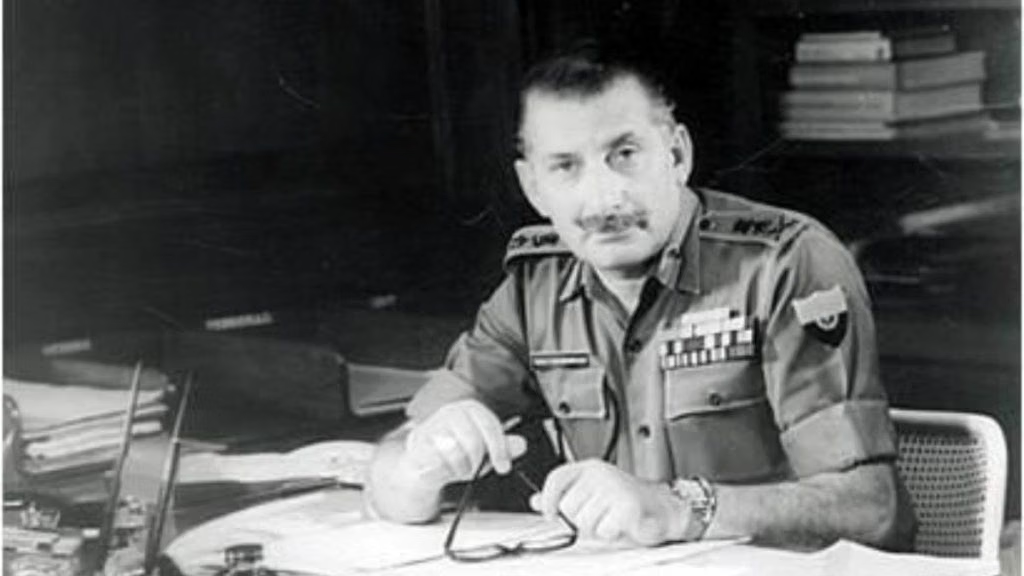
Field Marshal Sam Manekshaw | Image Source: theprint
Sam’s ‘Fire and Move’ Tactics
Captain Sam did not limit himself to just giving orders. Even as bullets rained down from enemy machine guns, he risked his life to point out enemy bunkers on the hill. Sam used ‘Section Level Tactics’ there. Following the ‘Fire and Move’ method, while one troop provided cover fire, he personally led another troop and moved very close to the enemy. Despite the high risk of being hit by bullets, he stood where his soldiers could see him, directing them with hand signals and shouts. He created a belief among the soldiers: "My commander is right in front of me; when nothing is happening to him, why should I be afraid?"
Risking Life to Reach the Goal!
Even though he lost nearly 30 percent of his company’s strength, Sam did not step back. He went to the front line of the battle, observed enemy movements directly, and kept changing strategies (real-time adjustments) as he moved forward. Coordinating with British officer Captain John Neil Randle’s troops, he ignited a fighting spirit in his army and successfully recaptured Pagoda Hill, which had seemed impossible to win back.

An illustration of Battle of Sittang Bridge | Image Source: NDTV
9 Bullets and a Military Cross in a Pool of Blood!
The counter-attack was almost successful, and the strategic base was back in our hands. Just as victory was in our hands, a tragedy occurred. Bullets flew from a Japanese soldier’s Tommy gun.’ Suddenly, 9 bullets entered Sam Manekshaw’s stomach and lungs. He collapsed on the hill in a pool of blood. Observing this entire heroic fight from a distance, the head of the 17th Infantry Division, Major General David Cowan, was deeply moved by Sam’s bravery. Usually, a Military Cross (MC) is not given to someone who has died (No posthumous MC). Believing that Sam had no chance of survival, General Cowan wanted the hero to receive the honor he deserved before he breathed his last. He rushed to the spot, took off his own ‘Military Cross’ medal, and pinned it to Sam’s shirt. Receiving such a high honor on the very battlefield where his blood was shed, while fighting death with his last breath, is a truly historic and respectful moment.
Humor That Mocked Death: "A Mule Kicked Me!"
While Sam was struggling for his life, his orderly (assistant) Sher Singh carried him on his shoulders to an Australian field surgeon. Seeing Sam’s condition, the doctor refused to operate, believing there was no chance of survival. Even then, Sam showed his unique sense of humor. When the doctor asked, "What happened to you?" Sam, even in a state where he could barely speak, replied with his iconic smile: "A bloody mule kicked me." The doctor realized how strong the man's will to live was if he could speak so bravely and humorously while near death. He started the operation immediately. After a battle that lasted for hours, the doctor succeeded, and Sam Manekshaw returned as a winner over death.
Not Just a Brave Soul, But an Unstoppable Force!
Born on April 3, 1914, into a Parsi family in Amritsar, Sam Hormusji Framji Jamshedji Manekshaw served as India's first Field Marshal. He led from the front in the 1947 Indo-Pak war, the 1962 China war, and the 1965 Pak war. In the 1971 war, he brought a magnificent victory to India in just 13 days and played a key role in the creation of Bangladesh. At that time, 93,000 Pakistani soldiers surrendered, and the humanity Sam showed then is rare in world military history. The nation honored him with the highest civilian awards: Padma Bhushan (1968), Padma Vibhushan (1972), and he became Field Marshal in 1973. Finally, on June 27, 2008, he breathed his last in the hospital due to illness. Even if Field Marshal Sam Manekshaw is not physically among us, the courage, humor, patriotism, and humanity he taught will live forever in the hearts of every Indian.