20 Key Facts You Must Know on Dr. Vikram Sarabhai: Visionary Behind India’s Space & Nuclear Leap

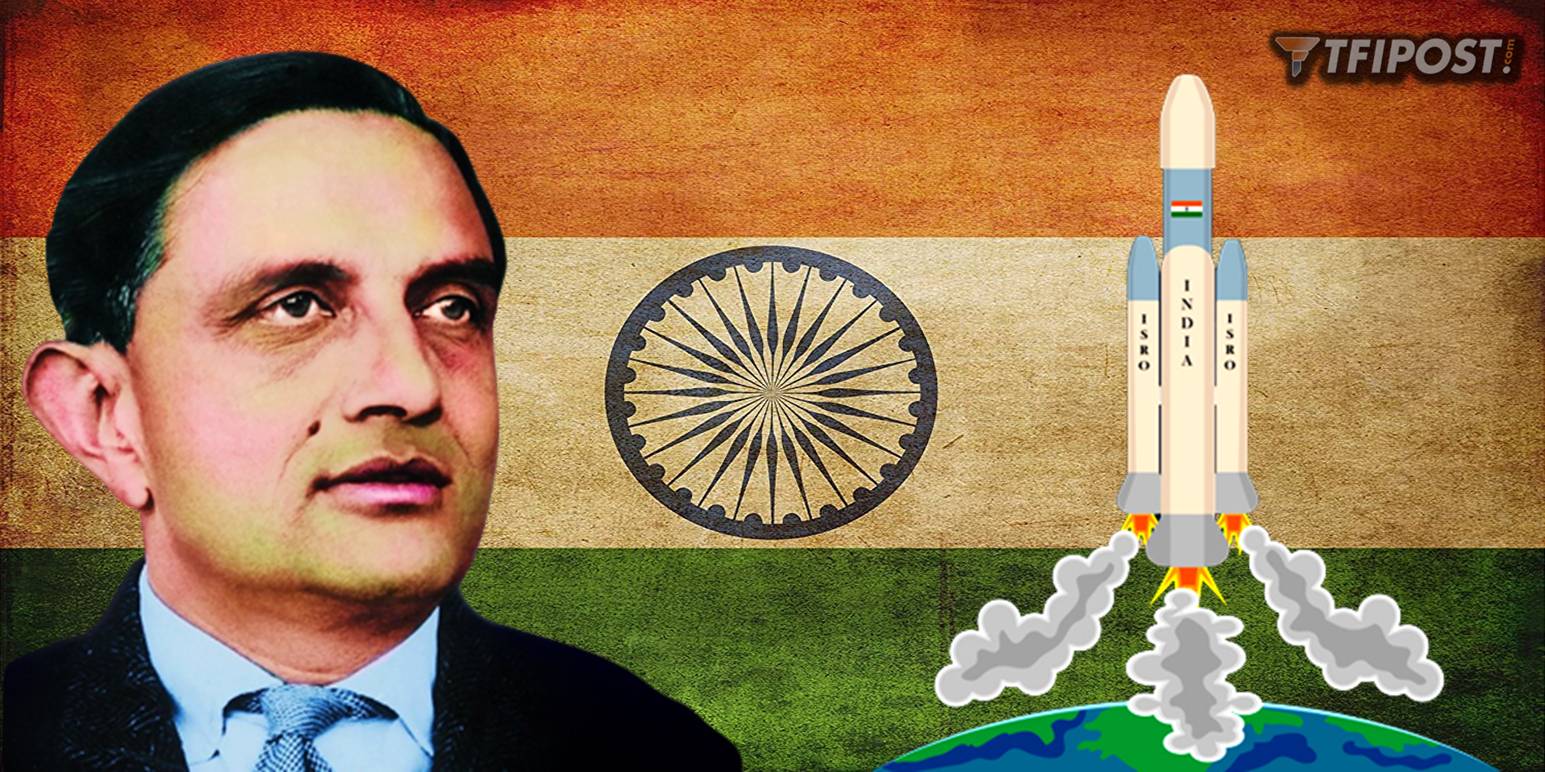
Aryabhata, India’s first satellite, was launched with Soviet assistance thanks to Dr. Vikram Sarabhai, even though India lacked launch vehicles. Using India’s non-aligned position and his scientific reputation, he was able to accomplish this during the Cold War by using geopolitics, diplomacy, and vision to develop India’s space program before it had its own launch infrastructure.
1. Early Life of Dr. Vikram Sarabhai
- Born on August 12, 1919, in Ahmedabad, Dr. Vikram Sarabhai hailed from a prominent industrialist family supportive of Gandhian ideals. He belonged to a wealthy Jain industrialist family, he was one of eight children of Ambalal Sarabhai, a prominent mill owner, and Sarla Devi.
- Dr. Sarabhai attended Gujarat College in Ahmedabad for his studies before relocating to England to attend the University of Cambridge.
- In 1937, Vikram Sarabhai moved to Cambridge, UK, earning his Tripos in Natural Sciences by 1940.
2. What influenced Sarabhai’s shift toward space science during World War II?
- After returning to India due to World War II, his education at Cambridge was interrupted and he stayed back in India.
- Granted permission by Cambridge to work toward his PhD under Nobel laureate C.V. Raman.
- C.V. Raman sparked his interest in cosmic rays, marking Sarabhai’s entry into space science.
- In 1942, Dr. Sarabhai met Homi Bhabha; their scientific and cultural camaraderie deepened his commitment to cosmic ray research.
3. How did the Quit India Movement impact Vikram Sarabhai’s wedding?
- In 1942, Vikram Sarabhai married renowned classical dancer Mrinalini Swaminathan during a time of national unrest.
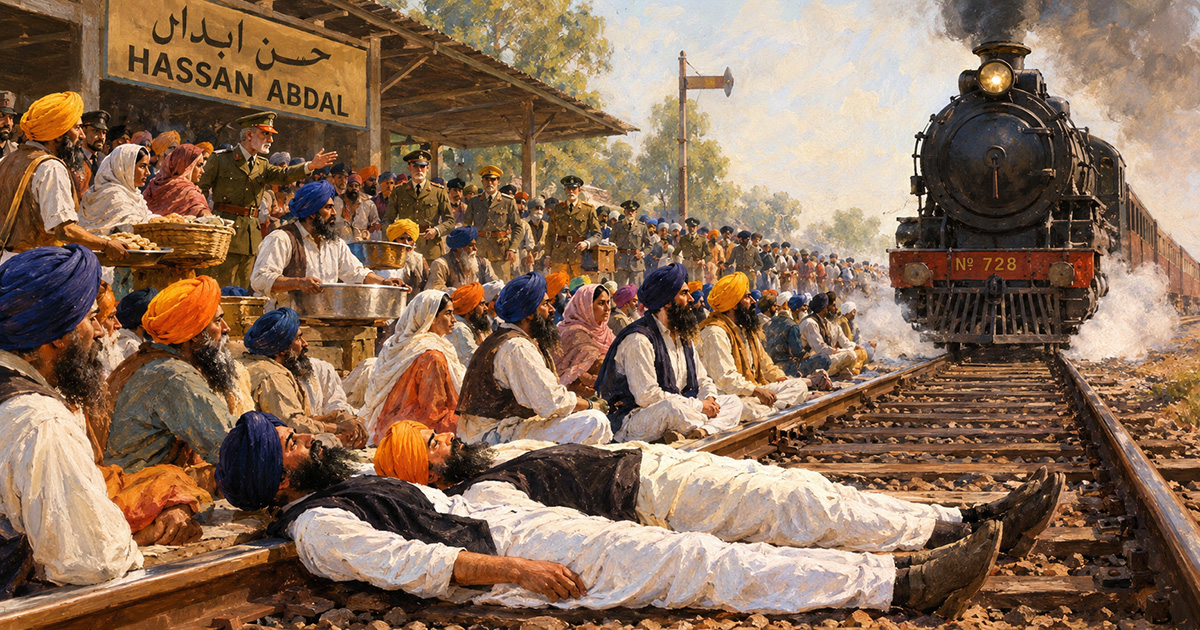
- Sarabhai’s family was unable to attend the wedding because of the disruption caused by protesters destroying train tracks during the Quit India Movement.
4. What early projects show Sarabhai’s role in Indian space research?
- Between 1940–45, Sarabhai studied cosmic ray time variations using Geiger-Muller counters in Bangalore and the Kashmir Himalayas, advancing India’s early space science.
- After WWII, he returned to Cambridge and earned a PhD in 1947 for his thesis ‘Cosmic Ray Investigation in Tropical Latitudes’.
5. What institution did Sarabhai establish soon after India’s independence?
- On November 11, 1947, Sarabhai founded the Physical Research Laboratory (PRL) in Ahmedabad, marking the start of India’s space science infrastructure.
6. How did Sarabhai contribute to India’s textile industry?
- He founded the Ahmedabad Textile Industry’s Research Association (ATIRA) on December 13, 1947, to modernize and innovate India’s textile sector through scientific research.
7. How did PRL evolve from a two-room lab to a national scientific institution?
- In 1947, the Physical Research Laboratory (PRL) began its operations in just two small rooms at M.G. Science College, while plans for a permanent campus were underway.
- The Ahmedabad Education Society generously provided a nearby plot of land for the construction of PRL’s new building, enabling the expansion of India’s pioneering space research institution.
- On 15 February, 1952, the foundation stone for the PRL building was laid by Nobel Laureate C.V. Raman, in the esteemed presence of Homi Bhabha, S.S. Bhatnagar, and several other leading figures in Indian science.
- On 10 April, 1954, Prime Minister Jawaharlal Nehru officially inaugurated the new PRL campus, after which all research activities were shifted from M.G. Science College to the newly established facility.
- In 1957, Vikram Sarabhai launched a dynamic space programme in India, establishing the Physical Research Laboratory (PRL) as the cradle of the nation’s space exploration efforts.
8. What international event pushed Sarabhai to accelerate India’s space program?
- The launch of Sputnik-1 by the Soviet Union on October 4, 1957, served as a major inspiration for Sarabhai to promote an Indian space initiative.
9. What were Vikram Sarabhai’s major achievements in the year 1962 across science, education, and space research?
- In 1962, Vikram Sarabhai played a key role in founding the Indian Institute of Management (IIM) Ahmedabad, significantly promoting management education in India.
- On November 21, 1962, Vikram Sarabhai established the Indian National Committee for Space Research (INCOSPAR) at Thumba, Thiruvananthapuram, Kerala, laying the foundation for India’s space program.
- In 1962, Vikram Sarabhai was honored with the Shanti Swarup Bhatnagar Award for his outstanding contributions to the field of physical sciences.
10. What was India’s first rocket launch and who led it?
- On November 21, 1963, Vikram Sarabhai led India’s first rocket launch from the Thumba Equatorial Rocket Launching Station (TERLS) in Kerala. This landmark event marked India’s official entry into space research, laying the foundation for its future space ambitions under Sarabhai’s visionary leadership.
11. When did Sarabhai become Chairman of the Atomic Energy Commission?
- On October 19, 1966, Vikram Sarabhai was appointed Chairman of the Atomic Energy Commission of India, succeeding Homi J. Bhabha. Under his leadership, India made significant strides in nuclear research and energy development, strengthening the nation’s atomic capabilities.
12. What were Dr. Sarabhai’s contributions to India’s electronics sector?
- On April 11, 1967, the Electronics Corporation of India Limited (ECIL) was officially founded under the Department of Atomic Energy, with Dr. Vikram Sarabhai playing a pivotal role in its establishment. His vision was to foster indigenous capabilities in electronics, particularly to support India’s nuclear, defense, and space sectors.
13. How did Vikram Sarabhai contribute to India’s space and nuclear energy programs between 1967 and 1969?
- On January 17, 1967, Dr. Vikram Sarabhai played a key role in establishing Uranium Corporation of India Limited (UCIL) in Jaduguda, Bihar, to ensure indigenous uranium mining and processing for India’s nuclear energy program.
- On August 15, 1969, the Indian Space Research Organisation (ISRO) was officially established, replacing the Indian National Committee for Space Research (INCOSPAR), which had been set up in 1962. Dr. Vikram Sarabhai, often regarded as the father of India’s space program, became ISRO’s first Chairman. Under his leadership, ISRO was brought under the Department of Atomic Energy, reflecting the strategic importance of space research in national development. Dr. Sarabhai envisioned leveraging space technology to address India’s developmental challenges, emphasizing applications in communication, education, and resource management.
14. What was the Satellite Instructional Television Experiment (SITE)?
- On September 18, 1969, Dr. Vikram Sarabhai, Chairman of ISRO, and Dr. Thomas O. Paine, NASA Administrator, signed a landmark agreement for the Satellite Instructional Television Experiment (SITE). This collaboration utilized NASA’s ATS-6 satellite to broadcast educational programs to over 2,400 rural Indian villages from August 1975 to July 1976, marking a significant milestone in international cooperation for development
15. How did Sarabhai influence international nuclear diplomacy?
- On September 22, 1970, Dr. Vikram Sarabhai was unanimously elected as the President of the 14th General Conference of the International Atomic Energy Agency (IAEA), held in Vienna from September 22 to 28. His leadership at this prestigious conference underscored his international stature and highlighted India’s growing influence in the global nuclear science community. During his presidency, Dr. Sarabhai championed the peaceful applications of atomic energy and strongly advocated for collaborative international efforts in nuclear research and development.
- In 1971, Dr. Vikram Sarabhai served as Vice-President at the Fourth United Nations Conference on the Peaceful Uses of Atomic Energy held in Geneva. This conference focused on the global applications of nuclear technology for peaceful purposes.
16. When and where did Dr. Vikram Sarabhai passed away?
- On December 30, 1971, Dr. Vikram Ambalal Sarabhai, father of India’s space program, died of cardiac arrest at Halcyon Castle, Kovalam, Kerala. He was 52, and his untimely death was a profound loss to India’s scientific community.
17. What civilian honors did Sarabhai receive during and after his lifetime?
- On January 26, 1966, Dr. Vikram Sarabhai was awarded the Padma Bhushan in the year 1966 for his outstanding contributions to science and engineering.
- On January 26, 1972, Dr. Vikram Sarabhai was posthumously awarded the Padma Vibhushan, India’s second-highest civilian honor, recognizing his pioneering contributions to science and the nation’s space program.
18. How was Dr. Sarabhai honored on the Moon?
- In 1974, at Sydney, the International Astronomical Union renamed the Moon’s Bessel crater in the Sea of Serenity as the Dr. Sarabhai Crater, honoring his contributions to space science.
19. What tribute was paid to him during Chandrayaan-2?
- On September 20, 2019 – The lander of India’s Chandrayaan-2 mission, named ‘Vikram’ in his honour, was scheduled to land near the Moon’s South Pole, marking his legacy in lunar exploration.
20. What initiative was launched in 2019 to promote space journalism in his name?
- On August 12, 2019 – On Dr. Vikram Sarabhai’s 100th birth anniversary, ISRO announced the Vikram Sarabhai Journalism Award to encourage excellence in space science and technology reporting.
.png)
.jpg)