No, Kellogg's Could Not “Colonize” Indian Breakfast Culture: Poha & Parathas Still Rule Bharat’s Mornings

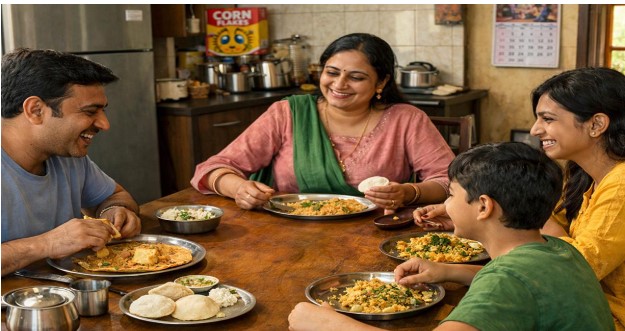
This image is AI-Generated
On National Cereals Day, we bring you an interesting story of a 1994 invasion by Kellogg's into the Indian Breakfast Market. In 1994, American cereal titan Kellogg's landed in India with a $65 million ambition, opening a Mumbai plant to launch corn flakes, basmati rice flakes, and wheat flakes in an attempt to colonize our breakfast. In a nation devoted to hot breakfast, steaming poha, idlis, dosas, and paranthas, Kellogg's came with a hope to create a “ready-to-eat” cereal category with cold milk. Though there was an initial buzz, a high-profile launch, and global quality, sales soon revealed a harsh truth: Indians weren't buying breakfast ideas from abroad, and their idea to colonize our cultural food items, wherein breakfast plays a vital role, failed miserably.
The Battle of Cold Cornflakes in the Land of Hot Upma and Poha
Despite providing quality products and utilizing significant technological and managerial resources from its parent company, Kellogg's sales in the Indian market were suffering. By 1995, it was estimated that for every 100 packets sold, only two were bought by regular customers, the rest being first-time buyers. The main reason for their initial lack of success was the dietary and cultural habits of Indians. They were offering a soft cereal mixed with cold milk, but Indians preferred hot milk.
Consequently, international breakfast cereal brands like Kellogg's also faced backlash for their advertising and promotional campaigns. Kellogg's ads became the villain. They attacked Bharat’s breakfast culture, calling Bharat’s breakfast very “heavy” and showing sluggish families after consuming traditional breakfast items such as parathas and upma. They tried to project a Western cereal combination of cold milk and crunchy flakes as “modern and healthier”. Indian mothers erupted in backlash, and the media called it cultural arrogance. Unfortunately, Kellogg's saw 98% one-time curious buys, no repeat customers. Cold, sweet flakes couldn't satiate appetites wired for hot, spicy, filling meals. Instead of brand rivals fighting Kellogg’s, a combination of public outrage due to “insulting” ads and cold milk usage damaged Kellogg’s initial foray into the Indian market.
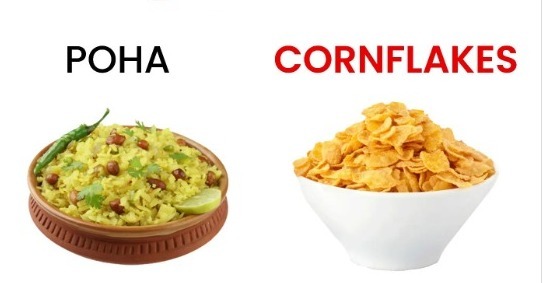
Cold Cornflakes VS. hot upma and poha | Image Source: Instagram/@DieticianRanjitKaur
Forced to Become a “Snack Brand”
This international cereal-based food company has been able to survive in India mainly in limited urban markets, especially through sweet, colorful cereals made for children and through small-sized product packs. However, no matter how attractive they look, colorful foods are not healthy for children at all. The red, blue, and brightly colored breakfast cereals that children eat, thinking they are healthy, can slow down their intellectual development. Mental health can also be affected. From colorful candies to tasty snacks, any colorful food that uses artificial colors can change a child’s behavior. That is why even today, more than 90 percent of Indian breakfasts consist of homemade traditional foods like poha and upma. Cereals still remain mainly a limited, convenience-based product. This clearly shows that the priority of these global companies is not India’s poverty, culture, or food crisis, but profit. In Indian families, traditional savory breakfasts are still more popular than ready-to-eat (RTE) cereals and snacks.
However, at present, quick-delivery platforms like Blinkit, Zepto, and Swiggy Instamart have greatly increased the use of ready-to-eat (RTE) cereals in urban areas—such as cornflakes, Chocos, muesli, and oat-based cereals. Tests have shown that although cornflakes contain low fat and calories, they have a high glycemic index, which raises blood sugar levels quickly. If blood sugar levels keep rising regularly, it can lead to diabetes-related complications such as heart disease and nerve damage.
The convenience of 10-15 minute quick delivery has made these cereals particularly popular among working families and young people. These platforms contributed 30-40% to the sales of RTE cereals in 2024-25. As a result, cereals have gained recognition in cities as a "snack" or a quick breakfast option, due to their convenience and ability to meet immediate needs. Consequently, the Indian breakfast cereal market (especially RTE) is showing strong growth forecasts for 2026, with the total market value projected to reach USD 7.32 billion by 2030 from USD 5.14 billion in 2025 (CAGR 6.08%).
Nonetheless, traditional savory breakfast dishes like poha, upma, idli, and paratha are still consumed in most Indian households. This is because they are deeply intertwined with Indian culture, tastes, and social customs. These dishes are warm, spicy, and nutritious, and they foster the habit of families eating together, whereas cold, sweet cereals are often considered children's food or an incomplete meal. Made with rice, lentils, and vegetables, these dishes are inexpensive and readily available and are considered wholesome. On the other hand, the higher cost of cereals, their sweet taste, and the presence of added sugar—especially given concerns about diabetes and obesity—make people wary. Consequently, cereals remain largely limited to some urban households, while traditional home-cooked meals continue to be the mainstay of breakfast in India.
In conclusion, while National Cereal Day reminds us of the history of breakfast cereals and grain-based foods, in the Indian context, it brings to light a larger truth—food is not just about nutrition; it is a part of cultural continuity which can never be colonized by outside powers. International brands like Kellogg's have managed to create a niche urban market in India through technology, marketing, and investment, but they have not been able to replace the centuries-old tradition of warm, savory, and homemade breakfasts. From the Bengal famine to today's quick commerce-dependent urban life, this long journey shows that global cereal companies' focus is primarily on profit and convenience-seeking consumers, not on India's food culture or its challenges. Therefore, when discussing the future of breakfast, the real challenge will be not just market growth, but protecting local food, nutrition, and cultural values—where Upma, Poha, or Idli will continue to be unwavering staples on Indian breakfast tables.
.png)