Battle of Asal Uttar: When Sugarcane Fields Became the Graveyard of Pakistani Tanks | How the Indian Army Turned the Tide of the 1965 War
This was a retreat but a carefully planned strategy to lure the enemy into a trap of India's own making.

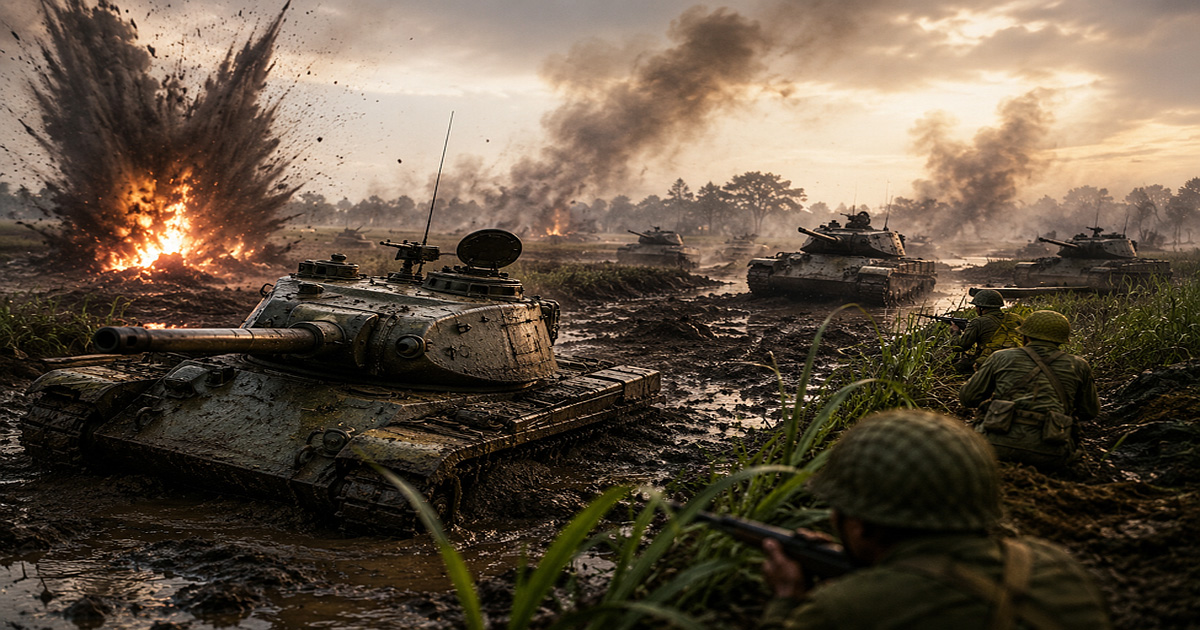
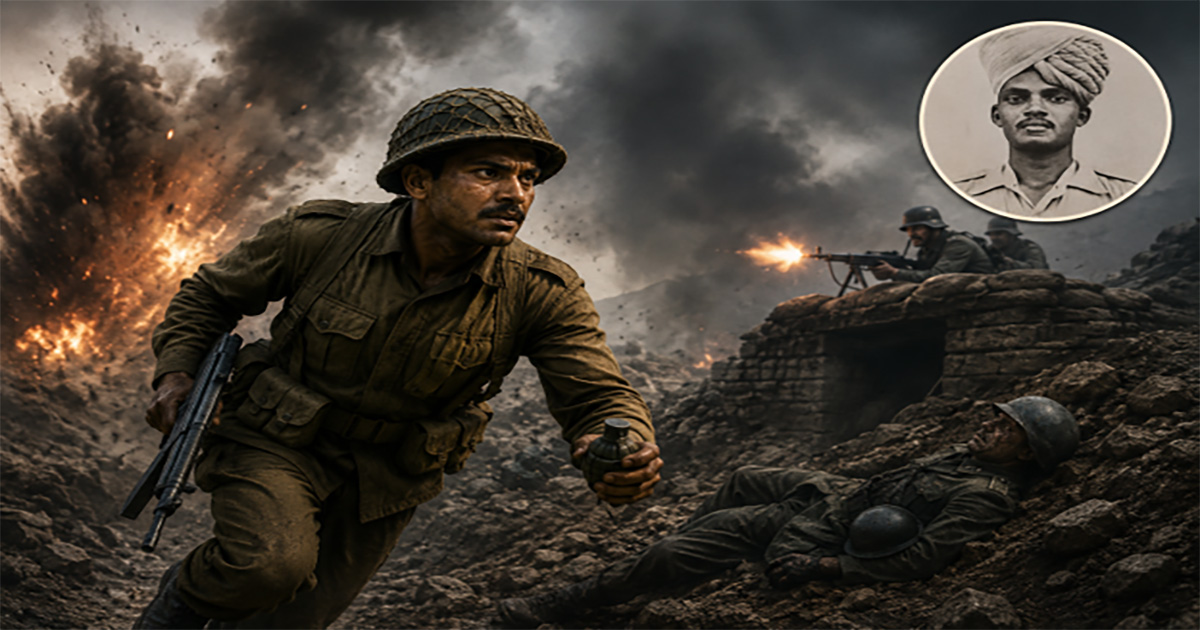
Battle of Asal Uttar, 1965 | This image is AI-generated
During the 1965 India–Pakistan War, Pakistan deployed its powerful 1st Armoured Division in the Khem Karan sector of Punjab. Its objective was to capture the Beas River bridge and cut Punjab off from the rest of India. Initially, the Pakistani Army made some gains. However, between 8 and 10 September 1965, near the village of Asal Uttar in present-day Tarn Taran district, the Indian Army successfully thwarted Pakistan's strategy.
Recognising the seriousness of the situation, Major General Gurbaksh Singh, commander of the Indian 4th Mountain Division, made a bold and farsighted decision. He ordered his troops to carry out a planned withdrawal from Khem Karan and establish a strong defensive position centred around the village of Asal Uttar. This was not merely a retreat but a carefully planned strategy to lure the enemy into a trap of India's own making. Overnight, Indian soldiers flooded the surrounding sugarcane fields with water. Within hours, the fertile fields had turned into marshland, while Pakistan remained completely unaware of the plan under the cover of darkness.
The next morning, Pakistan's 1st Armoured Division advanced with complete confidence. It had full faith in its modern American-made M-47 and M-48 Patton tanks. But the moment these heavy tanks entered the battlefield at Asal Uttar, they found themselves trapped in the carefully laid Indian defensive formation. The marshy ground brought their advance to a halt. The tanks became bogged down in the mud, unable to move forward or change direction quickly. Within moments, Pakistan's greatest strength had turned into its greatest weakness.
This was precisely the moment the Indian Army had been waiting for. A precise and devastating counterattack from all sides shattered the Pakistani armoured division. During the fierce battle, more than 100 Pakistani tanks were destroyed, while the Indian Army captured over 40 tanks. According to the Indian side, only 10 Indian tanks were destroyed during the entire battle.
The Battle of Asal Uttar was not only a major tactical victory but also one that broke the backbone of Pakistan's most powerful armoured division. It is also true that had Pakistan's plan succeeded, Amritsar and large parts of Punjab could have faced a serious threat.
However, the Indian Army's foresight, intelligent use of the terrain, and the extraordinary bravery of its soldiers eliminated that danger. The most remarkable aspect of the Battle of Asal Uttar was that a Pakistani force equipped with modern weapons and advanced tanks was defeated through the Indian Army's tactical brilliance, superior battlefield planning, and masterful use of the terrain. That is why military historians regard this battle as one of the finest examples of successful military strategy in modern warfare.