When the Hindu–Jain Merchants of Surat Launched an Economic Revolt Against Qazi Nuruddin’s Fanaticism, Aurangzeb Was Forced to Apologize
In the 17th century, Surat was not only one of India's most prosperous trading cities but also one of the wealthiest commercial centers in the world.

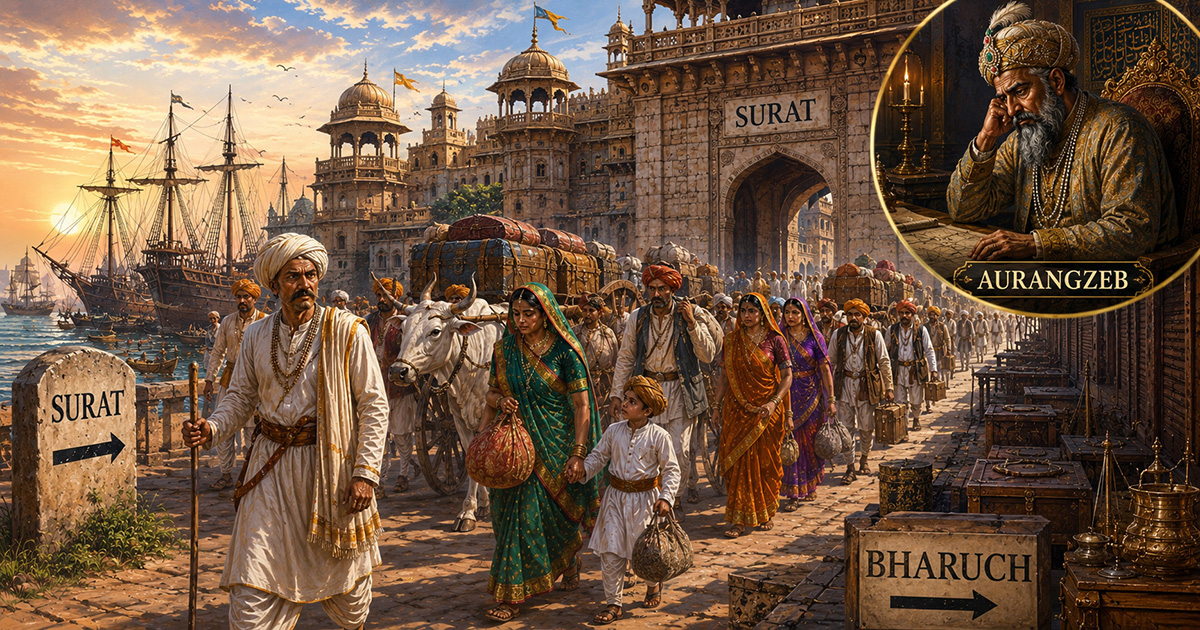
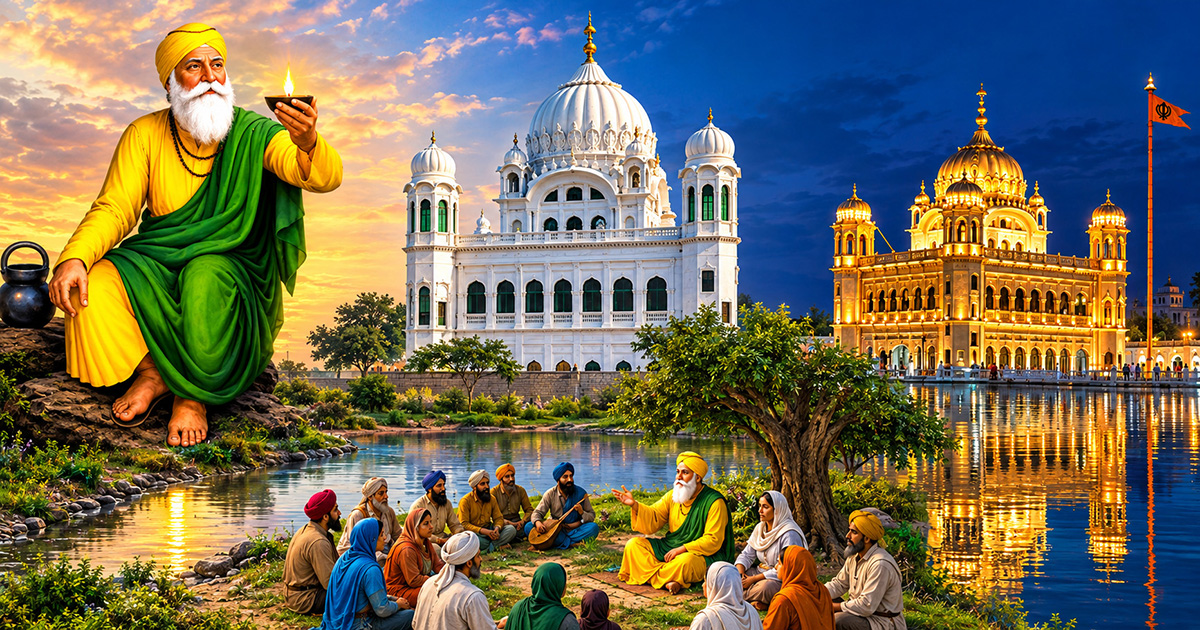
Surat trade merchants | This image is AI-generated
In the seventeenth century, Surat was not only one of India's most prosperous trading cities but also one of the wealthiest commercial centers in the world. The hard work and business acumen of Hindu and Jain merchants had transformed the city into a major hub of international trade. However, after Aurangzeb ascended the Mughal throne in 1658, circumstances began to change rapidly. His religiously orthodox outlook created new challenges. Aurangzeb granted qazis and maulvis a free hand to carry out the forced conversion of Hindus and Jains to Islam. The merchants of Surat could tolerate economic losses, but they were not prepared to accept attacks on their faith and dignity. This is the story of how a city that stood at the heart of India's economic activity came to a standstill because of the fanaticism of Qazi Nuruddin.
After ascending the Mughal throne in 1658, Aurangzeb began policies that many contemporaries viewed as oppressive toward Hindus across the empire. Surat was not untouched by these developments. The city's qazi, Nuruddin, along with a group of religious hardliners, allegedly compelled two Hindus and one Jain merchant to embrace Islam. Deeply distressed by the forced conversion, one of the merchants reportedly took his own life. The incident was no longer limited to three individuals. The Hindu and Jain merchant communities regarded it as a direct assault on their honor and self-respect. Widespread anger spread through Surat's trading community. Years of growing resentment had finally found a trigger that compelled merchants to openly resist. They believed that if they remained silent now, such incidents would only increase in the future.
In response to the forced conversions carried out under Qazi Nuruddin, the Mahajan Sabha of Surat—the most influential organization of merchants in the city—became active. Prominent Hindu merchant Bhimji Parekh and the renowned Jain Mahajan Virji Vora took responsibility for uniting the community. After several meetings and discussions, they concluded that economic resistance would be the most effective weapon against religious persecution.
On 9 July 1669, the merchants took a historic decision and declared that all commercial activities would remain suspended until forced conversions and religious discrimination came to an end. Soon, the vibrancy of Surat's markets began to disappear. Cloth markets, grain mandis, and trading establishments shut down, while thousands of artisans and laborers found their livelihoods affected.
However, despite the closure of businesses, Qazi Nuruddin's religious campaign continued. With the backing of Aurangzeb's administration, he allegedly persisted in the forced conversion of members of the Hindu and Jain communities. This further enraged the merchants, leading them to take an even more drastic step.
On 23 November 1669, nearly 8,000 merchant families collectively decided to leave Surat. Along with their families and resources, they departed for Bharuch. This move came as a severe shock to the Mughal administration. The very merchants who had built Surat's prosperity were now abandoning the city. As they left, markets became deserted, streets fell silent, and commercial activity nearly came to a halt. This was not merely a migration of merchants; it was a powerful statement that economic prosperity held no value without dignity and religious freedom.
The impact of this collective decision soon became visible. Surat's economy suffered severely. Activity at the port declined, and customs revenue flowing into Mughal coffers began to dry up. Economic pressure on the administration increased steadily. Even the city's normal functioning started to be affected. Initially, the Mughal authorities attempted to suppress the protest, but it was not easy to break a movement that operated without violence. The merchants did not resort to swords or armies; instead, they turned the economy itself into their instrument of resistance.
Gradually, Aurangzeb realized that if the merchants did not return, Surat's economic condition would deteriorate even further.
Eventually, faced with a deepening economic crisis, Aurangzeb was forced to yield. Efforts were initiated to persuade the merchant families to return to Surat. An apology was conveyed, and assurances were reportedly given that they and their communities would not face religious harassment in the future. From the final days of December 1669, merchants gradually began returning, and Surat's trade slowly recovered.
This episode holds a special place in history because it originated from an incident of forced religious conversion that united an entire commercial community. What began as a protest against the actions of Qazi Nuruddin evolved into a powerful economic movement that compelled even a ruler as formidable as Aurangzeb to reconsider his approach. It remains one of the rare examples in Indian history where organized public action, without war or bloodshed, forced those in power to back down.