When Mughal Emperor Akbar Met Guru Amar Das Ji: The Langar That Taught the Mughal Invader Equality
A remarkable episode unfolded on the sacred land of Punjab that proved even the Mughal invaders had to bow before India's spiritual strength.

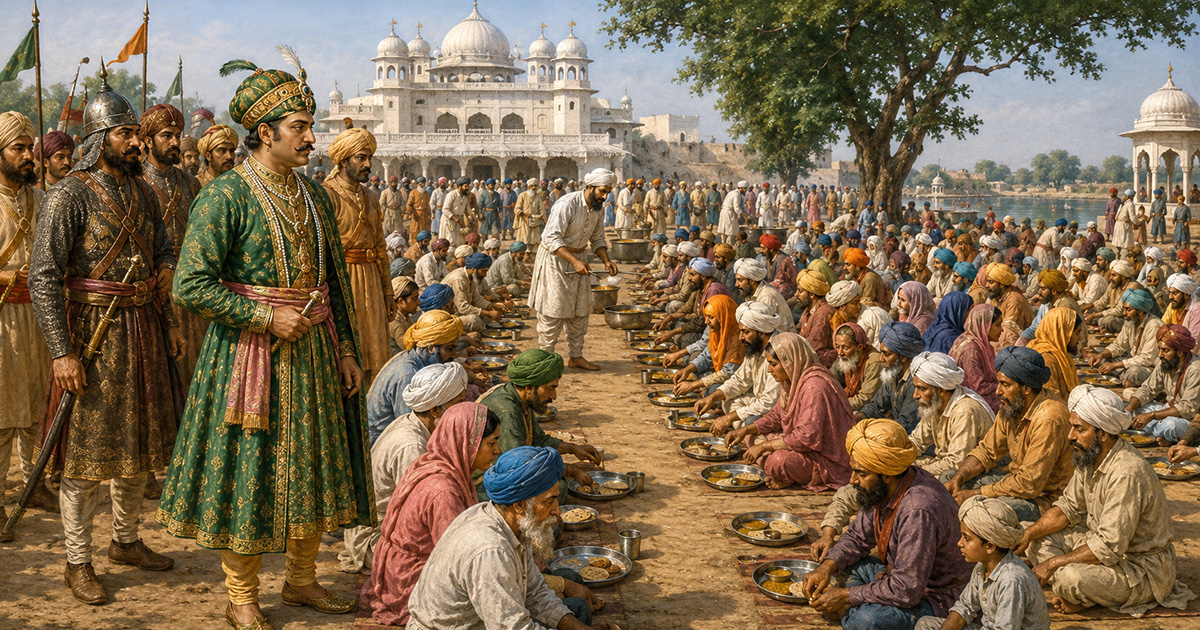
When the Mughal emperor was impressed to witness Langar | This image is AI-generated
A remarkable episode unfolded on the sacred land of Punjab that proved even the Mughal invaders had to bow before India's spiritual strength. On one side stood the Mughal emperor Akbar, and on the other stood Guru Amar Das Ji—a man who possessed neither an army nor a royal palace. Yet, when Akbar came face to face with Guru Amar Das Ji, it was not political power that prevailed, but the timeless values of equality, selfless service, and unwavering principles. The politically clever Mughal emperor Akbar was so deeply impressed by Guru Amar Das Ji's personality and teachings that he expressed his desire to donate land for the Guru's mission, setting aside his imperial ambitions. However, Guru Amar Das Ji firmly declined the offer. This episode remains one of the finest examples of India's spiritual traditions, though very few people are aware of it today.
The incident took place in 1569. While travelling from Delhi to Lahore, Akbar halted at Goindwal in Punjab. There, he learned about Guru Amar Das Ji. Around that time, Akbar had initiated his policy of Sulh-i-Kul (Universal Peace), under which he met influential leaders from various schools and sects of Sanatan Dharma. Behind this initiative lay a calculated political strategy—to strengthen and sustain Mughal Islamic rule in India through diplomacy.
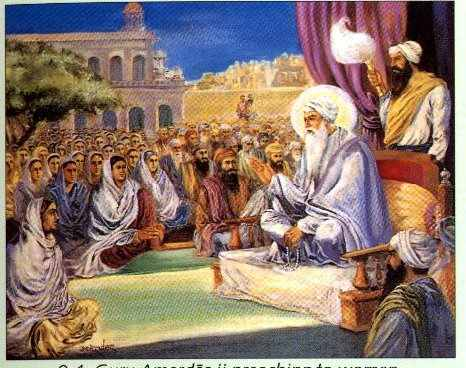
When Guru Amar Das Ji's disciples informed him of Akbar's arrival, some followers suggested that special arrangements should be made to welcome the emperor. Guru Amar Das Ji, however, made it clear that the Guru's court did not distinguish between a king and an ordinary individual. Everyone was equal there, whether ruler or subject.
Akbar arrived at Gurdwara Goindwal Sahib with his army. The first thing that caught his attention was the institution of langar, where everyone sat together in a single row and shared a simple meal. The langar remained open day and night for travellers, the poor, strangers, and members of the congregation alike. Every person was treated equally.
The volunteers seated Akbar in the langar alongside everyone else and served him the same food. He was not accorded any royal honour or offered a special seat. It was a living demonstration of equality. Witnessing this left Akbar astonished because such an arrangement—where every individual enjoyed equal status regardless of rank—did not exist in the Islamic social order of his time.
Akbar also observed that those serving the langar were ordinary devotees themselves and that the meals were prepared through voluntary contributions from society. This system deeply impressed him because it honoured service rather than authority, and equality rather than privilege. Guru Amar Das Ji's ideals presented an inspiring alternative to the rigid social structures of that era.
After the meal, Akbar met Guru Amar Das Ji in person. The emperor was struck by the Guru's radiant presence. He asked how, despite his advanced age, Guru Amar Das Ji's face shone with such extraordinary brilliance, whereas Akbar himself was constantly surrounded by the finest physicians and consumed the best food available.
Smiling gently, Guru Amar Das Ji replied that he ate the same simple food served in the langar to everyone else. The radiance on his face, he explained, did not come from luxurious meals but from constant remembrance of God, selfless service, and walking the path of truth. His response was not merely an answer to Akbar's question—it conveyed the deeper message that a person's true beauty arises not from external wealth but from devotion to God and a life dedicated to selfless service. Deeply moved by Guru Amar Das Ji's principles and the langar system, Akbar made an offer before departing. He proposed donating land to support the langar so that this noble service could expand further. Guru Amar Das Ji respectfully declined the proposal.
He explained that Guru Nanak Dev Ji's tradition rests upon earning one's livelihood honestly and sharing one's earnings with others. The Guru's langar does not function through the patronage of kings but through the faith, service, and voluntary contributions of the sangat (the community). Accepting royal grants, he said, would contradict the very spirit upon which the langar had been founded.
Guru Amar Das Ji further explained that every individual contributes according to their ability and receives according to their need. This is why the institution remains free from any sense of hierarchy, dependency, or inequality. Hearing these profound words, Akbar bowed before Guru Amar Das Ji in reverence.
This episode is therefore far more than a meeting between an emperor and a saint. It stands as a powerful example of India's spiritual strength—a force so profound that even imperial authority found itself humbled before unwavering principles. That is why Guru Amar Das Ji's decision continues to be remembered as an enduring symbol of service, equality, and self-respect.
Born on 5 May 1479, Guru Amar Das Ji left his mortal body on 1 September 1574. Throughout his life, he remained devoted to carrying forward the teachings and mission of Guru Nanak Dev Ji.