When the British Empire’s Pride Was Shattered: The History of the Guru Ka Bagh Morcha and the Sikhs’ Extraordinary Non-Violent Struggle
On August 8, 1922, when Akali Sikhs cut dry wood from the grove for the gurdwara's Langar, the Mahant accused them of theft and filed a complaint with the police. Without delay, the British authorities arrested five Sikhs on August 9 and sentenced them to one year of rigorous imprisonment along with a fine of ₹300.

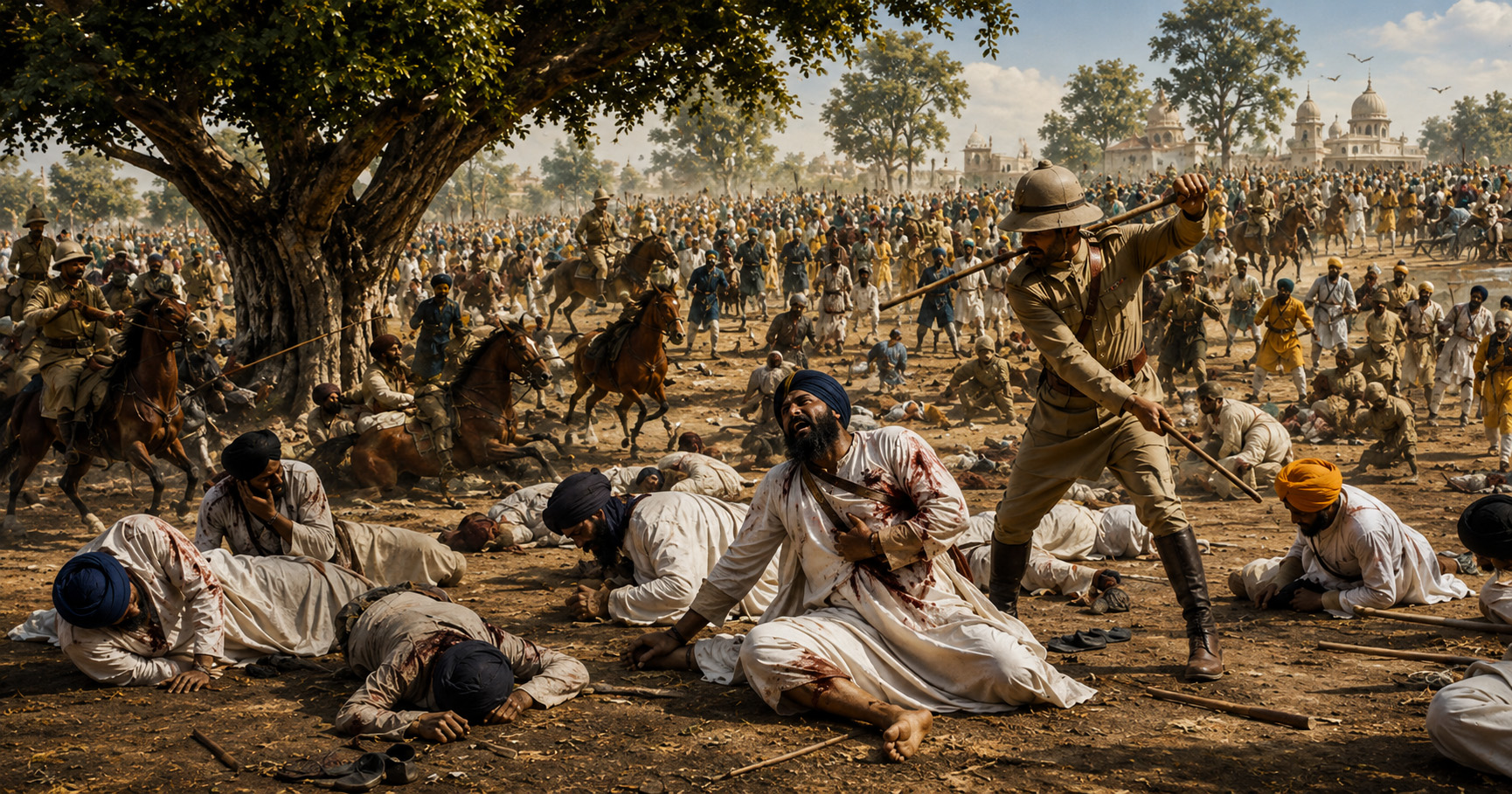
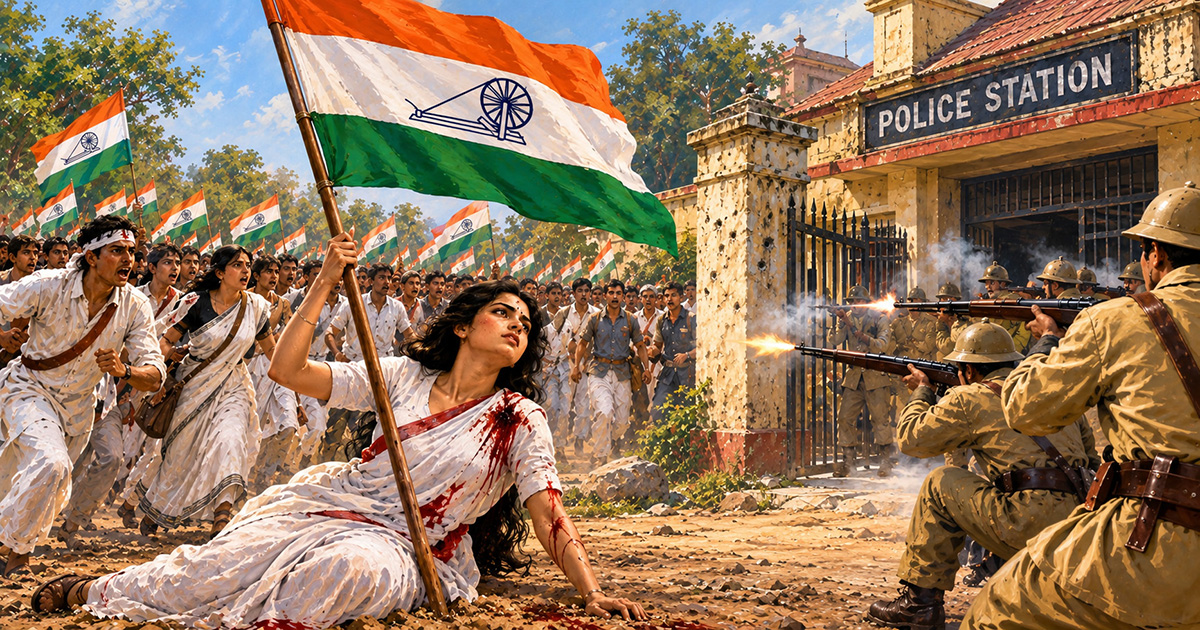
The incident at Guru ka Bagh Morcha | This image is AI-generated
About 25 kilometers from Amritsar, in the village of Ghukewali, stand two historic gurdwaras associated with the visits of Guru Arjan Dev Ji and Guru Tegh Bahadur Ji. Maharaja Ranjit Singh had donated a vast tract of land to these shrines, which became known as Guru Ka Bagh. By the 1920s, its management was in the hands of Mahant Sundar Das of the Udasi sect, who, with government backing, treated the property as his personal estate.
On August 8, 1922, when Akali Sikhs cut dry wood from the grove for the gurdwara's Langar, the Mahant accused them of theft and filed a complaint with the police. Without delay, the British authorities arrested five Sikhs on August 9 and sentenced them to one year of rigorous imprisonment along with a fine of ₹300. The Sikh community viewed this as a direct attack on their religious freedom, and the Shiromani Gurdwara Parbandhak Committee (SGPC) announced a peaceful protest in response.
It was decided that every day, a group of five Sikhs would proceed to Guru Ka Bagh. None would carry weapons, use abusive language, or retaliate against violence. The police began making arrests, but the flow of volunteer groups never stopped. Formal arrests of the jathas began on August 22, 1922, and on August 23, they were charged with theft, rioting, and criminal trespass. However, the more arrests the authorities made, the more volunteers came forward to join the movement.
On August 25, during the Amavasya gathering, thousands of Sikhs assembled at Guru Ka Bagh. Alarmed by the size of the crowd, police officer S.G.M. Beatty ordered a brutal lathi charge. The unarmed Sikhs were mercilessly beaten with batons and trampled under boots, yet none raised a hand in resistance. The wounded kept falling, but every morning a new jatha stood ready with unwavering determination. The situation became so severe that the SGPC had to establish a temporary hospital nearby to treat the injured.
To crush the movement, the British administration imposed strict surveillance on all routes leading to Guru Ka Bagh. Heavy police forces were deployed, and the area was effectively sealed off. Yet American filmmaker A. L. Verges secretly recorded the British atrocities and later showed them to the world under the title Unique Pictures of India's Martyrdom.
Despite the blockade, the famous British missionary and educationist C. F. Andrews somehow managed to reach Guru Ka Bagh. What he witnessed shook him to the core and brought tears to his eyes. Describing the horrifying scene, he wrote: “Four Akali Sikhs wearing black turbans stood with folded hands, praying to God. They were completely calm and motionless. Suddenly, a British officer struck one Sikh with the brass-bound end of a heavy baton on the back of his neck with full force. As he fell to the ground, a policeman brutally crushed his neck and shoulder with heavy boots. Yet there was neither anger nor desire for revenge on the faces of the Sikhs.”
Eventually, mounting international criticism and growing embarrassment forced the Lieutenant Governor of Punjab, Sir Edward Maclagan, to intervene. On September 13, 1922, orders were issued to halt the lathi charges.
To find a permanent solution to the dispute, the renowned engineer Sir Ganga Ram stepped forward. He acquired the rights to the disputed land from the Mahant and transferred the documents to the SGPC. On April 27, 1923, the government unconditionally released all prisoners. In total, 5,605 Sikhs were arrested, around 1,500 were injured, and 12 brave volunteers attained martyrdom during the Guru Ka Bagh Morcha. The movement laid the foundation for the historic Sikh Gurdwaras Act of 1925.
Congratulating the Akali leaders on this remarkable victory, Mahatma Gandhi famously wrote: “The first battle for freedom has been won.” The story of Guru Ka Bagh stands as a testament to the fact that victories are not always won by the sword; sometimes they are achieved through unwavering faith, discipline, and the courage to endure suffering without retaliation.