When Mahadji Scindia Defeated the British Through the Burden of War Expenses: The Story of Gwalior That History Buried
Instead of fighting a decisive pitched battle, Mahadji Scindia adopted the traditional Maratha strategy of the "Scorched Earth Policy."

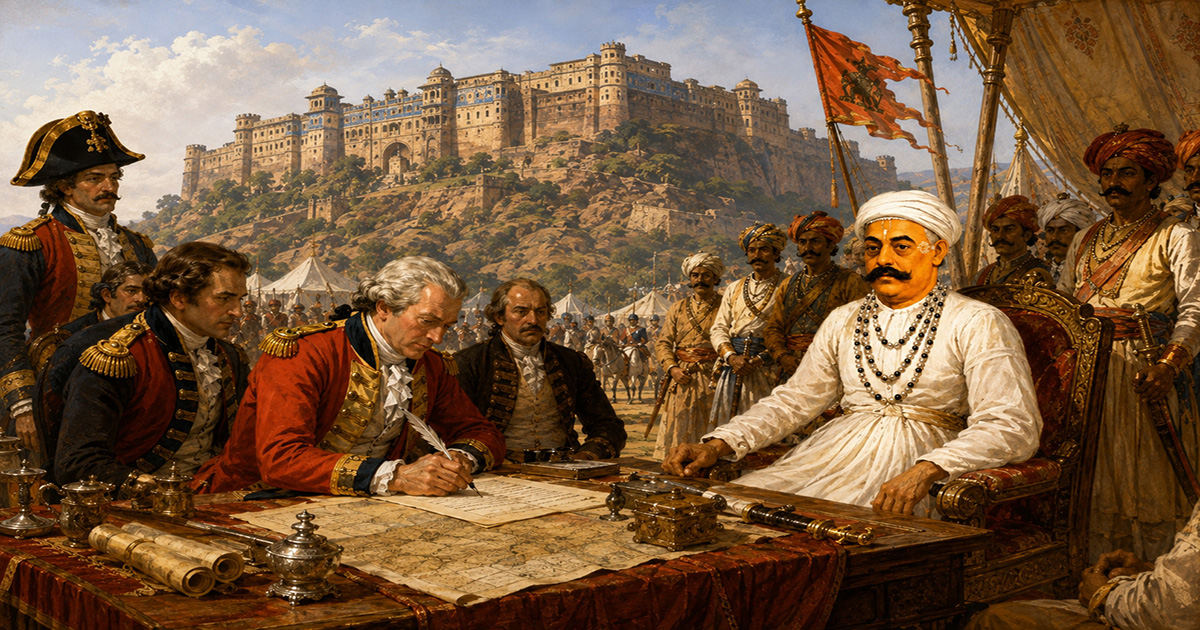
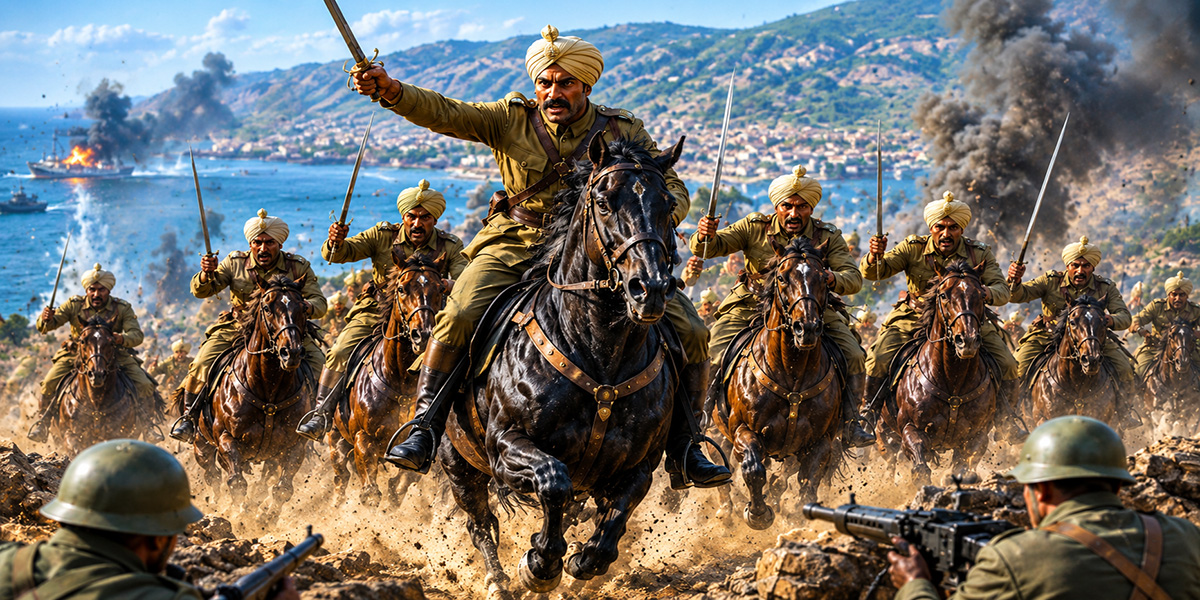
Mahadji Scindia defeats the British Raj | This image is AI-generated
On August 3, 1780, the British captured the seemingly impregnable Gwalior Fort. This happened while Mahadji Scindia, the ruler of Gwalior, was away from the city. Having secured this victory through their modern artillery and superior weaponry, the East India Company became convinced that Mahadji Scindia and the Marathas had lost their power in northern India. But perhaps they did not realise that Mahadji did not wage war by the sword alone. His greatest strength was Maratha military strategy. In the end, it was this very strategy that imposed such a crushing economic burden on the British that they were forced to seek peace. As a result, not only was Gwalior Fort restored to Mahadji, but a large territory also returned to his dominion. How did he achieve this? What was the strategy that turned the tide? It is a fascinating story.
After losing Gwalior Fort, Mahadji understood that confronting the British Army directly would be suicidal. The British possessed superior artillery and modern weapons. Yet, at any cost, he wanted to regain control of Gwalior Fort, the symbol of the Maratha state's honour and prestige. Instead of fighting a decisive pitched battle, he adopted the traditional Maratha strategy of the "Scorched Earth Policy."
Under this strategy, Mahadji's forces completely disrupted the British Army's supply chain. Standing crops were destroyed so that the British would find no food in the surrounding countryside. The water in wells was made unfit for drinking. Mahadji understood that the most effective way to defeat the British was to strike at their supplies and resources, rather than merely attacking their soldiers.
While Mahadji was breaking the British supply chain, he was also forcing them to fight guerrilla warfare in hilly terrain. His objective was to prolong the conflict instead of allowing it to be decided in a single decisive battle. Across Malwa and northern India, the Maratha forces continued to maintain pressure on the British through the Scorched Earth Policy.
The second major setback for the British was that, while they were fighting Mahadji's forces in northern India, the East India Company was simultaneously engaged in a war against Hyder Ali, the ruler of Mysore. Through his strategy, Mahadji had trapped the East India Company on two major fronts. As a result, its manpower, finances, and military supplies were steadily being exhausted.
The cost of the war was becoming unbearable for the East India Company. Mahadji Scindia knew that time was now working in his favour. He prolonged the war to such an extent that the Company's financial condition began to deteriorate. Eventually, the British realised that this war could not be won through military strength and modern weapons alone.
To defeat Mahadji, they would have needed a strategy like his. Finally, on July 1, 1781, near a place called Sipri, Mahadji Scindia achieved a decisive victory over the British. Although the British had captured Gwalior Fort, they had ultimately lost the war.
On October 13, 1781, the two sides agreed to a temporary ceasefire. The British began appealing to Mahadji for a treaty. After prolonged negotiations, the historic Treaty of Salbai was signed on May 17, 1782, at the village of Salbai, near Gwalior. Under the terms of the treaty, the British agreed to return most of the territories they had taken from the Marathas, recognised Mahadji Scindia's authority over the lands west of the Yamuna River, and, most importantly, restored Gwalior Fort to his control.
Mahadji's influence in northern India emerged stronger than ever before. This struggle demonstrates that Mahadji Scindia's greatest victory did not lie in a single battle but in his overall strategy. By disrupting British supply lines, he forced them to seek peace. With patience, he trapped the British in a long, expensive, and exhausting war.
He had understood that the British Empire's greatest strength was its modern army, but its greatest weakness was the burden of a prolonged and costly conflict. Mahadji relentlessly exploited that weakness. As a result, the British won Gwalior Fort but lost the war itself.
Mahadji Scindia, on the other hand, lost the fort initially but ultimately emerged as the victor. That is why history remembers him not only as a great warrior but also as a master strategist who, through his diplomacy, patience, and military foresight, compelled the British to sign a treaty on his own terms.