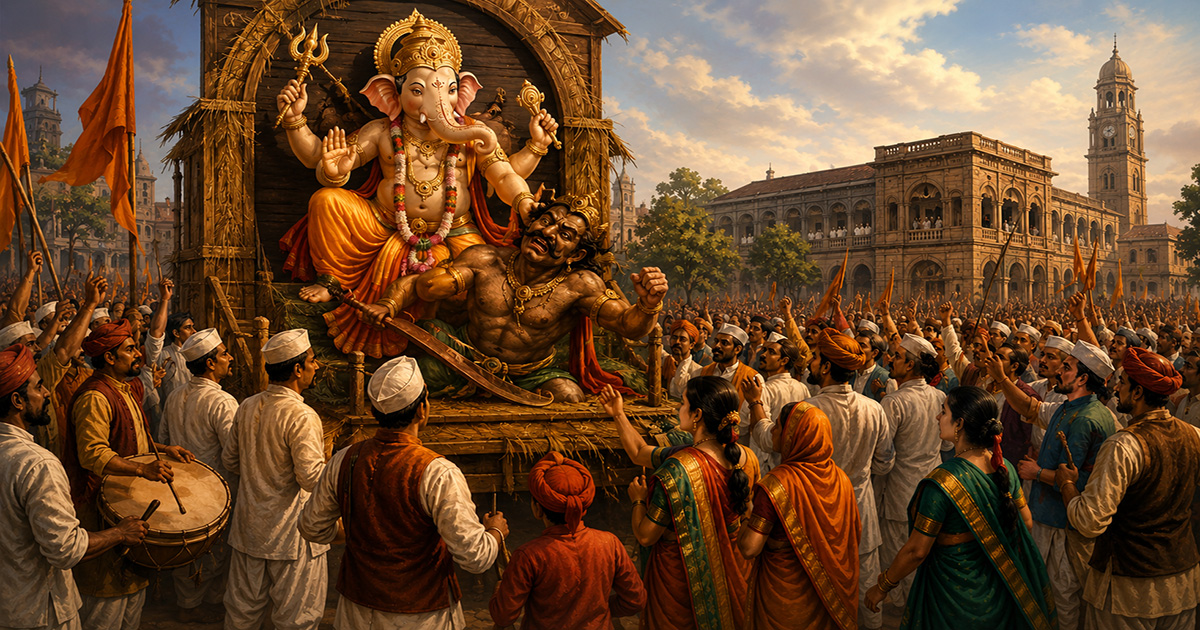
How V. S. Srinivasa Sastri Used English to Defeat Racial Discrimination and Save Indians in South Africa?
At a time when the British believed Indians could never truly master their language, V. S. Srinivasa Sastri had already proved them wrong.

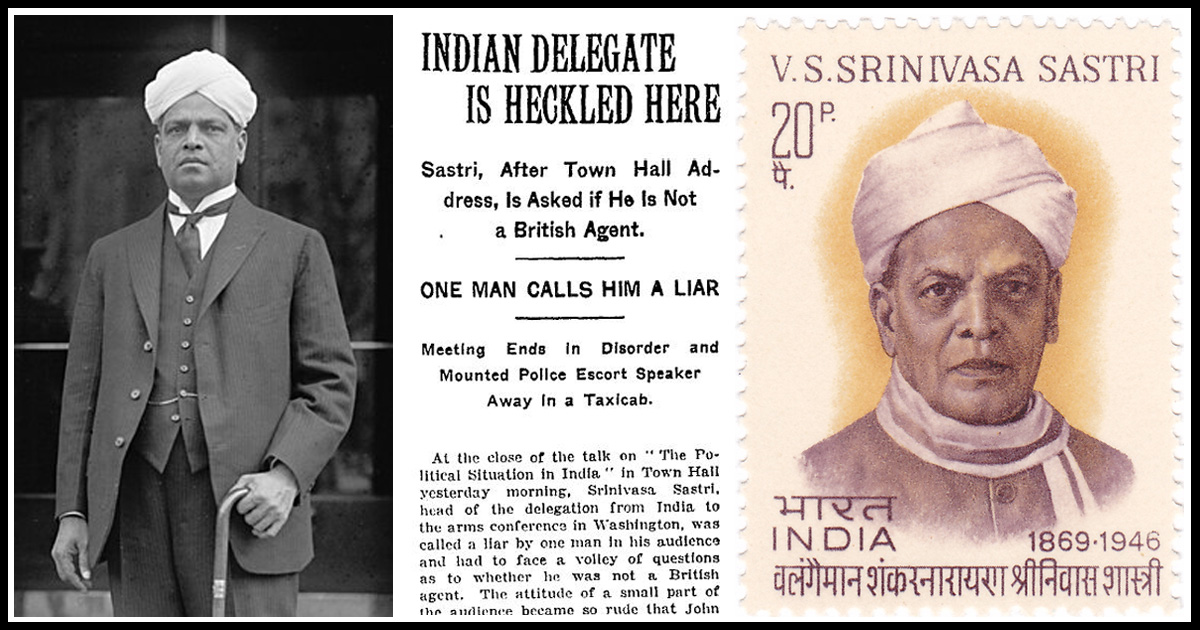
V. S. Srinivasa Sastri | Image Source: Wikipedia
"How could an Empire that claimed to stand for justice deny dignity to hardworking Indians simply because of their race?"
The hall fell silent.
The man asking that question was V. S. Srinivasa Sastri, one of India's greatest diplomats and orators, whose mastery of English would become his most powerful weapon in defending Indians overseas. V. S. Srinivasa Sastri | Image Source: KKBooks 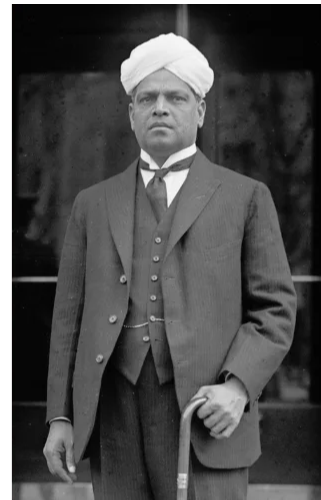
Standing before South Africa's Parliament in 1927, he had just challenged the very foundations of the British Empire not with anger or threats, but with the Empire's own ideals of justice. At that moment, the future of more than 1,50,000 Indians living in South Africa hung in the balance. Many had crossed the seas as labourers. Others had spent decades building successful businesses through relentless hard work. Yet, despite their contribution, they were treated as second-class citizens. Then came another blow. The white South African government introduced the Areas Reservation Bill (1926). If passed, Indian families would be pushed into segregated "ghetto" settlements while Indian merchants would lose the right to own property or conduct business in valuable commercial areas. Everything they had built over generations was under threat.
Fear spread across the Indian community. In 1926–1927, Indian national leaders relied on sending petitions, giving fiery speeches, and demanding that the imperial government in London, where the Colonial Office and the British Imperial Cabinet were based, force South Africa to treat Indian immigrants equally. But it failed. The responsibility then fell on V. S. Srinivasa Sastri. Sastri with the Governor-General, Lord Athlone, in Cape Town, in February 1928 | Image Source: Medium 
India had not chosen Sastri by chance. They knew he possessed a weapon no one else did. Years earlier, Oxford professor Arthur Lionel Smith had remarked, "I never knew that the English language was so beautiful till I heard Sastri speak it." At a time when the British believed Indians could never truly master their language, Sastri had already proved them wrong. Born in a small village in the Madras Presidency, his extraordinary command of English had earned him a place on King George V's Privy Council, one of the highest honours an Indian could receive. Now, that very gift would become India's strongest strength in South Africa. Yet Sastri never regarded English as a badge of prestige. He saw it as a weapon to defend his people.
As head of the Indian delegation to South Africa, Sastri entered Cape Town in December 1926 not with threats or fiery slogans, but with confidence, patience and extraordinary intellect. Standing before the South African Parliament and influential white audiences, Sastri calmly dismantled every argument used to justify racial discrimination. Using British constitutional principles, legal reasoning and even Christian values, he forced his audience to confront the contradiction between the Empire's ideals and its treatment of Indians. Those who had expected confrontation instead found themselves listening to one of the greatest minds in the British Empire.
His calm logic succeeded where anger could not. After months of patient negotiation, the government officially dropped the Areas Reservation Bill, and the result produced the Cape Town Agreement of 1927, which secured important safeguards for Indians in South Africa, protecting their rights and giving them an official voice through India's representative in the country. So successful was his mission that Sastri was appointed India's Agent in South Africa to oversee the implementation of the agreement.
Across Britain, newspapers celebrated him as the "Silver-Tongued Orator of the British Empire." Yet Sastri's greatest achievement was not that he conquered the English language; it was that he used the language to defend the dignity of Indians when they needed it most. Srinivasa Sastri proved that not every battle for justice is won on the streets. Some are won across negotiating tables, where wisdom, patience and reason triumph over prejudice. His greatest weapon was his intellect, through which he defended the dignity of Indians thousands of miles from home.