The Teacher Who Changed Joseph Stalin's Mind: Dr. Sarvepalli Radhakrishnan and Jammu & Kashmir Diplomacy
In 1949, when Dr. Sarvepalli Radhakrishnan arrived in Moscow as India's ambassador, relations between the two nations were cold and uncertain.

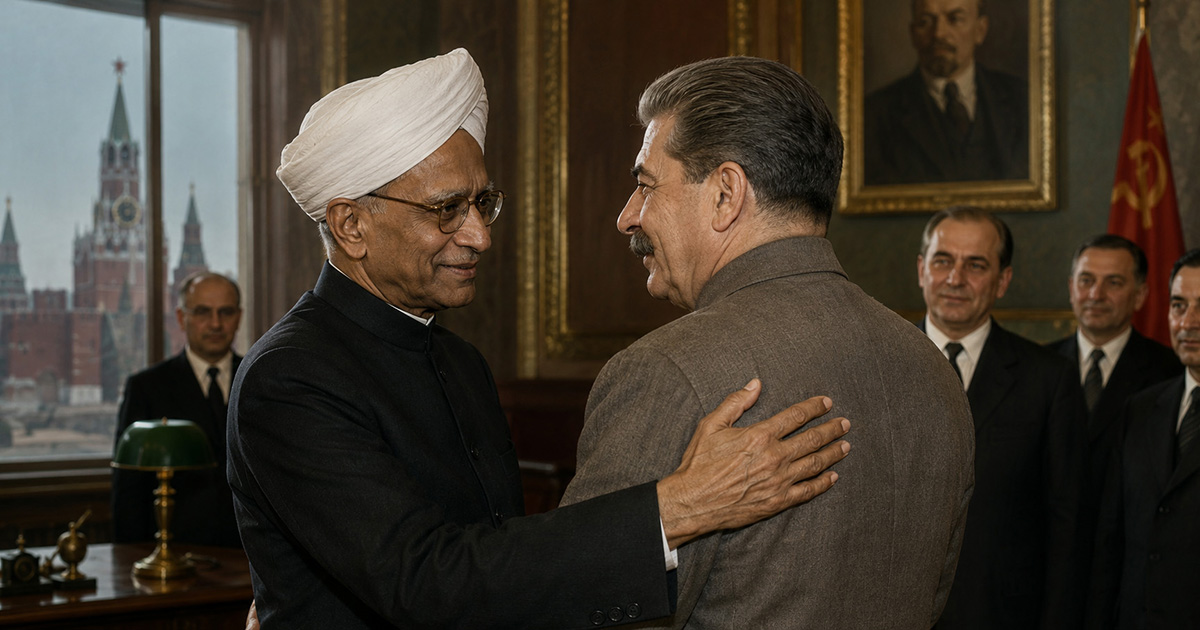
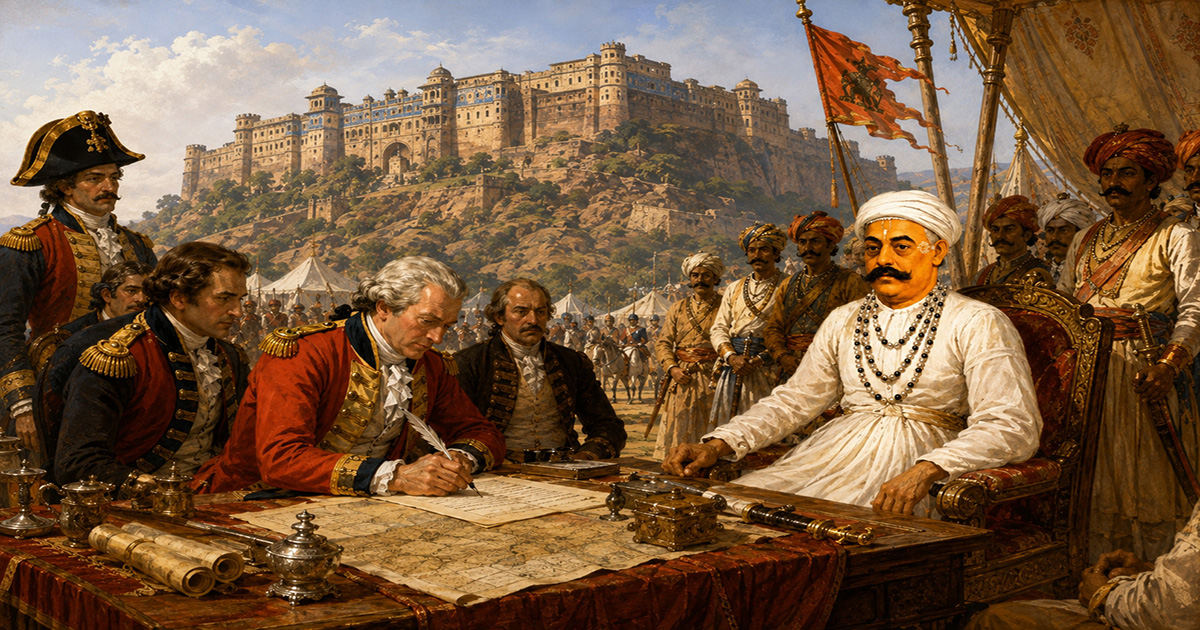
Dr. Sarvepalli Radhakrishnan with Soviet leader Joseph Stalin | This image is AI-generated
"The Soviet Union cannot support these proposals on Jammu and Kashmir." In January 1952, these words echoed across the United Nations Security Council as members debated fresh proposals on Jammu and Kashmir. Rising from his seat, the Soviet representative declared, "Attempts by outside powers to interfere in Jammu and Kashmir are unacceptable." For a moment, the entire UNSC chamber fell silent. Britain and the United States hadn't expected this. It was a dramatic shift. Until then, the Soviet Union had largely stayed away from taking a clear stand on Jammu and Kashmir. So why had one of the world's most powerful nations suddenly become India's strongest supporter at the United Nations?
The answer lies in the outstanding and high-stakes diplomacy of Dr. Sarvepalli Radhakrishnan, who was appointed India’s Ambassador to Moscow in 1949, at a time when India and the Soviet Union had very strained ties. Dr. Sarvepalli Radhakrishnan | Image Source: Medium
A Scholar Walks Into the Kremlin
In 1949, when Dr. Sarvepalli Radhakrishnan arrived in Moscow as India's ambassador, relations between the two nations were cold and uncertain. Stalin was suspicious of this newly independent country. Was India truly free, he wondered, or simply Britain wearing a different flag? Most diplomats would have answered these questions with treaties and policy papers. However, Radhakrishnan chose a different path entirely. Radhakrishnan engaged Stalin in wide-ranging conversations on philosophy, history, and civilization. And this helped in solidifying India’s position on one of the most significant issues.
The Question Nobody Else Would Ask
Diplomatic cables indicate that within 2 years, by 1951, Radhakrishnan was able to earn something very rare: Stalin's genuine respect. It was during one such meeting that he raised an important issue. Radhakrishnan met with Andrey Vyshinsky, Stalin's formidable foreign minister. Without any hesitation, he asked, "Why won't Russia support India on Kashmir at the Security Council?"
Vyshinsky, caught off guard, tried to sidestep the question. "India had never formally asked for Soviet support," he said.
Without missing a beat, Radhakrishnan answered, "But that is exactly what I am doing right now, am I not?" Radhakrishnan made this request entirely on his own initiative, without waiting for instructions from New Delhi. He acted entirely on his own.
Vyshinsky directly reported the conversation to Joseph Stalin, who was deeply shaken by how bluntly the Indian Ambassador had cornered him. In his official briefing to the Kremlin, Vyshinsky noted that Radhakrishnan was not acting like a typical, timid foreign envoy; he was operating with the absolute authority of a scholar who demanded straight answers. Stalin did not ignore the request. Instead, his initial reaction was one of genuine amusement and profound curiosity. Upon hearing Vyshinsky's report, Stalin famously remarked on how unique the Indian Ambassador was, noting that Radhakrishnan was a "man of peace and a true scholar, not a mechanical politician." But why did Stalin pay attention to a request that could easily have been ignored?
Within months, Moscow had turned. In January 1952, the Soviet Union began opposing Western-backed resolutions on Kashmir, and in the years that followed, it repeatedly used its veto to shield India's position at the UN, a partnership that would endure for decades.
A Farewell Unlike Any Other
In April 1952, as Radhakrishnan prepared to leave Moscow for good, he visited Stalin one last time. What happened next broke every rule of Kremlin protocol: he reached out and gently held Stalin's face, then patted him warmly on the back. No foreign dignitary had ever dared touch the Soviet leader that way. Stalin was said to be visibly moved.
Back in India, Radhakrishnan went on to become the country's first Vice President, and later its second President. When his students asked to mark his birthday with celebration, he asked for something else instead: let it be a day for teachers, not for him.
That is why India celebrates Teachers' Day on September 5th, a date that traces back, in part, to a quiet room in the Kremlin, where a philosopher-diplomat taught the world's most powerful men that sometimes the boldest thing you can do is simply ask an honest question.