When “Freedom Fighter” Tipu Sultan Urged an Afghan Ruler to Invade Bharat
Tipu Sultan has been widely celebrated as “Tiger of Mysore,” however, the so-called freedom fighter had invited Islamic rulers to invade Bharat!

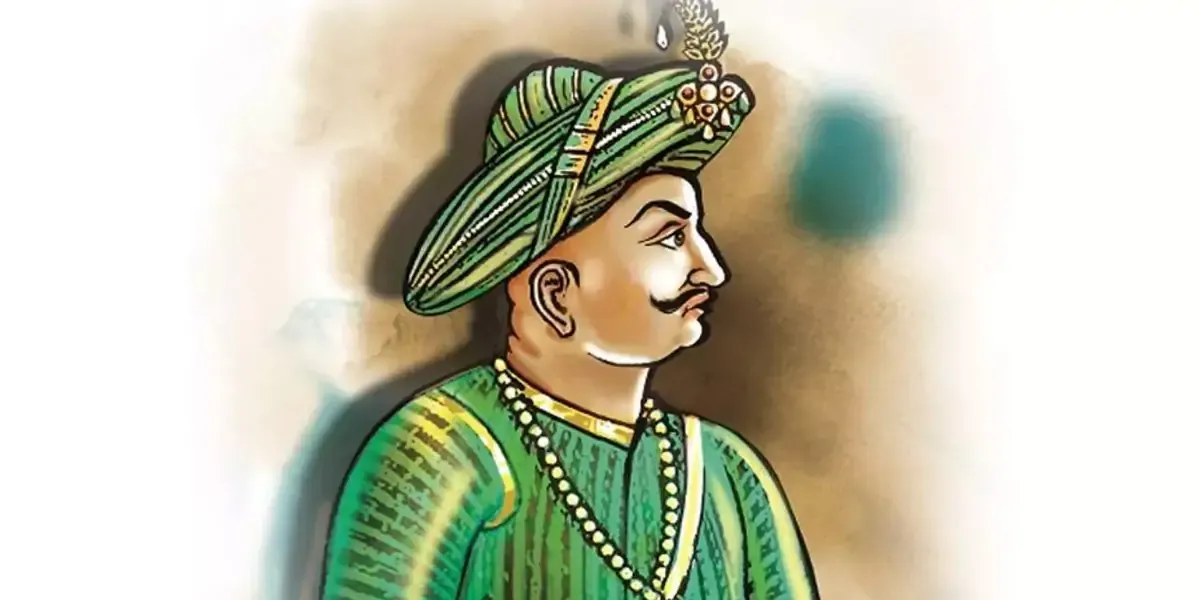
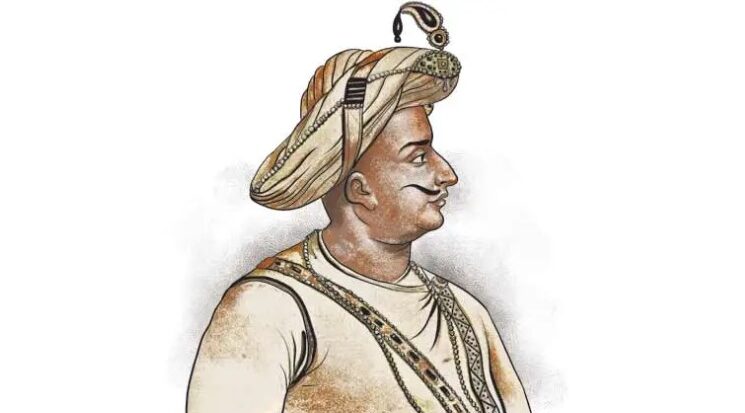
Tipu Sultan, often described as “Tiger of Mysore” | Image Source: shortpedia
Tipu Sultan has been widely celebrated as “Tiger of Mysore,” while the textbooks describe him as a “freedom fighter” who was a fierce opponent of the British. However, when one looks beyond the simplified story and examines historical records, especially his own diplomatic correspondence, an uncomfortable truth emerges: The so-called freedom fighter had invited Islamic rulers to invade Bharat!
Historical records reveal that Tipu Sultan actively sought the assistance of the powerful Muslim ruler, Zaman Shah Durrani, the ruler of Afghanistan, to invade Bharat. Through letters, diplomatic missions, and secret negotiations, Tipu attempted to persuade him to march into Bharat with a large army. Hence, on his death anniversary (May 4), we bring you the story of how the brutal ruler of Mysore invited the ruler of Afghanistan to invade Bharat, contradicting his widely promoted image as a patriotic defender of the Indian subcontinent.
Tipu Sultan’s Invitation of Invasion to Zaman Shah
Amid mounting pressure from the British and the Marathas, Tipu Sultan resorted to intensifying his diplomatic efforts to use Islam as a political and ideological tool, appealing to rulers across the Muslim world to join him in a campaign that he portrayed as a “religious war” or “Jihad”. For this, he approached Zaman Shah Durrani, the third king of the Durrani Empire in Afghanistan, in early 1796 to invade Bharat.
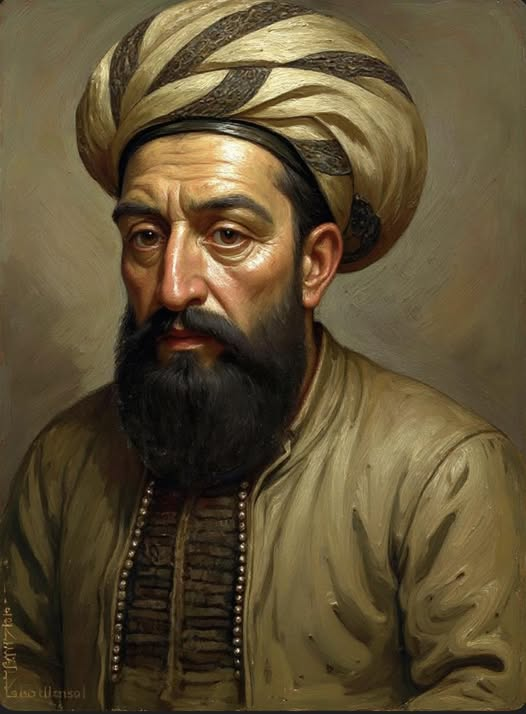
Zaman Shah Durrani, the third king of the Durrani Empire in Afghanistan | Image Source: Facebook
As per his vision, with Shah’s assistance, he could trigger a massive invasion of Bharat that would overturn the existing political order. His strategy was that when the Afghan forces led by Zaman Shah would invade Bharat from the north, Tipu Sultan would simultaneously attack from the south with his Mysorean army. If successful, this coordinated effort could potentially bring the entire subcontinent under Tipu’s control.
Thus, he began approaching the Durrani ruler in 1796, writing a series of letters and sending two emissaries, Mir Habibullah and Muhammad Reza (also referred to as Mir Reza Ali), to the Afghan ruler’s court. The ambassadors travelled by sea, reaching Kandahar before proceeding toward Kabul, where they intended to formally present Tipu’s proposals to Zaman Shah. Tipu Sultan did not send the emissaries empty-handed — they carried five lakh rupees and valuable gifts as presents for the Afghan ruler in order to secure his goodwill and cooperation. Furthermore, Tipu Sultan also promised enormous financial incentives. According to historical accounts, he pledged to pay three crores of rupees as peshkash and promised to cover the expenses of 20,000 Afghan cavalry if Zaman Shah agreed to invade Bharat.
Tipu Sultan did not merely entice him. He also attempted to paint a picture of why he needed Zaman Shah’s assistance by describing the Hindus as “kafirs” and framing the invasion in explicitly religious terms. In a letter to Zaman Shah, dated February 5, 1797, Tipu openly declared his intention to wage a holy war. Addressing the Afghan ruler, he wrote: “Your Majesty must doubtless have been informed that my exalted ambition is to wage a Holy War…”
He also shared a detailed military plan. One option he presented was that Zaman Shah should send a trusted noble to Delhi to replace the Mughal emperor, who had been weakened, and take control of northern Bharat. The second option suggested by him was even more direct. He suggested that Zaman Shah could himself personally lead the invasion into Bharat and drive the Marathas out of Delhi, after which the combined Afghan and Mysorean forces would crush Maratha power in the Deccan. Thus, the letter reveals that Tipu Sultan was not merely seeking military cooperation but was instead attempting to mobilize a broader religious coalition to invade Bharat.
Zaman Shah Invades Bharat, Targets Sikhs in Lahore
Influenced by Tipu Sultan, Zaman Shah eventually launched his campaigns toward Bharat in the late 1790s. His first campaign began in November 1796, when he marched into Punjab with Afghan forces. By January 1797, he had successfully captured Lahore without major resistance. Meanwhile, the Sikh chiefs strategically withdrew from the city and regrouped at Amritsar, where they prepared to defend their sacred center.
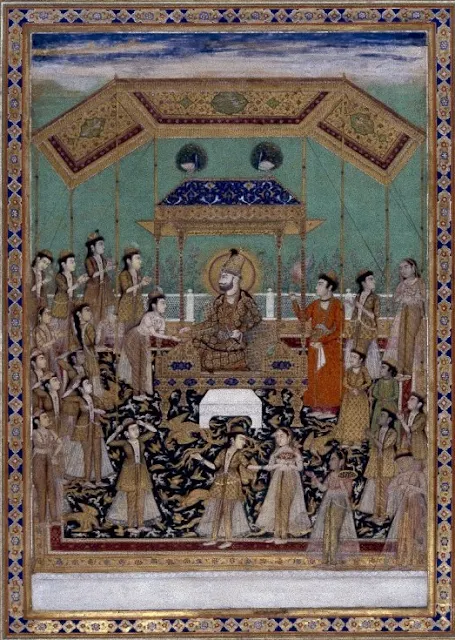
Zaman Shah Durrani in Lahore | Image Source: British Museum
As Zaman Shah advanced towards Amritsar, the Afghan forces encountered strong resistance. Sikh forces confronted him roughly 10 kilometers from the city. At the same time, intelligence reports from Afghanistan warned him of a possible Persian threat against his homeland. Faced with these complications, Zaman Shah abandoned the campaign and returned to Afghanistan to deal with internal threats. Seeing this as an opportunity, the Sikhs quickly moved to regain control over Lahore, recapturing it after the Afghan withdrawal, and defeating and killing the governor that Zaman Shah had left behind.
In 1798, Zaman Shah launched his second campaign to Bharat. He attempted to capture Lahore once again, but this time Sikhs employed effective guerrilla tactics, destroying supply routes and harassing Afghan forces. They devastated the countryside around the Afghan camp, cutting off food and reinforcements. Unable to maintain his lines of communication with Kabul, Zaman Shah eventually withdrew once again in January 1799.
In 1800, he launched a third campaign against Bharat, but it never progressed as internal power struggles within Afghanistan forced Zaman Shah to abandon the campaign entirely, bringing his ambitions of conquering Bharat to an end.
Re-Examining the Narrative: Was Tipu Sultan Truly a “Freedom Fighter”?
Tipu Sultan’s correspondence with Zaman Shah raises a tough question: If Tipu Sultan was truly fighting for Bharat’s freedom, as our textbooks suggest, why did he invite a foreign ruler to invade the nation? This episode forces us to reconsider Tipu Sultan’s portrayal as an “anti-colonial hero”. Instead, it suggests that he was a far more complex and controversial figure who was willing to invite foreign armies into Bharat and encourage them to wage war across the subcontinent, all owing to power hunger.