Raja Harishchandra Film: When No Women Were Ready to Play a Female Role, Know How Film Was Made

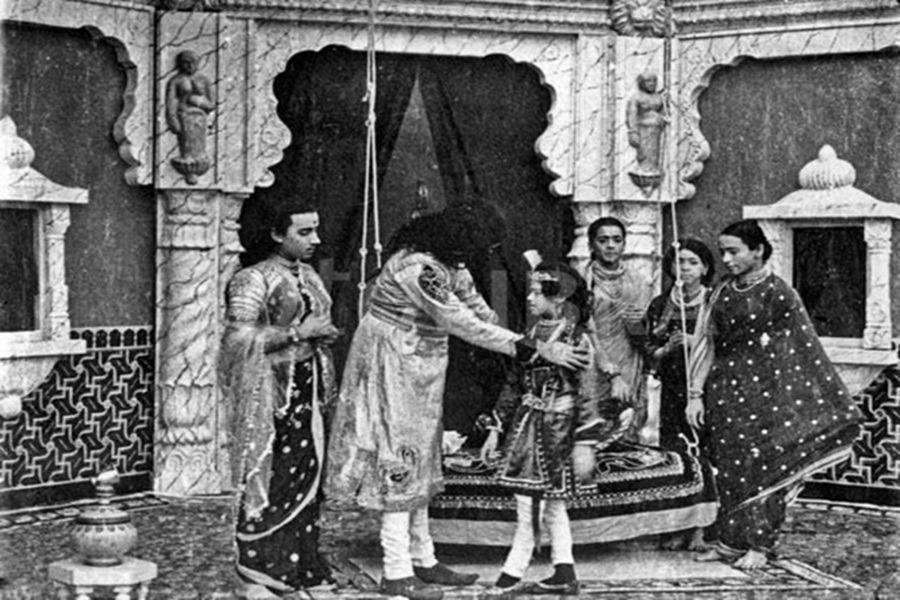
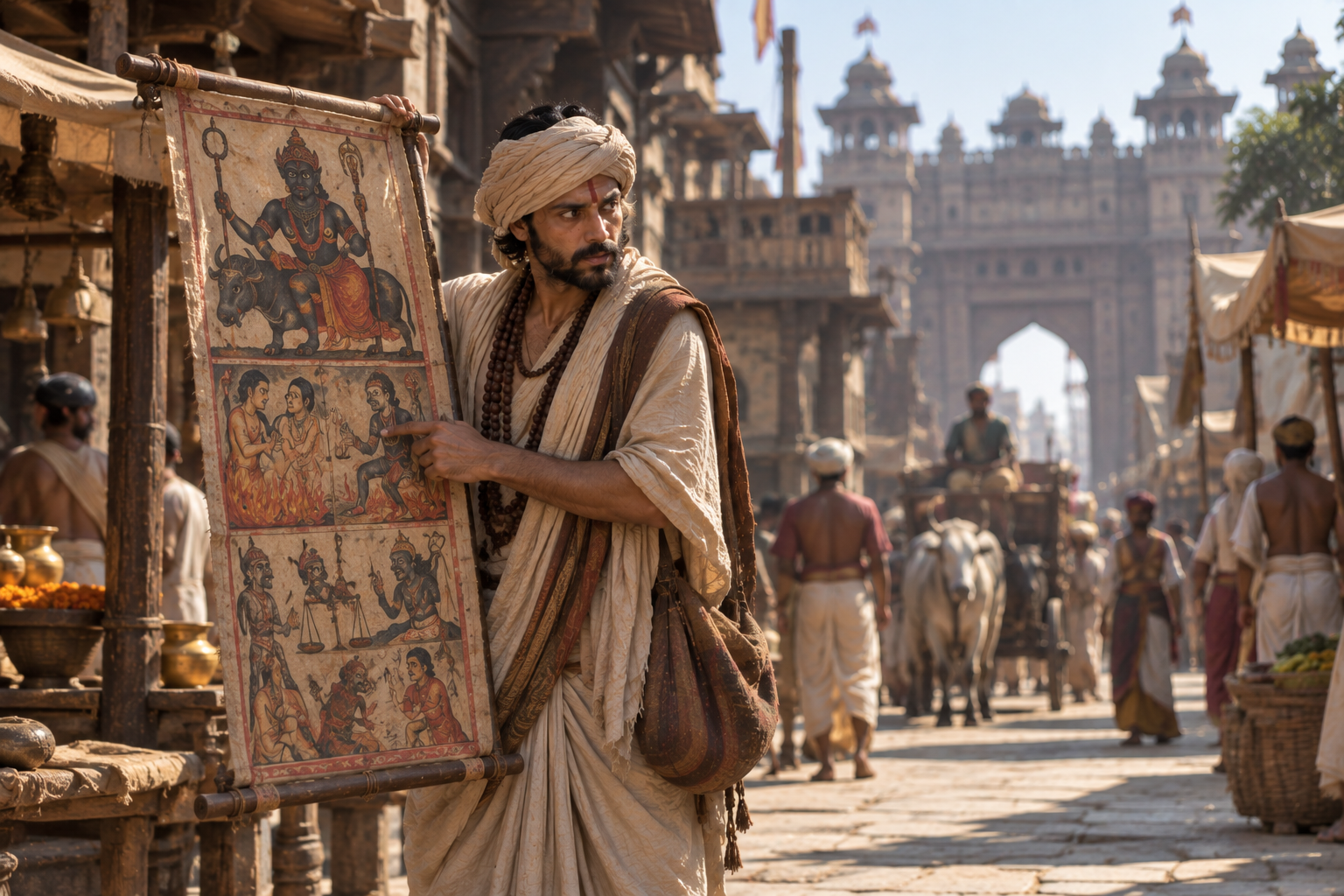
A visual from Raja Harishchandra’s film | Image Source: News 18
At the beginning of Indian cinema, when Dadasaheb Phalke made India’s first full-length film, “Raja Harishchandra,” in 1913, the social conditions of that time created a unique challenge. The role of Queen Taramati, the film’s main female character, could not be played by a woman because no woman was willing to act. In that era, working in films or theater was considered equivalent to prostituting. Social taboos, the custom of purdah, conservative thinking, and the fear of bringing shame to the family kept women completely away from the screen of the theatre. Phalke placed newspaper advertisements and contacted dancing girls and sex workers, but all his efforts were in vain. A few sex workers came for auditions, but they were not suitable for the role. One was even selected, but her owner later refused.
In the middle of this deep disappointment, Phalke noticed a cook at a restaurant named Anna Salunke. His full name was Anna Hari Salunke, who worked as a waiter or cook at a small restaurant on Grant Road. Their monthly salary was only Rs. 10. When Phalke went there to drink tea, he noticed a delicate build, slender hands, and feminine grace in Anna. He immediately understood that this young man could be suitable for the role of Taramati. Phalke explained the role to him and offered him a monthly salary of Rs. 15 to tempt him for the role. At first, Anna was hesitant, but Phalke’s repeated persuasion and financial incentive reaped fruit. The biggest problem was the moustache. Anna and the other male actors did not want to shave their moustaches because, in those days, according to Hindu custom, keeping a moustache before the father’s death was considered a kind of religious duty. Phalke convinced both them and their fathers. In the end, Anna shaved his moustache, wore a sari, applied makeup, and became Taramati. That’s how the first “heroine” of Indian cinema was played by a male cook.
Behind this decision lay the social reality of Bombay in 1913. Even in the theater, female roles were played by men. In his autobiography, Phalke wrote that he asked the actors to tell their families that they worked in the “Harishchandra Factory,” so that their relatives would not be suspicious. The shooting took place in the jungles of Vangani and Trimbakeshwar, where the male actors also learned tasks traditionally associated with women, such as sifting rice and kneading dough, so that the scenes would look natural. Anna Salunke’s role of Taramati was so convincing that audiences never imagined it was a man. Because it was a silent film, there was no problem with the voice. Through intertitles and facial expressions alone, he beautifully portrayed the sorrow of a wife, a mother’s affection, and the dignity of a queen. His role was crucial to the film’s success because Taramati’s story would have felt incomplete without emotional depth.
After about Rs. 15,000 in cost and 6 months and 27 days of relentless effort, the shooting of “Raja Harishchandra” was completed, and on April 21, 1913, a special screening was held at the Olympia Theatre in Bombay for selected people who had a good understanding of films. After receiving praise at this screening, Dadasaheb decided to release the film to the public.
May 3, 1913, became that historic day when India’s first film, “Raja Harishchandra,” was released at the Coronation Cinema Hall in Bombay. The film became a superhit, and with that, this date and Dadasaheb Phalke’s name were written into the pages of history.
Anna Salunke’s role was not just a coincidence; it became a symbol of the beginning of Indian cinema. After the film’s release, “Raja Harishchandra” had houseful shows in Bombay and became a topic of discussion across the country. People were mesmerized by seeing a story on screen. Anna became famous overnight. Later, in Phalke’s 1917 film “Lanka Dahan,” he played both Rama and Sita, which became the first double role in Indian cinema. His build had become more muscular by then, yet he still appeared convincing as Sita in a sari. He also played female roles again in “Satyavadi Raja Harishchandra” (1917) and acted in films like “Satyanarayan” and “Buddha Dev.” Overall, Anna acted from 1913 to 1931 for about eighteen years and later became a cinematographer. His filmography included films such as “Ahiravan Mahiravan Vadh,” “Pandav Vanvas,” and “Shishupal Vadh.”
This event reveals the gender politics of that era. While women were confined to the walls of the home, men had to play female roles. Phalke’s effort not only gave birth to cinema but also challenged the boundaries of gender discrimination. Artists like Anna Salunke proved that acting is beyond gender. However, a few years later, the situation began to change. In Phalke’s next film, “Mohini Bhasmasur,” Durga Bai Kamat became the first real female actress, and her daughter Kamla Bai Gokhale became the first child artist. But Anna Salunke’s legacy will always be remembered. In 1944, he died at the age of just 47, but he remains immortal in Indian cinema’s history as the “first heroine.”
Today, when we look at the freedom and variety of roles available to women in Bollywood, Anna Salunke’s story reminds us of the struggle that laid the foundation of this industry. No woman was ready, so a cook wore a sari, applied makeup, and made history. Phalke had said that after returning from England, he dreamed of bringing the gods and goddesses of India to the screen. The contribution of an unsung hero like Anna Salunke in making that dream come true is priceless.
Dadasaheb Phalke (Dhundiraj Govind Phalke), born on April 30, 1870, in Nashik, Maharashtra, is called the ‘Father of Indian Cinema’. He produced, directed, and wrote India’s first feature film, “Raja Harishchandra.” He is considered the founder of the Indian film industry and the man who laid the foundation of Indian cinema. The Dadasaheb Phalke Award, the biggest award in Indian films, was established in 1969, and interestingly, the highest film honor named after Dadasaheb Phalke, who had failed to persuade a woman to act in his first film, was first awarded to a woman, Devika Rani.