Battle of Burki 1965: How 4 Sikh Battalion Crippled Pakistan's Defences Near Lahore
Following Pakistan's infiltration into Jammu & Kashmir under Operation Gibraltar, India launched a bold offensive towards Lahore in 1965. The center of this mission was the village of 'Burki'

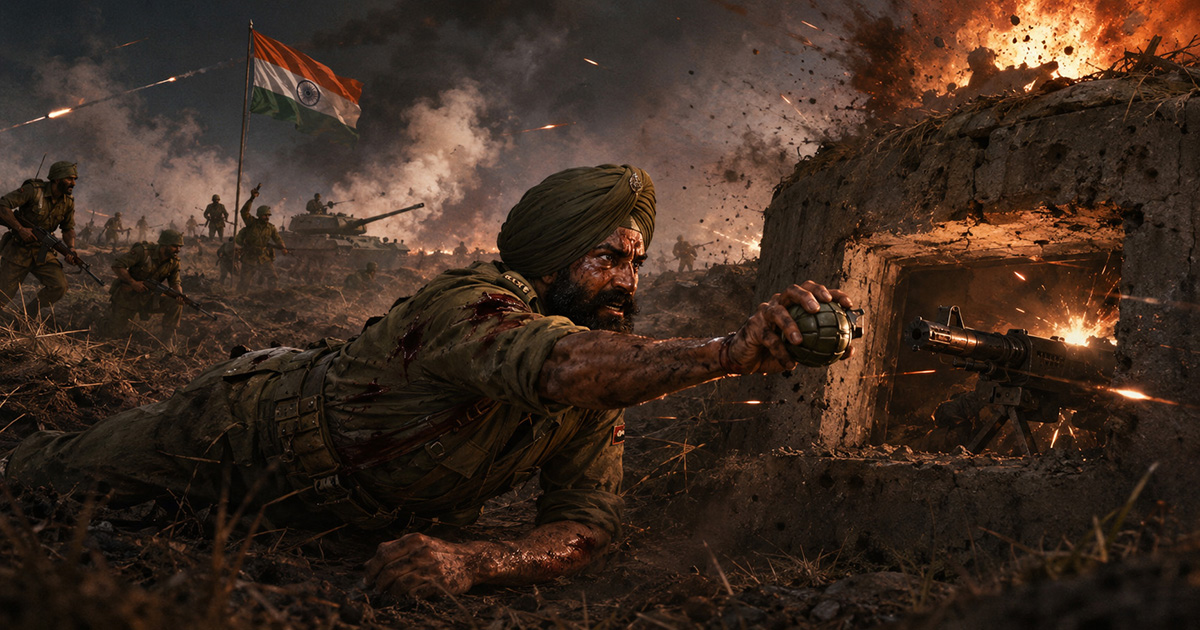
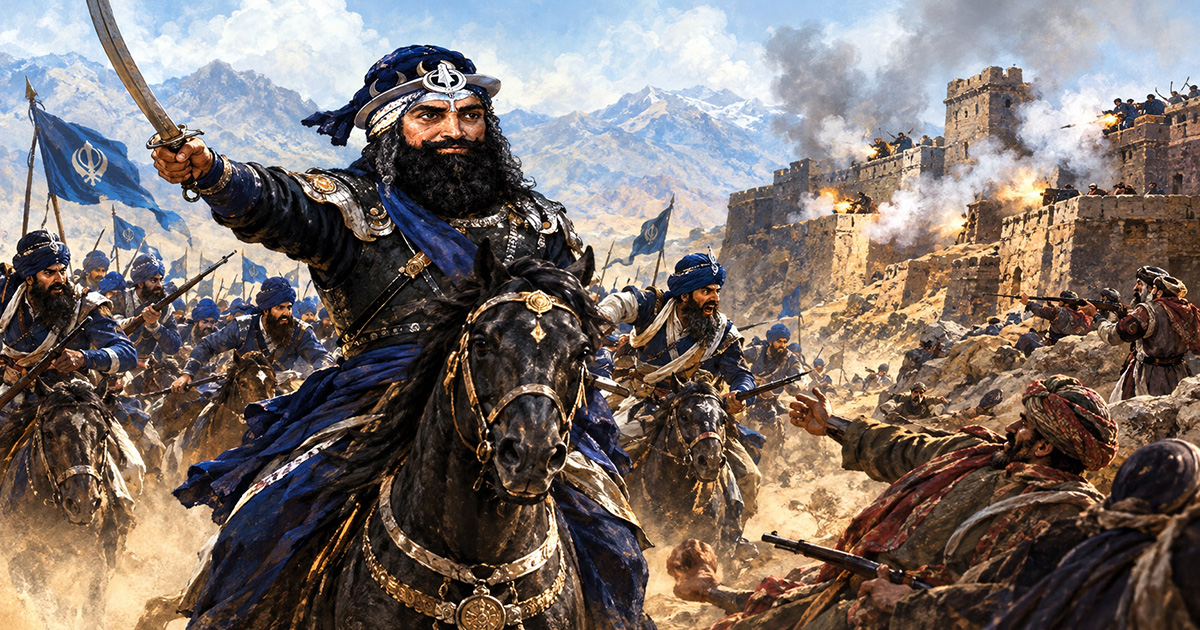
Subedar Ajit Singh's bravery in the Battle of Burki | This image is AI-generated
Following Pakistan's infiltration into Jammu & Kashmir under Operation Gibraltar, India launched a bold offensive towards Lahore in 1965. The center of this mission was the village of 'Burki', located near the Indian border in Punjab and to the southeast of Lahore. This village was directly connected to Lahore city via a bridge over the Ichogil Canal. Therefore, capturing this village, which was considered the main defensive shield of Lahore, meant crippling Pakistan's defense system. The main responsibility of this mission was entrusted to the 4th Sikh Battalion under the 7th Infantry Division, led by Lieutenant Colonel Anant Singh. His unit was also provided with effective support from tanks and artillery. This operation commenced on September 6, 1965, at 4:45 AM.
Within the first hour of the Battle of Burki, the Indian Army captured key positions including Theh Marja, Rakh Hardit Singh, and the village-bound barrier, weakening Pakistan's first defensive line. To advance towards Burki, Indian forces first had to secure Barka Kalan and Barka Khurd, from where Pakistani troops were firing. The 9 Madras Battalion captured Barka Kalan on September 7, 1965, while the 16 Punjab Battalion swiftly captured Barka Khurd on September 9th, clearing the final approach to Burki.
Now the final objective was the village of Burki. Situated on the east bank of the Ichhogil Canal, this village was maintained under extremely strong Pakistani fortification. With concrete pillboxes, machine gun nests, artillery shelling, and tank protection, capturing Burki was not easy. Therefore, the 65 Infantry Brigade planned to complete this operation in two phases: In the first phase, the 4 Sikh Battalion was to capture Burki village, while in the second phase, the 16 Punjab was to secure the east bank of the Ichhogil Canal and put an end to the resistance of the Pakistani brigade.
On the night of September 10, before the assault, Indian artillery heavily bombarded Pakistani positions for about half an hour. Subsequently, the strength of the enemy was weakened by accurate firing on the defensive setup of Burki village and the east bank of the canal. At the same time, Indian tanks also moved forward to provide effective fire support to the infantry. In the moonlit night, the 4th Sikh Battalion advanced rapidly towards Burki. However, upon reaching near the village, a strong machine-gun post halted the progress of the Indian soldiers. Advancing further was impossible without destroying this post.
Recognizing that the destruction of this machine-gun post was essential for the success of the attack, this dangerous responsibility was entrusted to Subedar Ajit Singh of the 4th Sikh Battalion. Without a moment's delay and displaying exceptional bravery, he advanced toward the enemy post. Disregarding his own life, he single-handedly faced the heavy machine-gun fire and kept moving forward. Even after being hit in the chest by machine-gun bullets, he did not retreat. He crawled closer to the bunker and, by lobbing a grenade through a small loophole in it, completely destroyed the post.
Due to this incomparable bravery of Subedar Ajit Singh, the path for the Indian army was cleared. Inspired by his courage, the jawans of 4 Sikh launched a fierce assault and breached the Pakistani defense lines. At around 9:10 PM (2110 hours), breaking down all resistance at Burki village, the Indian army achieved victory. Many Pakistani soldiers hiding in pillboxes were killed, while others were taken prisoner. This victory opened up the path for the Indian army up to the Ichhogil Canal and dealt a major blow to Lahore's defense system.
This battle of Burki became a shining symbol of the 4 Sikh battalion's indomitable courage, excellent leadership, and tactical prowess. In honor of this historic victory, the battalion was awarded various medals and honors. These included one 'Mahavir Chakra', three 'Vir Chakras', three 'Sena Medals', and four 'Mentioned in Despatches'. Along with this, as a recognition of their historic victory, the battalion was awarded the honorary 'Battle Honour' of 'Burki'. This was not just a military award, but an identity of the unparalleled valor of every soldier who fought on that battlefield. Even today, this battle is looked upon as an inspiring example of the courage, leadership, and determination of those brave soldiers to "press on until the last breath.”
.jpg)