Christianity Spread in Nagaland in Name of God Lungkitsungba, Not Jesus: Truth Behind 88% Christian Population

“God Lungkitsungba created us all.” When Christian missionaries first carried out conversions in Nagaland, the name of Jesus Christ was not even mentioned. The conversions were done in the name of the Nagas’ supreme deity, Lungkitsungba.
Church meant “the temple of Yesu”; the pastor was called “Papa ji”; Jingle Bells turned into something like “Yesu di balle-balle” – what is happening today in Punjab is exactly what was done in Nagaland in 1872, 153 years ago.
Just as missionaries today enter Punjabi society wrapped in Punjabi cultural forms, early conversions in Nagaland followed the same pattern: Local beliefs and traditions were carefully retained. Look at this figure: A century and a half after the first Naga conversion, the 2011 Census shows that 88% of Nagaland’s population is Christian. In less than 140 years, the number went from a single Christian to 1,739,651 people now under the Church’s fold.
If Punjab is not to drift toward an 88% Christian demographic in the flood of “Mera Yeshu Yeshu” memes, it is necessary to understand the Nagaland story.
On 10 November 1872, the first nine people were converted in Nagaland. The American missionary Edward Winter Clark baptised them in a local pond. He had no Bible with him, and the name of Jesus was not mentioned. Even the hymn was sung in the name of the Naga god Lungkitsungba. The strategy was deliberate: The new converts should feel neither cut off from society nor alienated from their customs.
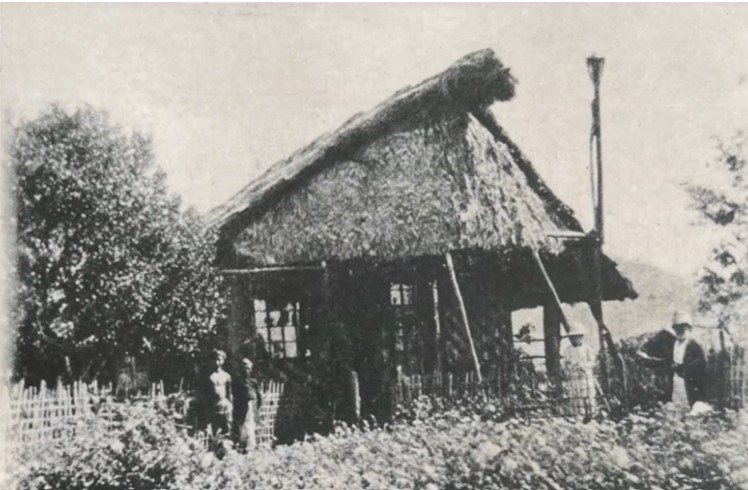
The plan worked. Forty-two days later, on 22 December 1872, fifteen more Nagas were converted. On the same day, Nagaland’s first church was established. Not a European-style building, but a thatched hut – so that it would not appear foreign to Naga life.
This first mission centre doubled as Nagaland’s first church. Despite repeating it, it must be said again: Christianity was spreading in Nagaland, but the Bible had still not arrived. This too was strategic. The missionaries did not want to impose anything that felt “foreign.” The Bible came only in 1892 — twenty years after the first conversions — and even then, in translated Naga languages.
From an Assam Printing Press to Mass Conversion
The real story of Christianity in Nagaland begins with Pastor E. W. Clark. He had come to supervise work at a printing press in Sivasagar, Assam, but conversion became his main objective. His targets were the Nagas.
Naga traders often came down from the hills to the Assamese plains to sell their goods in markets near temples. But how to communicate with them? Language was a barrier. Clark found help in a local Assamese man.
Clark had already converted one Assamese, Godhula Barua, effectively turning him into an intermediary. Barua himself was baptised in the pond of the Shiva Dol temple in Sivasagar. Barua then persuaded a Naga man named Supongmeren. Clark baptised Supongmeren in the same Sivasagar pond and converted him.
Supongmeren became the bridge through which Clark played the entire conversion game in Nagaland. Earlier missionaries had repeatedly failed due to strong resistance from Naga society. Learning from their mistakes, Clark worked slowly, avoided abrupt changes, and continued conversions without provoking cultural rupture. He combined local converts with his printing experience and turned both into tools.
The Molung Printing Press: Christianity’s Weapon in Nagaland
“God Lungkitsungba created us all.”
This line opened the article. Read it again. Remember that hymns for new Naga Christians were sung in Lungkitsungba’s name.
This was the core strategy through which Clark established the Molung Printing Press in Nagaland – and through its printed pages, almost erased Naga social structure and culture. The 88% Christian population stands as proof.
The Molung Printing Press was set up in 1884 in Molungyimsen village, twelve years after the first conversions. Until then, everything continued in the name of Lungkitsungba – prayers, hymns, even the conversion process. Surprisingly, the first publications were not the Bible.
In 1884 itself, the teachings of Jesus were translated into the local Ao language. Four years later, they appeared in Lotha and Angami. The Bible came only in 1892, again in local languages. An Ao dictionary was published in 1911.
The chronology of Molung’s publications makes the intention clear: this was never about Naga development. The aim was to gradually detach new converts from their traditions and slowly absorb them into Christianity. If development were the goal, a state that is 88% Christian would not rank at the bottom in unemployment, GDP, and per capita income, as NITI Aayog data shows.
Another striking fact: even after twenty years of converting people in Lungkitsungba’s name, the term “Jesus Christ” was still not introduced. Since the Nagas were culturally closer to Krishna and Vishnu, when a new divine name was finally needed, they coined “Ishu Khrista” instead of Jesus Christ.
Asia’s Largest Church
Do you know where Asia’s largest church is – Mumbai or Manila? Hong Kong, Kerala, Bangkok? All wrong. The correct answer is Nagaland.
Yes. The same state that ranks at the bottom in development indicators has Asia’s largest church in Zunheboto: the Sumi Baptist Church.
Now connect the dots:
- Remember the image of the first church – a thatched hut.
- Look at today’s largest church in Asia.
- Recall the claim that missionaries came to bring civilisation and education.
- And remember that NITI Aayog still ranks Nagaland as underdeveloped.
Put these four together. The real reason Christian missionaries came to Nagaland becomes clear. And so does the future trajectory of what is unfolding in Punjab today.