Operation Trident: How India Destroyed Karachi and Answered Pakistan's Operation Somnath?
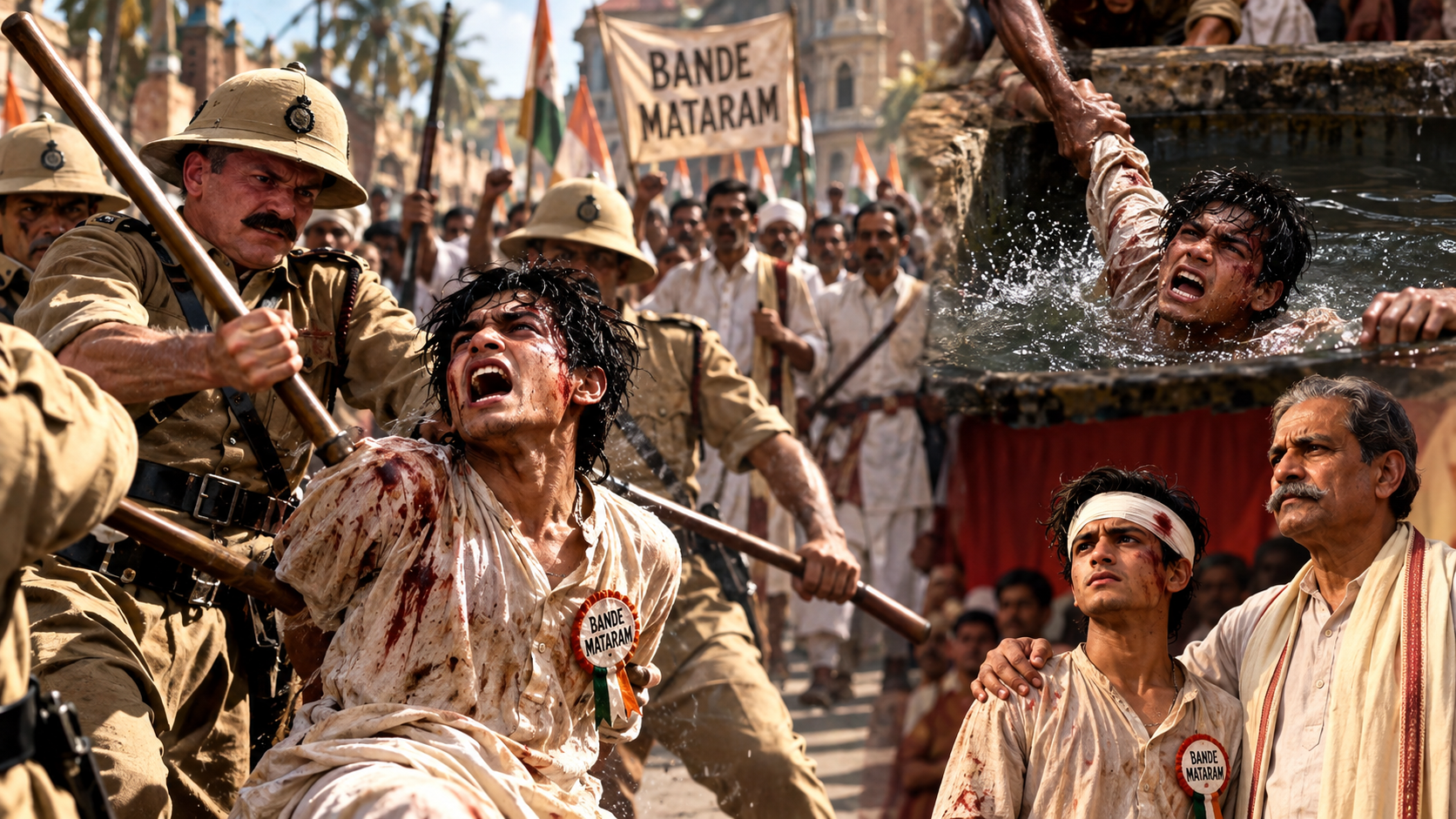
The turning point came on September 7, 1965, during Operation Somnath, also known as Operation Dwarka, when Pakistani warships bombarded the sacred town of Dwarka.

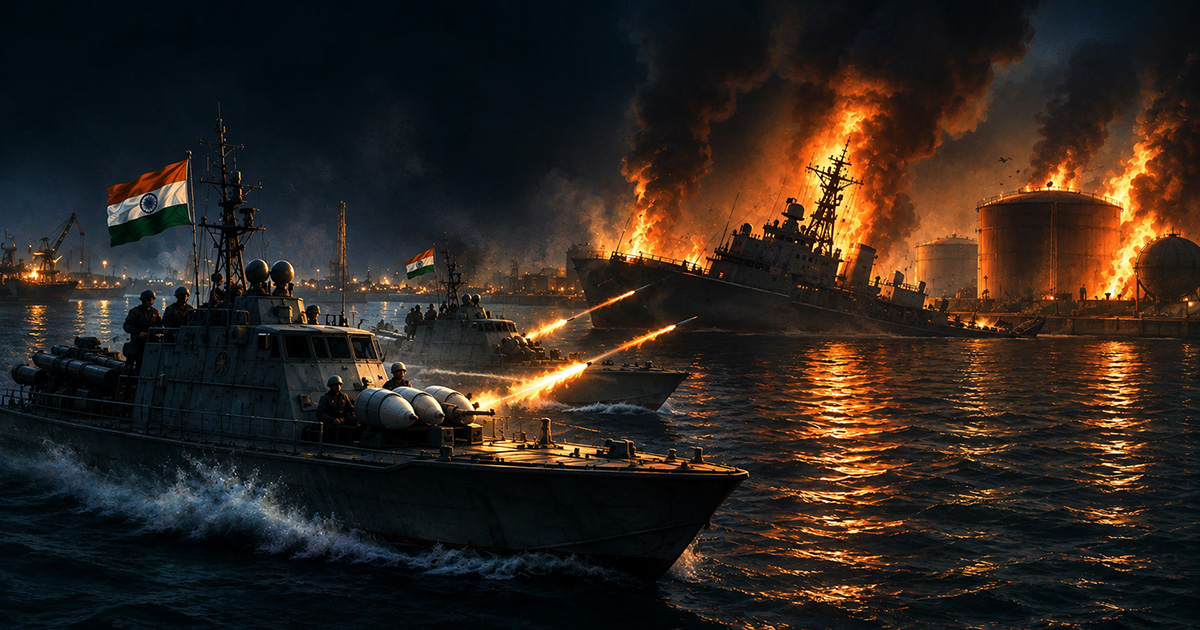
India's Operation Trident of 1971 | This image is AI-generated
On the night of December 4, 1971, the Arabian Sea witnessed one of the boldest naval operations in modern military history. In just a few hours, the Indian Navy penetrated Pakistan's heavily defended waters, destroyed enemy warships, and shattered the confidence of the Pakistan Navy. The mission was called Operation Trident, but this victory had not been planned in a single night. It had been six years in the making. The seed of Operation Trident had been planted six years earlier during Operation Somnath.
The turning point came on September 7, 1965, during Operation Somnath, also known as Operation Dwarka, when Pakistani warships bombarded the sacred town of Dwarka, claiming they were targeting an Indian radar. Pakistan celebrated the raid as a success, but the reality was very different. After firing around 50 naval shells in a bombardment lasting barely four to five minutes, the radar remained operational, the Dwarkadhish Temple was left unharmed, and the damage was limited to a railway guest house, a railway engine, and a few nearby structures. The shelling also killed a cow, an incident that deeply hurt local religious sentiments. Militarily, the raid achieved little, but it was intended to send a psychological message by striking one of India's most sacred coastal towns. It was here after that the Indian troops, under Admiral S. M. Nanda, the Chief of the Naval Staff that India started planning a strike back.
A bold strategist, Nanda believed that wars were won not by reacting to the enemy, but by staying one step ahead of it. During a crucial planning meeting at Naval Headquarters, senior defense officials warned him, "Admiral, if we launch an open attack on Karachi, Pakistan will use its superior submarines and aircraft to block our trade and destroy our ports." The risks were too high, and Nanda remained firm. He replied, "I was born in Karachi. I know its waters, I know its ports, and if war breaks out, I will bomb Karachi. If we are not going to attack, what is the Navy for?" His confidence won the support of the higher authorities. Nanda spent the next six years in preparation. Under his leadership, the Indian Navy acquired Soviet-built Vidyut-class (Osa-I) missile boats armed with long-range Styx missiles, intensified training for high-speed night attacks, and developed innovative tactics to tow the short-range missile boats closer to enemy waters before launching them into combat. He also shifted the Navy's doctrine from coastal defence to offensive missile warfare, determined that if Pakistan ever challenged India at sea again, the battle would end not on India's coast, but at Pakistan's own naval headquarters.
That opportunity came in December 1971 during the India-Pakistan war. Nanda chose Karachi, Pakistan's only major naval base and the lifeline of its maritime trade. Instead of launching a conventional assault, he exploited Pakistan's greatest weakness. Knowing the Pakistan Air Force lacked an effective capability to detect a strike in complete darkness, he planned the attack for midnight; the tiny Indian Vidyut-class (Osa-I) missile boats silently waited hundreds of miles out at sea, hidden among merchant shipping. As darkness fell, they activated their engines, sliced through the 150-mile barrier, and charged toward Karachi. Indian operators even spoke broken Russian over the radio to confuse Pakistani interceptors into believing they were Soviet merchant vessels.
The Indian missile boats, led by Lt. Commander Babru Bhan Yadav aboard INS Nipat, entered Pakistan and unleashed a devastating attack. Within minutes, Styx missiles struck enemy warships, ammunition vessels were destroyed, and the Keamari oil storage tanks erupted into flames, lighting up Karachi's skyline. Among the ships sunk was PNS Khaibar, the very destroyer that had participated in the bombardment of Dwarka during Operation Somnath in 1965. It was a powerful moment of history coming full circle.
For masterminding the naval campaign that transformed the Indian Navy into an offensive force, Admiral S. M. Nanda was awarded the Padma Vibhushan. For leading the missile boat strike into the heart of Pakistan's naval defences, Lt. Commander Babru Bhan Yadav was awarded the Maha Vir Chakra.
Operation Trident was not simply a successful naval raid. It demonstrated how six years of preparation, strategic thinking, and decisive leadership could turn the memory of humiliation into one of the greatest victories in Indian naval history.