Rao Dulchand Bhati's Battle of Bhatner: The Rajput Ruler Who Resisted Timur in 1398
The fortress of Bhatner (present-day Hanumangarh in Rajasthan) was a significant defensive structure controlling the road from Multan to Delhi.

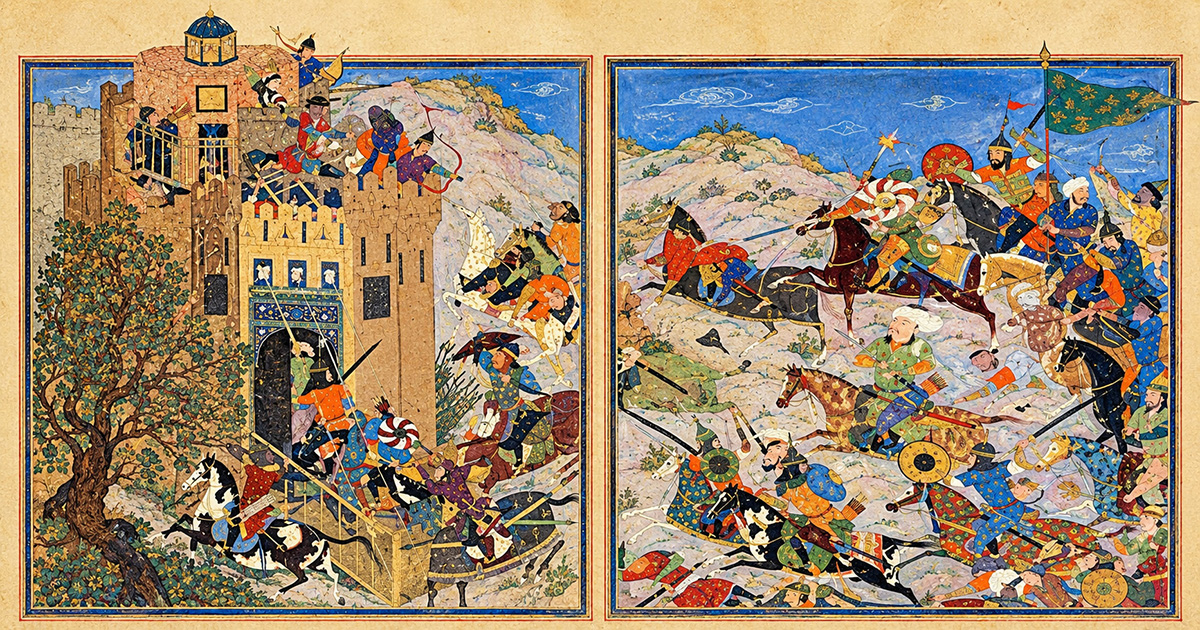
Timur's invasion of Bhatner Fort | Image Source: Wikipedia
During the autumn of 1398, as the Central Asian Islamic warlord Timur invaded the northwest of Bharat, panic arose throughout the region. The news of the approaching army caused the whole country to empty and hide as soon as possible. Many Hindu households from the surrounding villages fled to the fortress of Bhatner, hoping to find safe refuge behind its massive walls.
The fortress of Bhatner (present-day Hanumangarh in Rajasthan) was a significant defensive structure controlling the road from Multan to Delhi. Inside the fortress, there was Rao Dulchand Bhati, a local Bhati Rajput ruler. By the time Timur’s troops appeared at the edge of the fortress, this Bhati Rajput leader had made a decision to resist the invading army. It was not a trivial decision for him since, in the event of his surrender, his entire region would be at the mercy of Timur’s soldiers, and the hundreds of civilians who had taken shelter in the fortress would have been subject to plunder and murder.
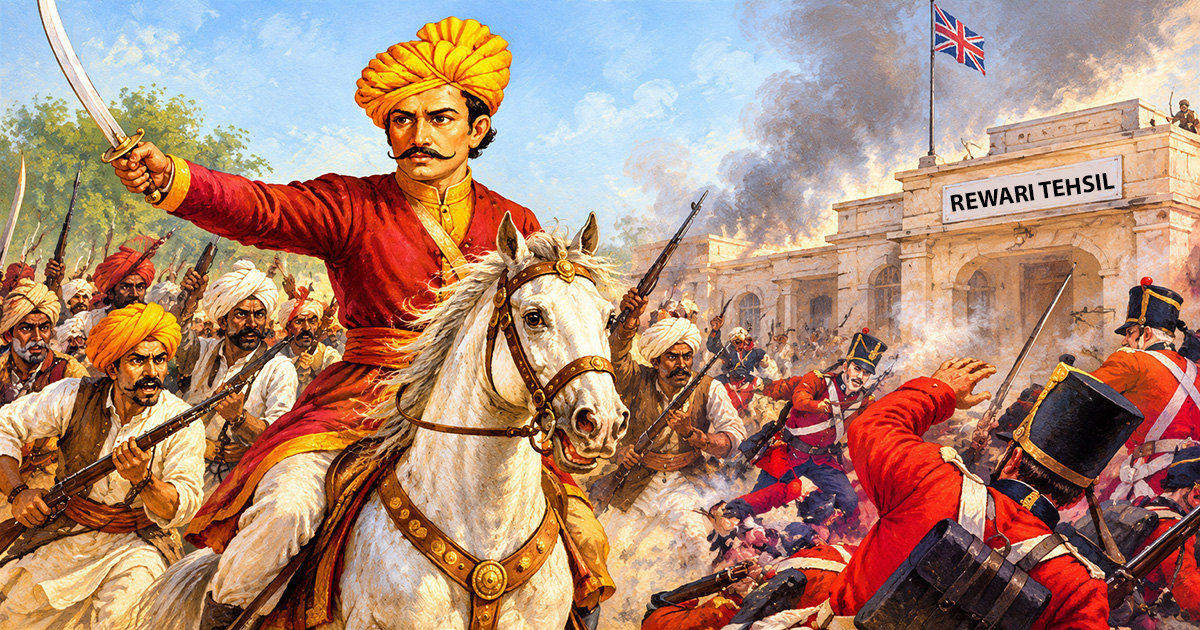
At the beginning of November 1398, Timur's army reached the fortress of Bhatner. Before launching a full-scale assault, the Central Asian conqueror demanded that its defenders surrender. Rao (Rai) Dul Chand Bhati, the Rajput ruler of Bhatner, refused to submit. Instead, he ordered his warriors to defend the fortress, meeting the advancing forces with volleys of arrows from the ramparts.
Timur then laid siege to Bhatner, one of the strongest frontier forts guarding the route from Multan to Delhi. Although his army greatly outnumbered the defenders and possessed experienced siege engineers, the Rajput garrison resisted fiercely. The defenders, supported by many local inhabitants who had taken refuge inside the fort, held out for several days despite repeated assaults, forcing Timur's forces to expend considerable time and effort before breaching the defenses.
On 9 November 1398, Timur's army finally succeeded in storming Bhatner. Once the fortress fell, the invaders carried out widespread plunder and a brutal massacre of its inhabitants. Timurid accounts record that thousands of people were killed after the capture of the fort, making the fall of Bhatner one of the earliest and bloodiest episodes of Timur's invasion of India.
According to local legends and traditions, the Bhati Rajput ruler, as well as many other locals, died as a result of the battle. It is also noteworthy that, according to the chronicle, Timur himself killed more than 10,000 people in the Bhatner fortress based on Timur’s text written in Persian. Timur's invasion of India | Image Source: History Unravelled
Thus, although Rao Dulchand could not protect the city from the bloodthirsty and ruthless Timur, Rao Dulchand became one of the first to resist the Central Asian conqueror. Timur himself acknowledged the bravery of the Bhati Rajput leader and his troops, as Bhatner was a large fortress defending the road to Delhi. To this day, Rao Dulchand is celebrated in the region as a fearless and outstanding leader who resisted the powerful conqueror.