Raman Spectroscopy Explained: How C. V. Raman’s Discovery Became a Global Weapon Against Liquid Explosives

With a massive population of nearly 830 crores, crowded railway stations, busy airports, and huge spiritual gatherings like the Kumbh Mela and Amarnath Yatra, ensuring safety across the world is like walking on a tightrope. When the enemy is hidden in the form of invisible ‘IEDs’ (Improvised Explosive Devices), our bomb squads must stay alert every single second. That is why today, our security forces are not just relying on courage, but are also using high-tech weapons like ‘Raman Spectroscopy’ to fight this invisible threat. Whether it’s an unclaimed bag at a station or chemicals being smuggled illegally, this technology allows officials to test them without even opening or touching them.
But what prompted this “Raman Spectroscopy” technology to come into effect is a 2006 London Heathrow Airport plot, targeting ten airplanes and estimatedly 3000 passengers. It was owing to this massive terrorist plot, mirroring the 9/11 attacks, that the “Raman Spectroscopy” came into effect, which made use of the “Raman Effect” invented by Indian scientist C.V. Raman, to save millions of lives by sniffing out bombs and terror plots worldwide.

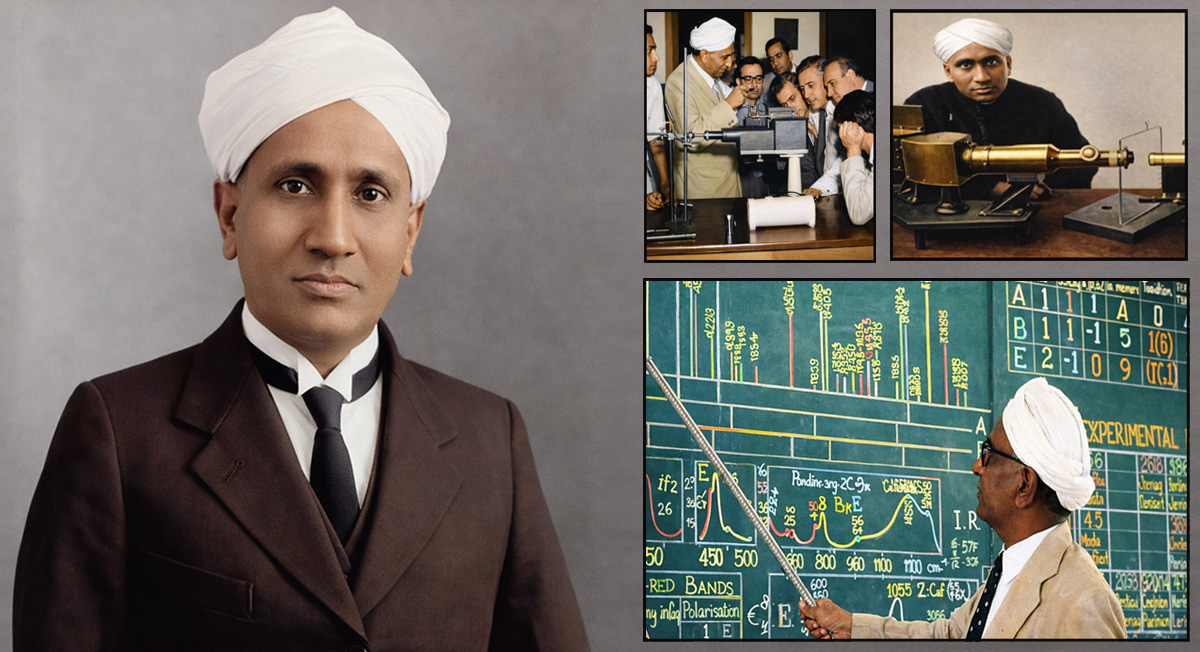
Indian scientist, C.V. Raman
The 2006 Foiling of the London Heathrow Airport Terror Plot
On August 10, 2006, at 4:00 AM, London’s Heathrow Airport was filled with thousands of travelers. Newlywed couples, elderly citizens, and intellectuals — all waiting for their flights to the United States. While everything seemed routine, a horrific conspiracy was brewing behind the scenes. Seven terrorists, including Al Qaeda terrorist Ali Abdullah Ahmed, as the mastermind, had a deadly goal of blowing up 10 aircraft in mid-air on August 10. Their plan of action, which the investigators believe mirrored the 9/11 terror attack on the US, was chillingly deadly. They chose soft drink bottles for their mission, and without breaking the seals, used hypodermic needles to drain the beverage and replace it with a liquid bomb, Hexamethylene Triperoxide Diamine (HMTD). This substance, which appears as a harmless liquid to standard X-ray machines, was to vaporize nearly 3,000 passengers mid-flight, turning the sky into a graveyard.
However, this deadly terrorist plot, aimed at 10 airplanes carrying nearly 3000 passengers, was foiled in a covert operation executed by British intelligence agencies (MI5), which had already placed this cell under surveillance. These intelligence officers were able to foil the plot because they were already surveilling the terrorists involved using hidden cameras and microphones. The night before, on August 9, the British police arrested 24 suspects on August 9, 2006, in London, Birmingham, and High Wycombe, thwarting a plan to detonate liquid explosives. The plot involved smuggling liquid explosives disguised as soft drinks or soda bottles.
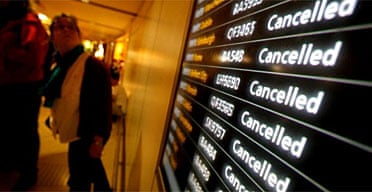
Multiple flights were canceled after the foiling of the incident at London Heathrow Airport
Raman Spectroscopy to Detonate Liquid Explosives
Following this massive, deadly plot, a need for a technology to detect such bombs came to the fore. That’s when Raman Spectroscopy, using C.V. Raman’s Raman Effect, came into play. The device sends a laser light of a specific wavelength towards an unknown material. This light can pass through plastic covers or glass bottles. When the light hits the molecules of the material, a process called ‘Raman Scatter’ occurs. In simple terms, the light changes its nature based on how the molecules inside are vibrating. This allows us to know what is inside a container without ever opening it.
Just like every human has a unique fingerprint, every chemical (like TNT or Hydrogen Peroxide) has its own “Spectral Fingerprint.” These atomic bonds never change. The Raman device identifies this unique pattern and can tell exactly what the substance is—whether it’s a liquid, gel, or powder—with high accuracy.
How is Raman Spectroscopy Used in Present Scenarios?
The Raman technology continues to help investigators. By analyzing tiny fragments left at the scene, experts can determine what chemicals were used and where the bomb might have been made. For example, during the 2010 Pune German Bakery blast, forensic teams used Raman analyzers to study microscopic residues. They confirmed the use of an RDX and Ammonium Nitrate mix, which helped them track down the criminal network.
It is also used to detect liquid explosives in massive spiritual gatherings such as Megh Mela, Char Dham, Kumbh Mela, and Amarnath Yatra, which witness a massive footfall of pilgrims from around the world.
More than a century ago, when C. V. Raman observed a subtle change in light passing through matter, which we called the “Raman Effect”, he could not have imagined that his discovery would one day stand between humanity and mass murder. Yet today, Raman Spectroscopy, which uses the Raman Effect, has quietly become one of the world’s most powerful counter-terror tools—detecting invisible liquid bombs, safeguarding airports, railway stations, and protecting millions at crowded pilgrimages and public gatherings.
.png)