The Untold Story of Ram Raghoba Rane: The Hero Who Cleared Minefields to Save Rajouri
In 1948, during one of the darkest chapters after independence, Rajouri and large parts of Jammu and Kashmir had fallen to Pakistani forces.

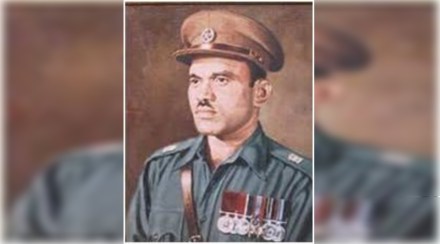
High in the rugged mountains of Jammu and Kashmir, a quiet yet powerful story still echoes—a saga of unimaginable courage, razor‑sharp intelligence, and unshakable resolve. This is the story of Lieutenant Ram Raghoba Rane, PVC, the Indian soldier who, under a storm of bullets, deadly mines, and the ever‑present shadow of death, carved a path forward so that Rajouri could be freed from the grip of the Pakistani army.
In 1948, during one of the darkest chapters after independence, Rajouri and large parts of Jammu and Kashmir had fallen to Pakistani forces. The enemy had pushed deep into Indian territory, occupying villages and terrorizing the people. In this desperate hour, a fearless young officer, Lieutenant Ram Raghoba Rane, stepped forward with his men, determined to push the invaders back. The mission was not just another operation; it was a race against time, because every minute of delay meant more lives lost.
After the Partition of India in 1947, Pakistan eyed Jammu and Kashmir with growing ambition. On October 22, 1947, Pakistani soldiers, disguised as tribesmen, attacked and seized a vast stretch of the state, including the Poonch region. Once in control, they began a brutal campaign of killings and destruction, while the Indian Army still struggled to reach the area.
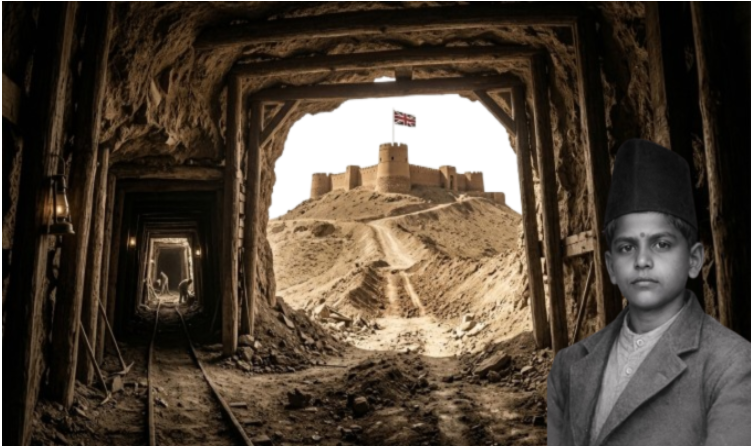
The main obstacle standing in the way of relief was Rajouri itself. The road from Nowshera to Rajouri had been systematically destroyed by the enemy. Mines were buried across every possible route, trees were felled to block the roads, and the high ridges were manned by Pakistani “jihadi” troops who raked the valley with machine‑gun fire. To advance seemed almost impossible.
On April 8, 1948, the Indian government assigned a critical task to Lieutenant Ram Raghoba Rane of the Bombay Engineers (Sappers), the mine‑clearing and road‑opening operation. Rane had to make the road from Nowshera to Rajouri passable, so that troops and tanks could move forward and push the enemy back.
The very first day of the operation proved how brutal the enemy was. As Lieutenant Rane and his team got to work, the Pakistani forces on the high ridges opened mortar and machine‑gun fire. Two of Rane’s comrades were killed. Rane himself was seriously wounded, yet he did not allow his men to know of his injury. With blood soaking his clothes, he reorganized his team, tightened his resolve, and kept working.
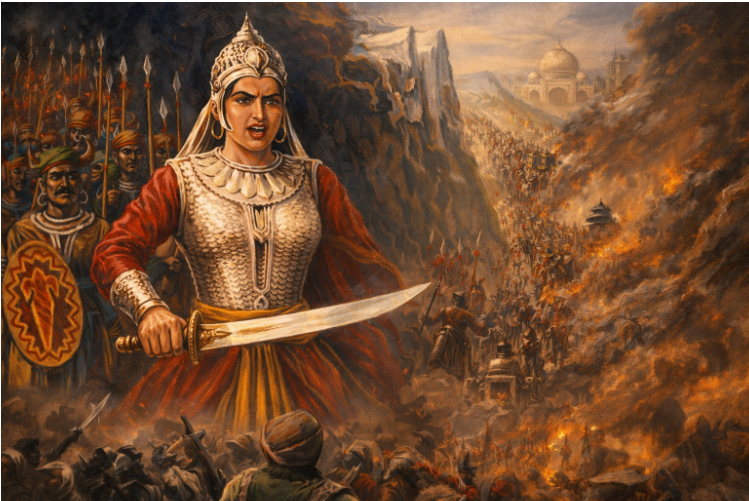
Rane’s method was both daring and ingenious. He used the tanks as cover, darting forward to clear the mines while his sappers followed behind. He would creep along the ground, locate each mine by touch, and then defuse or detonate it under fire. A single slip could have blown him—and his entire team—into oblivion. Yet, instead of fear, his face showed only quiet determination and the fire of courage.
From 8 to 11 April 1948, for four days, Lieutenant Rane and his men worked day and night without rest. They cleared hundreds of mines, blasted away tree‑blockades, and built makeshift paths over broken bridges and rocky terrain. Where no road existed, they created a new one. They even had to blast stone walls along riverbanks, and at times, lower tanks into the riverbed so that the armored column could move forward. Food, water, and sleep meant nothing to them—what mattered was that each step they took brought the Indian Army closer to Rajouri, and brought the people of that region nearer to freedom.
Rane understood that a direct frontal assault on the high ridges would be suicidal. Instead, he focused on the real key to victory—controlled movement. He prepared alternate routes for the tanks, carefully chose the time and direction of advance to avoid the worst of the enemy fire, and turned every obstacle into a new solution.
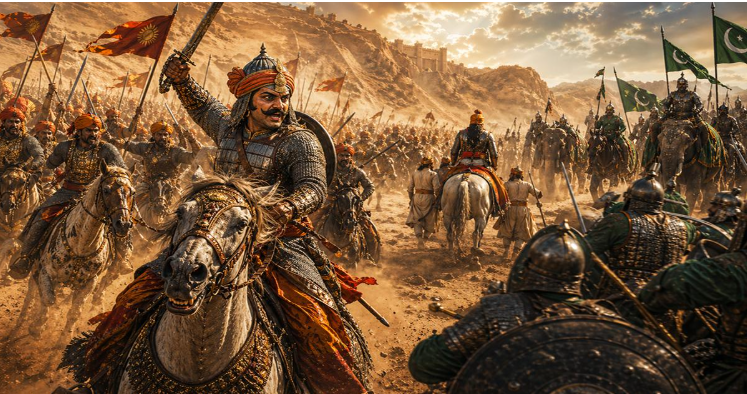
On 12 April 1948, the 4th Dogra Battalion, supported by tanks, rolled into Rajouri along the path cleared by Rane and his men. The moment they arrived, the tables turned. The Indian soldiers descended like an unstoppable force upon the Pakistani “jihadi” troops. Within hours, the enemy’s hold on the town crumbled.
Over 500 Pakistani soldiers were killed or wounded in the battle. The rest fled, leaving behind the ruins of their occupation. The town of Rajouri, which had been drowning in fear, bloodshed, and horror, finally began to breathe again. Civilians started to return to their homes, their faces pale with past trauma but slowly brightening with the first light of hope.
Lieutenant Ram Raghoba Rane’s role in this victory was extraordinary. Recognizing his superhuman courage and flawless leadership, the Government of India awarded him the Param Vir Chakra on June 21, 1950, making him the first living recipient of India’s highest gallantry award. He was later promoted to Captain in 1954 and retired as a Major on 25 January 1968.
Born in Haveri, Karnataka, on 26 June 1918, Rane had served in the British Indian Army before the formation of independent India. His commitment to the nation continued throughout his life. In recognition of his service, the Indian Navy erected a statue of him at the Warship Museum in Karwar, the Shipping Corporation of India named an oil tanker “MT Lieutenant Ram Raghoba Rane, PVC”, and the Government of India named one of the islands in the Andaman and Nicobar group “Rane Island” in his honour.
Lieutenant Ram Raghoba Rane’s story is not just a tale of military victory; it is the story of a man who chose to walk through minefields so that others could walk free. His courage reminds us that true heroism is not in the glory of the medal, but in the quiet sacrifice behind every step of peace.