Moga Massacre 1989: When Separatists Rained Bullet on RSS, Killing 25; Yet Failed to Shut Unity
This massacre shook Punjab and the entire nation. Every home was in mourning. Every eye was filled with tears. Many names became part of history that day.

The Moga massacre of 1989 | Image Source: Op India
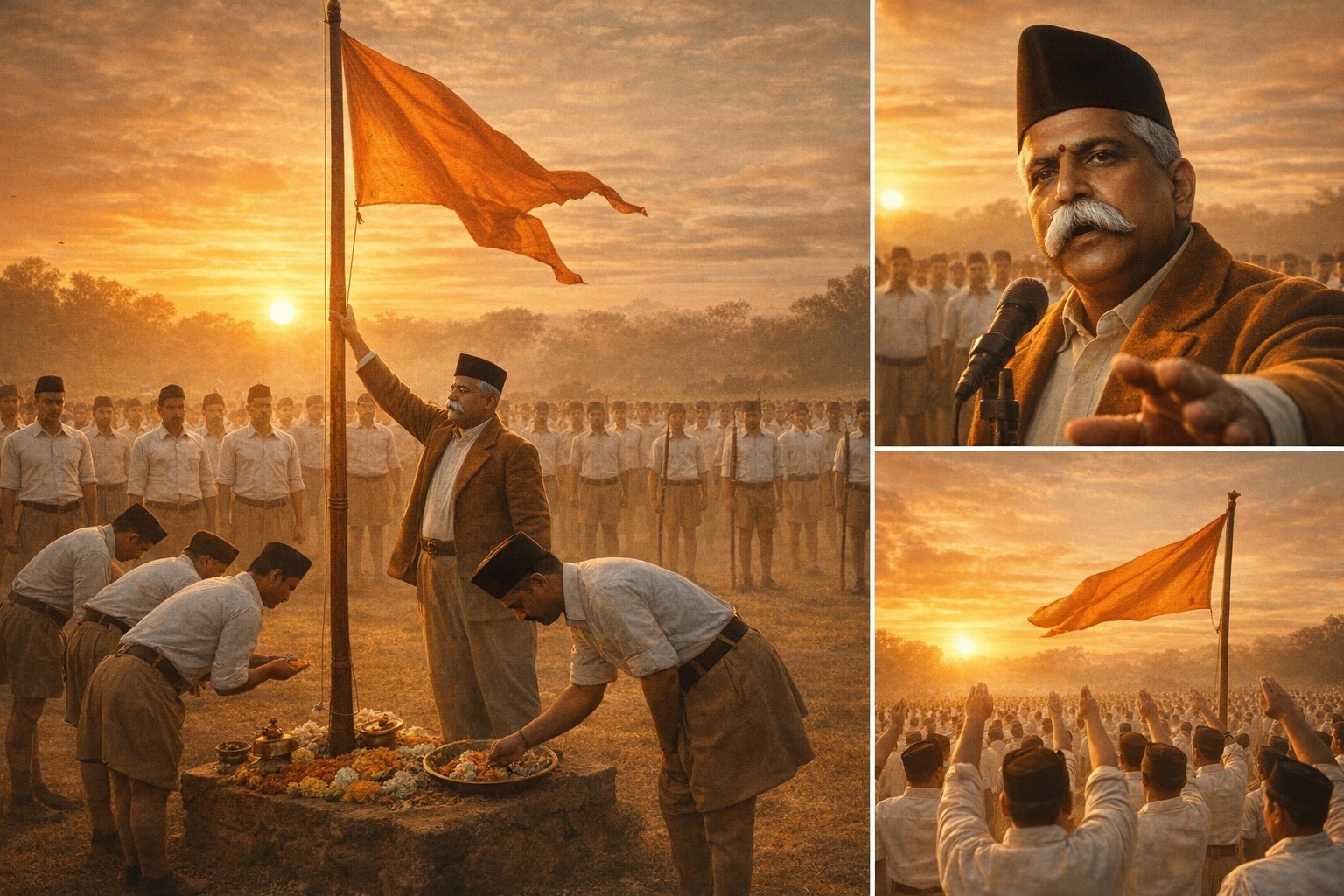
Punjab, 1990. There was a time when even the wind seemed to move in fear. Villages or cities, one question echoed everywhere: “Who will be the next target?” Yet, in that dark era, some people gathered every morning in an open ground, unafraid. They carried no weapons, only discipline and a pledge of devotion towards the nation. They were the volunteers of the Rashtriya Swayamsevak Sangh (RSS). We will tell you about a story of a massacre that is rarely known by anyone. 25th June, 1989, the date when separatists, at the command of foreign powers, tried to silence an organization that believed in India’s unity. But they could not succeed.
June 25, 1989; Jawaharlal Nehru Park in Moga
An ordinary morning, just like every day. People walking, children playing, and in one corner, the RSS shakha (daily gathering). Everything seemed normal. Around 6 a.m., the shakha began. Discipline, prayer, and a peaceful atmosphere. No one had the slightest idea that within minutes, a dark chapter of history was about to be written.
At 6:25 a.m., suddenly, some armed men entered the park. As soon as they came, they said to the swayamsevaks, “Lower the flag…” This was not just an order; it was a challenge. The syawamsevaks refused. And then… the separatists began firing without hesitation. Unselective shooting, panic everywhere, screams, and bloodshed. Within minutes, 25 swayamsevaks lay dead, and more than 35 people were seriously injured, writhing on the ground. The park, which moments earlier was full of life, now bore witness to death.
Near the small gate stood Om Prakash and his wife, Chhinder Kaur. They were unarmed. When they saw the terrorists fleeing, they did not hide in fear, but stepped forward to confront them. They shouted loudly, and both tried to stop and catch the terrorists. Even knowing that the attackers had deadly weapons like AK-47s, they did not retreat. But in the next instant, a hail of bullets struck them down… and both fell there. The brave martyrs were killed by the bullets of separatist terror | Image Source: News Bharati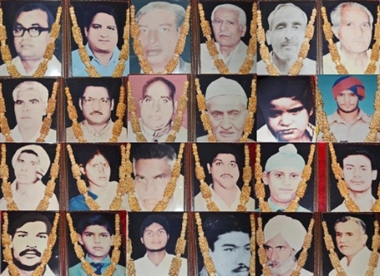
At the same time, a 1.5-year-old child, Dimple, playing nearby, also became a victim of the violence. A 10-year-old boy, Nitin Jain, saw all this with his own eyes. He thought it was some kind of game; he too ran after the terrorists. But someone caught him and sent him home. Perhaps so, that he would live, and remain a witness to this truth. Moments later, a powerful bomb planted in the park also exploded, killing a couple and two policemen.
This massacre shook Punjab and the entire nation. Every home was in mourning. Every eye was filled with tears. Many names became part of history that day: Lekhraj Dhawan, Babu Ram, Bhagwan Das, Shiv Dayal, Madan Goyal, Madan Mohan, Prabhjot Singh, Neeraj, Jagdish Bhagat, Ved Prakash Puri, Bhajan Singh, Satpal Singh Kalra, Om Prakash, and his wife Chhinder Kaur, and many more… Behind every name was a family, a dream. For a moment, it seemed terror had won. But the biggest turning point was yet to come.
The very next day, on 26 June 1989, in the same Nehru Park, the same ground, where the bloodstains had not yet dried, there, once again, the shakha was held. Around 100 volunteers came. No fear, no anger, only determination.
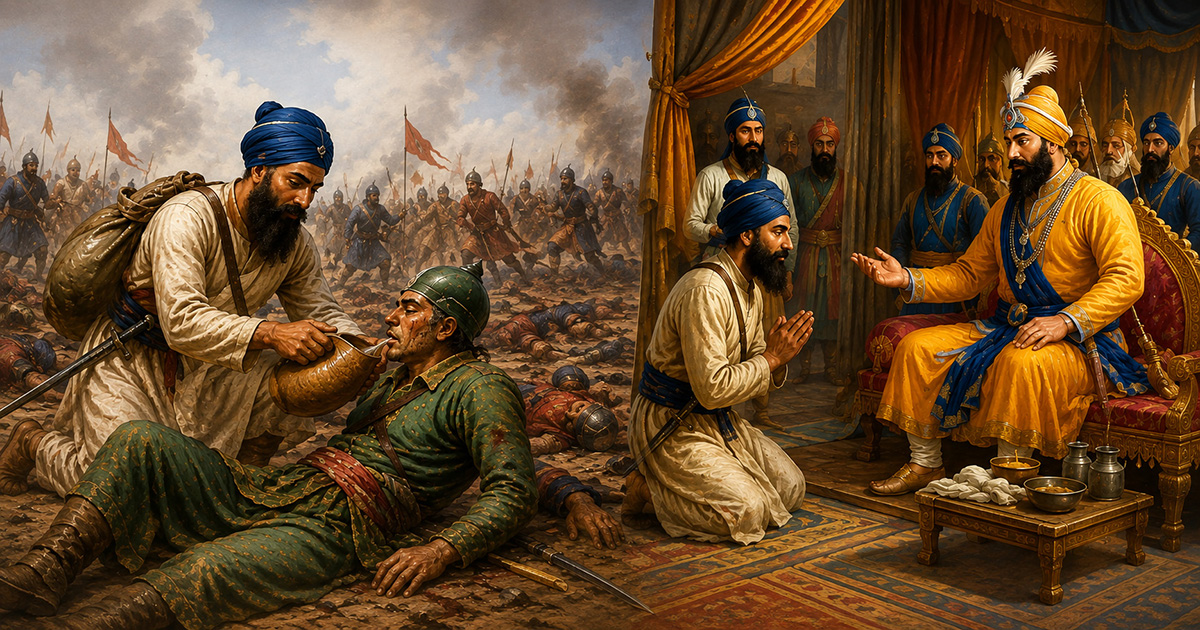
They sang a song: “Kon kehte h Hindu-Sikh Vakh ne, yeh bharat maa di sajji-khabbi akh ne…” [“Who says Hindus and Sikhs are divided? They are the right and left eyes of Mother India…”] This was not just a song; it was an answer. An answer to those bullets that tried to break the unity. This incident made it clear that no matter how big the aim of terror may be, if society stands united, it can be defeated. The Moga massacre was not just a tragic event; it became a story of pain, sacrifice, and above all, the victory of unity.
Even today, when June 25 arrives, a silent question echoes in the air of Moga, “Can bullets destroy humanity?”
And somewhere in that air, the answer comes: “No… Because where sacrifice exists, unity is born even stronger.” The park in Moga where the massacre incident took place | Image Source: moga.nic.in
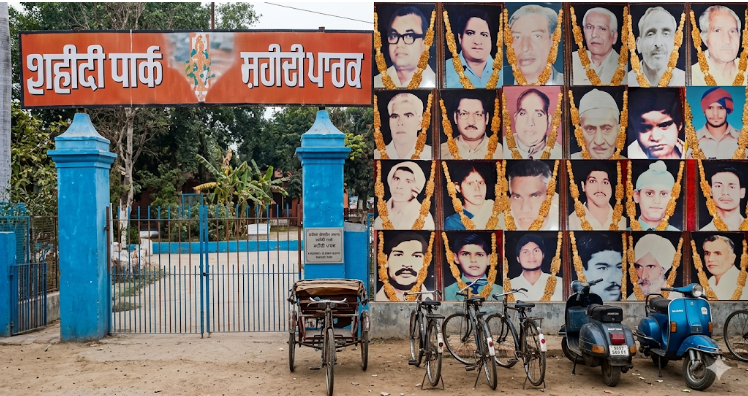
On June 24, 1990, a memorial was built in the park, named Shaheedi Park. A committee was formed to help the victim's families and to maintain the memorial. Every year, on the first Sunday after June 25, tributes are paid to all the martyrs.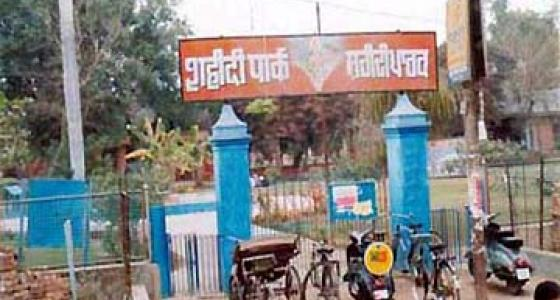
From this true story, one thing is clear: Wherever there was an attempt to break the nation, the volunteers stood at the forefront. Be it the Partition of 1947, the riots of 1984, or the terror years of the 1980s–90s—in every era, the volunteers worked to protect both Hindus and Sikhs.