Pavagadh Mahakali Temple: How the 500-Year-Old Shikhara Was Finally Rebuilt in Champaner
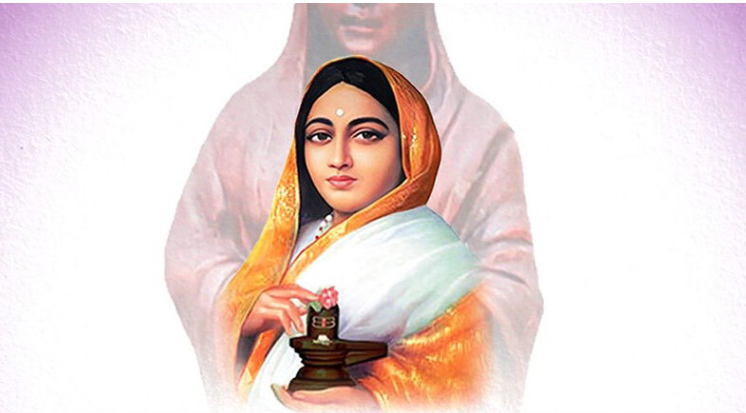
The Pavagadh Mahakali Temple, one of the 51 Shaktipeeths, endured exactly such an agony for five centuries.

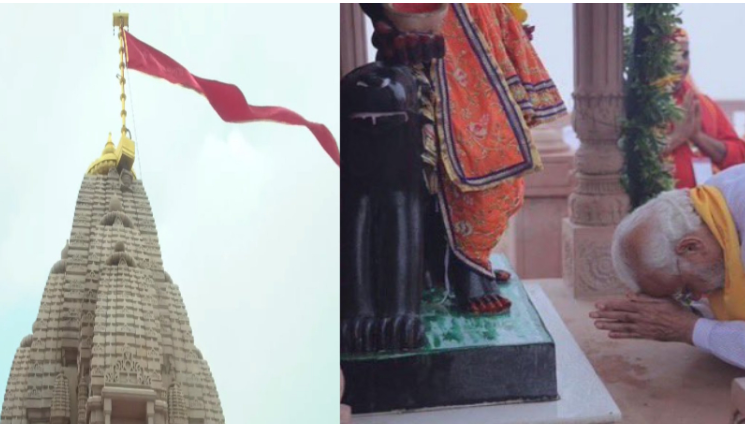
Dharma Dhwaja unfurls atop the Pavagadh Mahakali Temple after 500 years | Image Source: Op India Hindi
If the mother does not have a shelter, where can her children find peace of mind? If the mother herself remains like an orphan, how can the hearts of the devotees who believe in her find solace? The Pavagadh Mahakali Temple, one of the 51 Shaktipeeths, endured exactly such an agony for five centuries. The temple, which was destroyed in the 15th century, remained silent without a 'Shikhara' (spire) for 500 years. Those five hundred years, during which the flag did not fly atop the Mother's spire, felt like Hindu Dharma was carrying a festering wound in its heart. But how did that wait finally bear fruit after five centuries? How was the reconstruction of this temple, once thought impossible, achieved?
A Historical Wound - An Incomplete Temple
The Champaner Fort, once a symbol of Rajput glory, and the Mahakali Temple situated upon it, were destroyed in 1484 during the invasion of Sultan Mahmud Begada. By destroying the temple's Shikhara and constructing a Dargah in its place, it became impossible, according to the Shastras, to perform the Dhwajarohan (flag-hoisting) on a temple without a spire. For 500 years, even though devotees continued to visit the temple, they could never see the flag atop her spire. That incomplete darshan remained a piercing agony in the heart of every devotee.
The Power Behind the Resolve
"The 'Shree Kalika Mataji Devasthan Trust' stepped forward with a firm determination to untie this 500-year-old knot. Under the leadership of Trust Chairman Surendrabhai Patel, negotiations with the caretakers of the Dargah and the government began in 2002. These discussions continued for a remarkable 20 years. Finally, the reconstruction work, divided into two phases, was initiated in 2017. Driven not just by devotion but by a sense of historical responsibility, the project was undertaken with a massive budget of approximately ₹125 crores.
Social Harmony: A Great Turning Point
The biggest challenge in this construction was that the Dargah occupied the very spot where the Shikhara (spire) was meant to be. Even a minor oversight risked disturbing law and order. However, with the mutual agreement of both communities, the Dargah was respectfully shifted in February 2020, clearing the way for the construction of the temple spire within the same complex. This is not just a structure; it is a magnificent testament to India's social harmony."
An Engineering Marvel at 3,500 Feet
Transporting massive stones to the top of a steep hill, 3,500 feet above sea level, was an impossible task. For this purpose, specialized 'heavy-duty ropeways' were established. The previously small temple premises were expanded 10 times, transforming it into a massive spiritual complex of 30,000 square feet. The engineering brilliance shown in carving each stone below and assembling it at the summit is extraordinary.
Protection of the Sanctum Sanctorum: Ancient Tradition
To ensure no damage was caused to the thousand-year-old ancient 'Garbhagriha' (sanctum sanctorum), the new Shikhara, standing nearly 100 feet tall, was built over it. Modern 'load-bearing' technology was used to ensure that the weight did not fall on the old foundations. While adhering to ancient architectural methods, the area that had been in a state of ruin for centuries was transformed into a formidable spiritual fortress.
The Golden Moment: Flag Hoisting
Dharma Dhwaja unfurls atop the temple after 500 years | Image Source: Op India Hindi
On June 18, 2022, Indian Prime Minister Narendra Modi performed the Dhwajarohan on the golden spire. Seeing the Dharma Dhwaja flutter again in that holy place where no flag had flown for five centuries, the eyes of the devotees were filled with tears of joy. It was not just a ritual; it was the highest salutation offered to the Mother. At that moment, the chants of 'Jai Mahakali' echoing on the hill united the ancient and modern eras.
The Message of History
The resurgence of Pavagadh teaches us one thing—destruction is temporary, but faith is eternal. The Dharma that the Rajputs once shed their blood to protect stands tall today, as high as the sky. This temple is no longer just a place of pilgrimage; it is the reward for the perseverance that made the impossible possible and for centuries of waiting!