She Chose Justice Over Maternal Love: The Legacy That Made Ahilyabai the “Lokmata”
This is the incident when she ordered the death penalty for her own son for his crime.

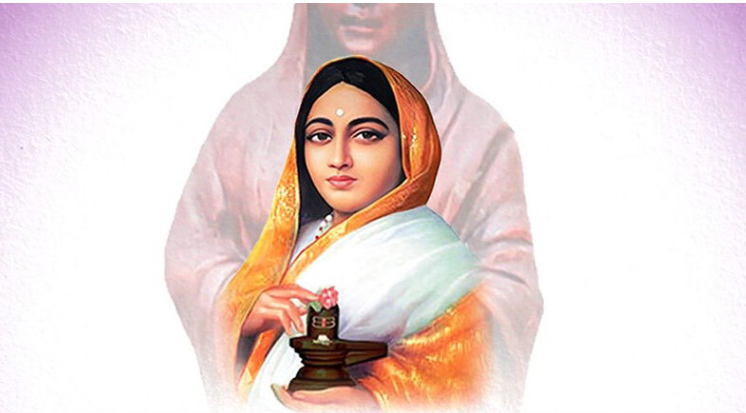
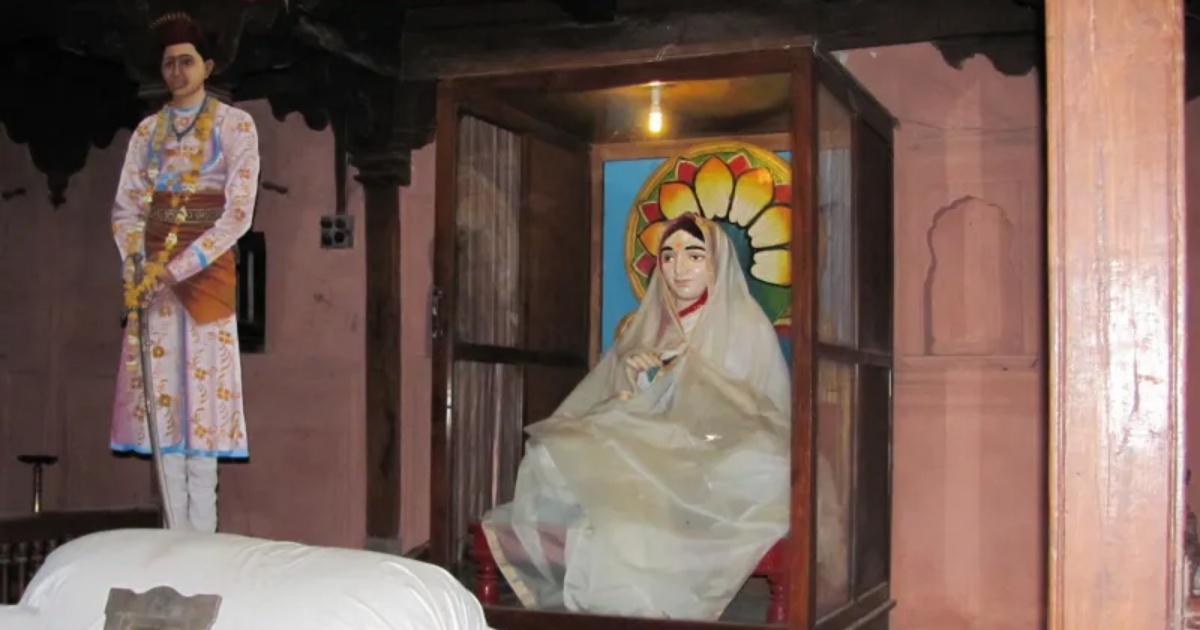
Punyashlok Lokmata Ahilyabai Holkar | Image Source: Krishakjagat
Can a mother ever sentence her own son to death? As unimaginable as this question may seem, the historical answer is something shocking. Ahilyabai Holkar, one of India’s greatest rulers, set an extraordinary example of justice that continues to astonish people. Revered as "Lokmata: the Mother of the People". She is widely known for building temples, protecting dharma, and ensuring good governance. Yet, there is another side to her that makes her a living embodiment of justice. This is the incident when she ordered the death penalty for her own son for his crime. This was not just a decision, but proof of her unwavering commitment to justice, impartiality, and devotion to dharma. Standing at the crossroads of a mother's heart and a ruler's duty, this event made her truly unparalleled in history.
This incident occurred during the reign of Ahilyabai Holkar in Malwa, renowned for her just, pious, and welfare-oriented rule. In her court, justice was not mere rhetoric but was just a living reality. One day, her son Malojirao Holkar was riding in a chariot near the royal palace. Suddenly, a playful young calf ran into the path of his chariot and was crushed, dying soon after in pain. This sight was heartbreaking, but even more disturbing was that Malojirao was unaware of this and rode on without stopping.
Soon after, when Lokmata Ahilyabai's chariot passed along the same route, her eyes fell upon the dead calf and its grieving mother cow sitting beside it. She immediately ordered her chariot to halt and asked the people around about what had happened. But no one there dared to name the prince directly; it seemed that fear, power, and deference silenced the truth. However, when Ahilyabai learned the full account of the incident, her heart was stirred not just as a mother, but as a just ruler. She returned to the palace at once and posed a profound question to her daughter-in-law: “If, before a mother’s eyes, her child is crushed under a chariot and the offender moves on without stopping, what punishment should such a person receive?” Without a moment’s hesitation, her daughter-in-law replied, “Such a person deserves the death penalty.”
When she arrived at the assembly, Ahilyabai Holkar delivered a verdict that left history stunned. She ordered that Malojirao's hand and foot be tied and crushed under a chariot, just in the same manner as the calf had been. This was not merely a punishment; it was the ultimate expression of justice. A deep silence fell over the court. No one could gather the courage to carry out such an order. A single question echoed in every mind: how could a mother truly punish her own son like this? But for Ahilyabai, in that moment, there was no difference between her son and her subjects; justice stood above all. When no one stepped forward, she herself took hold of the chariot’s reins, proving she would go to any lengths to uphold justice and dharma.
But as she moved to drive the chariot forward, an extraordinary event unfolded, infusing compassion into the harsh verdict. The same cow whose calf had been killed suddenly positioned itself in front of the chariot. It repeatedly blocked the path, as if pleading to halt the punishment itself. The scene was profoundly moving and symbolic. Courtiers and ministers saw it as a divine sign, urging Ahilyabai: "This cow too was a mother, and perhaps she didn’t wish for another mother to lose her child." In that moment, justice and compassion stood face to face: on one side, the demand for punishment; on the other, the call for mercy.
This incident is more than a tale of judgment; it's a story of balance, where justice and compassion become perfect complements. It's said that Malojirao learned a profound lesson from his actions afterwards. It wasn't just the fear of punishment, but a deep realisation of his mother's unwavering commitment to justice. Ahilyabai made it clear: Power means not just authority, but responsibility. A ruler's duty is to uphold equal sensitivity and justice toward every living being.
Lokmata Ahilyabai Holkar was born on May 31, 1725, in the village of Chondi in Jamkhed, Ahmednagar district, Maharashtra. A few years after her husband's death, her father-in-law, Malhar Rao, also passed away, prompting Ahilyabai to take the reins of the state. During her reign, she restored numerous temples across India that had fallen into ruins. A devout Shiva bhakta, she chanted His name with every breath and never signed documents with her own name; instead, she always wrote "Shri Shankar." For this reason, her every command was revered as Lord Shiva's decree.
This episode continues to teach us that true leadership is the one that rises above personal ties and stands firmly with truth. Ahilyabai Holkar proved through her 28-year reign that justice stands above all relationships, emotions, and attachments. For her, every being in the kingdom, whether human or animal, held equal importance. That is why she is remembered not merely as a queen, but revered as the “Mother of the People.” Her life remains an enduring inspiration for anyone committed to the path of justice, dharma, and duty.