The Tragic Story of Maharaja Duleep Singh: How the British Erased a Sikh King's Identity
Following the Second Anglo-Sikh War in 1849, Punjab was annexed by the British, and Duleep Singh, then aged 11, was forced to surrender his kingdom.

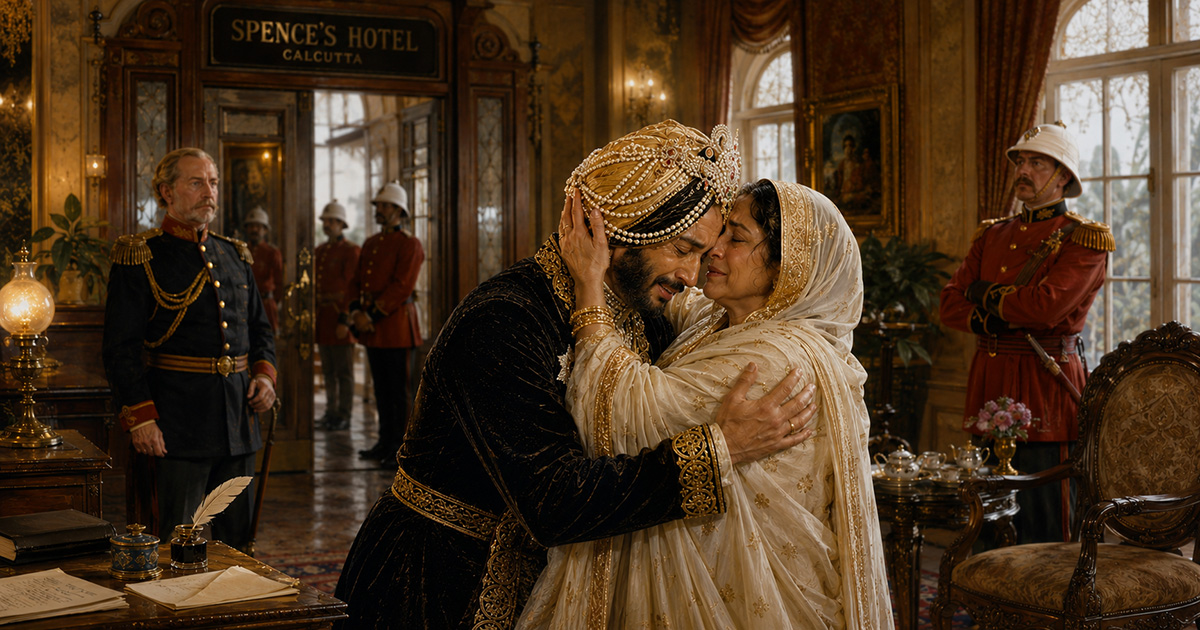
When Maharaja Duleep Singh united with his mother, Maharani Jind Kaur | This image is AI-generated
With the death of Maharaja Ranjit Singh on June 27, 1839, India’s most powerful empire in the Indian subcontinent—the Sikh Empire began to decline. The Sikh Empire witnessed a rapid succession of rulers—Maharaja Kharak Singh, Nau Nihal Singh, and Sher Singh—but none was able to sustain the empire. Thus, Duleep Singh, Maharaja Ranjeet Singh’s youngest son, was crowned Maharaja at just five years of age in 1843, with his mother, Maharani Jind Kaur, serving as regent.
However, after the First Anglo-Sikh War (1845–46), the British removed and exiled Maharani Jind Kaur, leaving the young king isolated. Following the Second Anglo-Sikh War in 1849, Punjab was annexed by the British, and Duleep Singh, then aged 11, was forced to surrender his kingdom. Stripped of his throne, he was placed under British guardianship, setting the stage for one of the most remarkable attempts at cultural and political assimilation in colonial India.
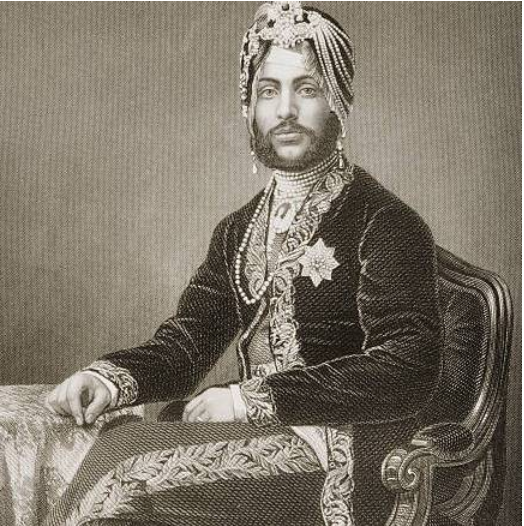
Maharaja Duleep Singh | Image Source: The Times Of India
The British placed Duleep Singh under the care of Dr. John Login, a Scottish surgeon employed by the East India Company. Interestingly, Login was entrusted with two highly symbolic responsibilities: the guardianship of the young Maharaja and the custody of the Kohinoor diamond, one of the greatest treasures of the Sikh Empire.
Soon after, Duleep Singh was moved from Lahore to Fatehgarh under strict supervision and was deliberately cut off from his own people. He was forbidden from meeting Indians except for a handful of carefully selected servants approved by British officials. This isolation distanced him from his language, traditions, and family. Duleep gradually began absorbing British culture. The Bible replaced Sikh scriptures in his daily life. Dr. Login introduced him to Christian teachings, while Biblical passages were recited to him. Slowly, the last Sikh Maharaja was encouraged to view Christianity not as a foreign faith but as his own. In 1853, before he had even turned fifteen, Duleep Singh formally converted to Christianity after approval from Governor-General Lord Dalhousie.
The following year, Duleep Singh was taken to England, where Queen Victoria welcomed him warmly. He became a frequent guest of the royal family and was granted a generous annual pension of £25,000 on the condition that he remained loyal to the British Crown. He was made to live in castles, was made to wear Highland attire, and was given the nickname "The Black Prince of Perthshire.” Yet beneath the outward glamour, Duleep Singh increasingly felt the pull of his homeland. He repeatedly tried to contact his exiled mother, but British authorities intercepted his letters. However, finally, in January 1861, Maharaja Duleep Singh reunited with his exiled mother, Maharani Jind Kaur, at Spence’s Hotel in Calcutta, ending a painful twelve-year forced separation by the British. Duleep refused to leave her behind and took her to England. There, during her final years, she successfully reawakened his dormant Sikh identity, heritage, and pride in his father’s lost empire.
The life of Maharaja Duleep Singh remains one of the most poignant examples of how the British Empire did not merely conquer kingdoms, but also sought to reshape identities, sever cultural roots, and transform defeated rulers into loyal subjects.