Burma Campaign 1945: Naik Gian Singh’s Heroic Stand Against Japanese Forces

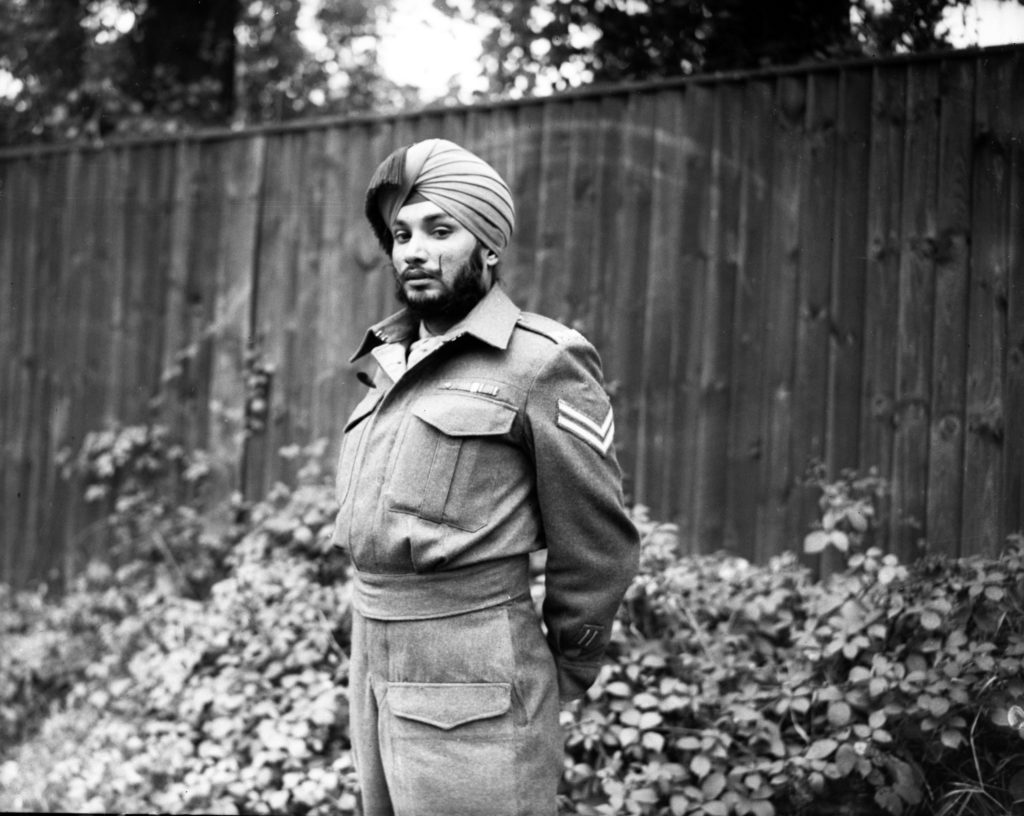
The year was 1945… As World War II entered its final phase, the Japanese forces had spread their cruel claws across Southeast Asia. In the dense jungles of Burma, where death lay in ambush behind every tree, an Indian soldier scripted a saga of indomitable courage. When the rain of enemy bullets began to shatter the morale of the Indian troops, one hero rose to defy death itself. His name was Naik Gian Singh. This is the story of how he and his comrades snatched victory from the jaws of defeat. Naik Gian Singh’s story – one of 12 Indian Victoria Cross recipients – reminds us why unsung heroes from the British Indian Army deserve celebration today.
The Battlefield of Burma and the Japanese Challenge
Naik Gian Singh’s journey of service to the nation began in 1937 when he joined the British Indian Army. During World War II, he was serving in the 4th Battalion of the 15th Punjab Regiment. In the Burma Campaign, this battalion was fighting under the leadership of Major Tony “Raj” Fowler.
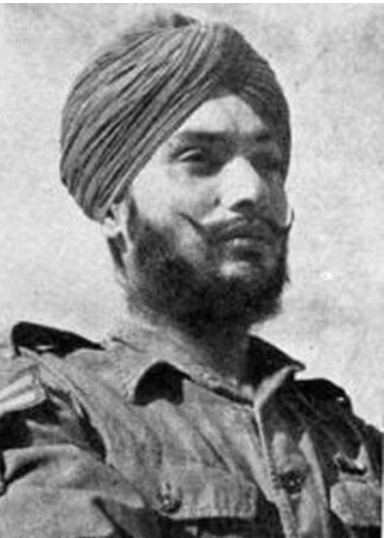
Naik Gian Singh | Image Source: Sikhiwiki
During that period, the road from Kamye to Myingyan in Burma (Myanmar) was strategically vital for military movements. On March 2, 1945, the Japanese army had established an impenetrable fortification along this route. Taking advantage of the natural cover provided by dense jungles and valleys, the Japanese soldiers lay in ambush within deep underground bunkers. The continuous barrage of machine guns and artillery from those positions was so fierce that the British-Indian troops were pinned down to the ground. In such a dire situation, two companies of the 15th Punjab Regiment surrounded the enemy post from all four sides. They captured the high ground behind the enemy and cornered them. Since all the water sources in that area were under enemy control, it had become imperative to dislodge them from that position.
The Unparalleled Leadership of Naik Gian Singh
The first attack was successful. Subsequently, a platoon was ordered to attack a village on the right flank. The platoon was advancing with the support of tanks, but the enemy was firing intensely. This platoon was being led by Naik Gian Singh. The enemy was hiding in pits near a cactus fence. Recognizing that the enemy was very close, Naik Gian Singh ordered his machine gunner to provide cover and rushed toward the enemy alone. With his Tommy gun, he neutralized several enemies, including four Japanese soldiers at their main weapon post.
Meanwhile, a troop of tanks moved forward to support the platoon. However, a cleverly concealed Japanese anti-tank gun suddenly opened fire on the tanks. In an instant, several soldiers were wounded by the oncoming fire. The situation became critical. At that decisive moment, Naik Gian Singh quickly realized that unless these invisible enemy bunkers were destroyed, it would be impossible to save the troop and move forward. Without waiting for orders and with total disregard for his own life, he gripped his Sten gun firmly. Despite being wounded, he charged directly at the enemy without wavering. Braving a heavy hail of bullets, he killed the crew of the enemy’s anti-tank gun and single-handedly captured the gun.
Snatched Victory from the Jaws of Death
Following this, the soldiers of his troop also moved forward. Naik Gian Singh led them through a narrow path within the cactus fence and safely cleared all enemy positions. Around 20 enemies were killed in this sector, most of whom were neutralized by Naik Gian Singh and his troops. After this action, the company changed its plan to attack the enemy from the rear. Naik Gian Singh was ordered to the Regimental Aid Post for treatment. However, despite being wounded, he requested permission to lead his troop until the entire operation was completed, and his request was granted. He not only maintained the firing but also used grenades to annihilate the Japanese soldiers. His immense bravery saved the lives of many soldiers in his squad. The enemy suffered heavy losses, and ultimately, the entire operation was successful.
Post-War Journey and Contribution to the Indian Army
For this act of valor, Singh was honored with Britain’s highest military decoration, the ‘Victoria Cross’ (VC), by King George VI during a ceremony held at Buckingham Palace on October 16, 1945. Even after the war ended, his passion for serving the nation did not diminish. After India gained independence, he joined the Indian Army. He actively participated in both major conflicts: the 1962 Sino-Indian War and the 1965 Indo-Pak War.
Captain Gian Singh’s legacy is recognized not only in India but also on a global level. His name is inscribed in golden letters on the ‘Memorial Gates’ in London. That battle of March 2, 1945, was not just a victory over a road, but a victory of the sheer grit of an Indian soldier. On October 6, 1996, this great son of the soil breathed his last, but his bravery continues to inspire the new generation today.
.png)

.jpg)