Portrait of an Awakening: How Abanindranath Tagore’s Youth Forged the Bengal School

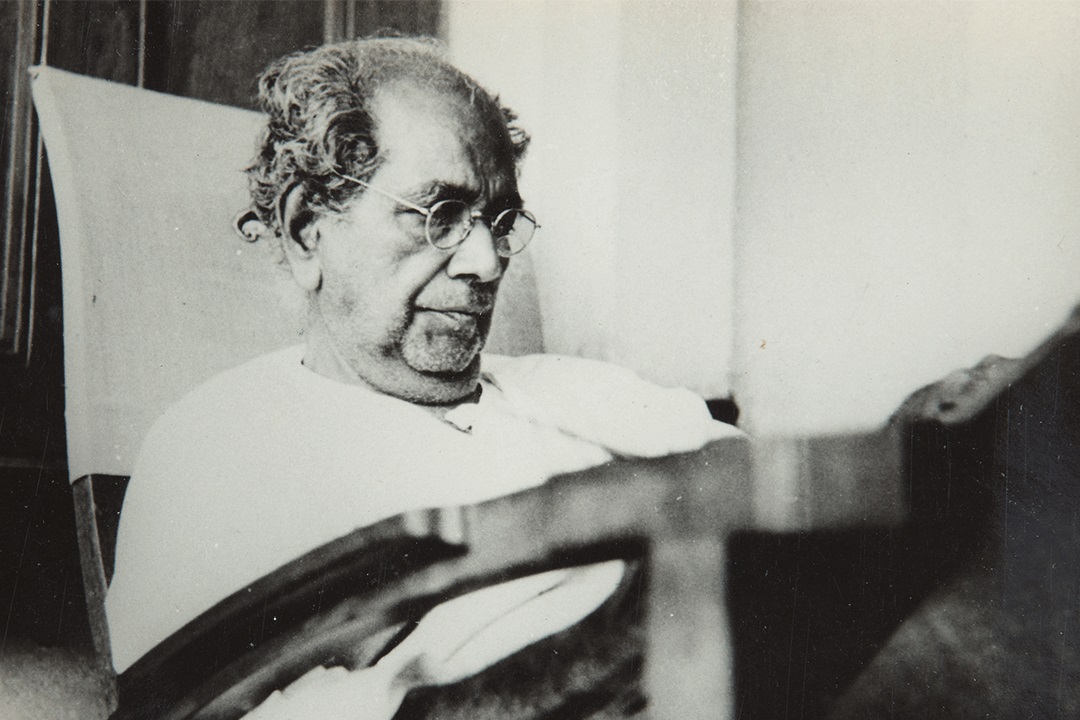
Abanindranath Tagore, born on 7 August 1871 in Calcutta, belonged to the illustrious Tagore family that played a pivotal role in Bengal’s cultural renaissance. He was the son of Gunendranath Tagore and the grandson of Girindranath Tagore, who was the second son of the prominent industrialist and reformer Dwarkanath Tagore. This rich familial legacy deeply influenced Abanindranath’s artistic journey, laying the foundation for his later contributions to Indian art and nationalism.
At age five, he was withdrawn from school after an insensitive punishment by a teacher. He was homeschooled thereafter and spent much of his childhood painting and exploring nature, especially in Champdani after his family moved there at age nine . His father passed away when he was around ten, prompting enrollment at Sanskrit College, where he continued artistic pursuits alongside studies.
Education: Homeschooled early; began schooling in Jorasanko until age 5. Attended Sanskrit College (~1881–1889), where he composed and illustrated verses, even winning a hymn contest on Saraswati After marriage in 1889, he briefly studied English at St. Xavier’s College for about 1½ years In 1890, he joined the Calcutta School of Art, receiving formal art training under Signor Gilhardi (pastel, watercolour, life study) and Charles Palmer (oil painting and portraiture) Source: Print
Career and Achievements 1. Founder of the Bengal School of Art & Indian Society of Oriental Art In 1907, alongside his brother Gaganendranath, he co-founded the Indian Society of Oriental Art in Calcutta to challenge British academic art and revive Indian aesthetics, marking a formal shift toward indigenous artistic identity
His leadership in this movement positioned him as the prime architect of the Bengal School of Art, promoting swadeshi values and a modern Indian visual language.
Abanindranath imagined a free India with his creations on paper and canvas. His most celebrated piece, Bharat Mata, is read as his testimony of nationalist thinking and the vision of a free India. It was created in response to Lord Curzon’s order of partition of Bengal in 1905.
2. Founder of Modern Bengali Children’s Literature
Some of his most renowned works are:
Khirer Putul (The Doll Made of Condensed Milk, 1896- A fairy tale about two queens, envy, and kindness—the first major children’s fantasy in Bengali. Celebrated for its lyrical language, fantasy world-building, and ethical depth. Still widely read and adapted in plays, TV serials, and school curriculums. Buro Angla (Old Englishman)- A surreal, symbolic journey of a child and an eccentric character, full of fantasy, folk magic, and humour. Inspired generations of young readers to explore stories beyond realism. Raj Kahini (Tales of Kings)- A historical tale collection written in heroic, lyrical prose, introducing children to Rajput valor and Indian history in a way that inspired national pride. One of the first books to blend history and fiction for children in India. Shakuntala– His illustrated retelling of Kalidasa’s Sanskrit classic made the story accessible and engaging for young readers. Nalak– A fictional retelling of the young life of Buddha, narrated in a gentle, poetic style designed to teach compassion and detachment.
Blending Illustration and Prose- Abanindranath’s stories often included his own illustrations, merging fine art with storytelling—a unique practice at the time. His paintings gave a deeper emotional layer to his prose, influencing later writers and illustrators.
Pioneering Traditional Painting Techniques He revived and refined traditional art methods—Mughal, Rajput miniature, Japanese wash, Persian elements—integrating them into a uniquely Indian modern styleb prathaculturalschool
His paintings like the Krishna Lila series, Passing of Shah Jahan, Shahjadpur Landscape, Ullapara Station, Alamgir, and the iconic Bharat Mata are emblematic of this synthesis. Print
International Exhibitions & Recognition Exhibited in London and Paris (1913) and Japan (1919), gaining early global attention iloveindia.com.
His Passing of Shah Jahan won a silver medal at the Delhi Durbar (1902–03) and a gold medal at the Congress Industrial Exhibition
Art Education & Institutional Impact
Appointed vice‑principal of the Government College of Art (Calcutta School of Art) in 1905, he shaped the curriculum to include Indian styles and techniques.
The Indian Society of Oriental Art under his guidance conducted exhibitions and trained artists including Nandalal Bose, K. Venkatappa, and others, thus mentoring a generation of modern Indian painters.
Spiritual-Nationalist Symbolism Abanindranath imagined a free India with his creations on paper and canvas. His most celebrated piece, Bharat Mata, is read as his testimony of nationalist thinking and the vision of a free India. It was created in response to Lord Curzon’s order of partition of Bengal in 1905, symbolizing India as a divine mother and galvanizing anti-colonial sentiment during the Swadeshi Movement
B. Narratives Surrounding Him
Many of his works subtly infused Swadeshi ideals and pride in Indian history and mythology, helping cultivate a cultural consciousness among children during colonial rule.
Nationalist Underpinnings
- Many works subtly reflect Swadeshi values, mythic patriotism, and traditional pride—especially in tales like Rajkahini and mythic retellings
- Appealed to children as early custodians of cultural identity under colonial rule.
- Catalyst for Literary Renaissance
- Inspired notable successors—Upendrakishore Ray, Sukumar Ray, Lila Mazumdar, Satyajit Ray—who took from his visual-literary integration
- Contributed to the mainstreaming of Bengali children’s literature, as opposed to European imports
Bharat Mata by Abanindranath Tagore
Abanindranath Tagore imagined a free India with his creations on paper and canvas. His most celebrated piece, Bharat Mata, is read as his testimony of nationalist thinking and the vision of a free India. It was created in response to Lord Curzon’s order of partition of Bengal in 1905.
As an artist, Abanindranath may have consciously moved away from his early European influences, but he continued to be recognised in Europe for his mastery. He also mentored the likes of modern art painters like Nandalal Bose, Asit Halder, Kshitindranath Majumdar, Jamini Roy, S.N.Gupta, among others.
Academic and Pedagogical Contributions
- Appointed Vice-Principal of the Government College of Art in 1905.
- Played a crucial role in curriculum reform—integrated traditional Indian styles into formal art education.
- Delivered 29 lectures on Indian aesthetics as Rani Bageswari Professor at Calcutta University (1921–29).
Break from Colonial Art Norms
- Opposed Realism, oil painting, and life study, advocating instead for tradition-rooted, intuitive creativity.
Envisioned a new model of art consumption free from colonial academic rigour and professional pressures.
Support from Havell, AK Coomaraswamy, and Sister Nivedita brought national and international attention.
Institution Building
- Co-founded the Indian Society of Oriental Art (1907)—India’s first art salon.
- Created a platform to showcase the works of the Bengal School and push the agenda of cultural indigenisation.
Academic and Pedagogical Contributions
- Appointed Vice-Principal of the Government College of Art in 1905.
- Played a crucial role in curriculum reform—integrated traditional Indian styles into formal art education.
- Delivered 29 lectures on Indian aesthetics as Rani Bageswari Professor at Calcutta University (1921–29).
What did Art Historian EB Havell Wrote About Abanindranath Tagore?
– Havell declared that Abanindranath was the first Indian painter of modern times, a statement that positioned him as central to the Indian artistic renaissance.
Both Havell and Tagore wanted to challenge colonial aesthetics and promote indigenous traditions, especially Mughal and Rajput miniatures.
Criticism Around Abanindranath Tagore
Indian Critics: Indian Critics thought of him as too Westernised or not Indian enough- Critical Collective
Western Circles: His style was seen as not modern or realistic enough, lacking the “truth” or form of Western academic art. Critical Collective
Fusion of Techniques and Styles Critical Collective Mediums and Influences: Used wash technique, blending Mughal miniature finesse with Japanese brushwork and Romanticism.
Innovative Synthesis: Combined emotive expression, literary inspiration, and symbolism to create a unique visual language.
Subjects: Religious (Radha-Krishna), political-spiritual (Bharat Mata), and literary (Omar Khayyam). Concept of Indian Modernity
Alternative to the West: Abanindranath’s modernism was not a replication of European modernity.
Reclaiming the Past: Emphasized an Indian aesthetic, rooted in bhava (emotion), rasa (aesthetic sentiment), and spirituality.
Role in Nationalism: Art became a medium of cultural resistance and self-definition against colonial narratives.
“I have noticed that when you have to paint a beautiful landscape … beauty is not something external … Soak your heart first in the shower of Kalidasa’s poetry … First soak yourself in the great poet Valmiki’s description of the sea, then proceed to paint a sea of your own”- A. Tagore
.png)