The Coffee That Changed Laxmi’s Life: A Story from Araku Valley

When Laxmi (name representative of many documented tribal women farmers in Araku development case studies) was a young girl growing up in a tribal hamlet near Araku Valley in Andhra Pradesh in the late 1990s, coffee plants already grew around her village, but they did not yet mean prosperity. Her family survived on small forest produce, seasonal farming, and daily wage labor. Middlemen controlled whatever little coffee was sold, and payments were unpredictable. Festivals like the Araku Tribal Festival were moments of joy, but daily life was still about survival.
Everything began changing around 1999, when organized tribal coffee development projects entered the valley. Laxmi remembers the first training session conducted for villagers on scientific organic coffee cultivation. For generations, her community had grown crops without chemicals simply because that was their way of life. But now, experts explained that this traditional method could become a premium global product. For the first time, Laxmi and other women realized that what they practiced naturally was actually valuable in the global market.

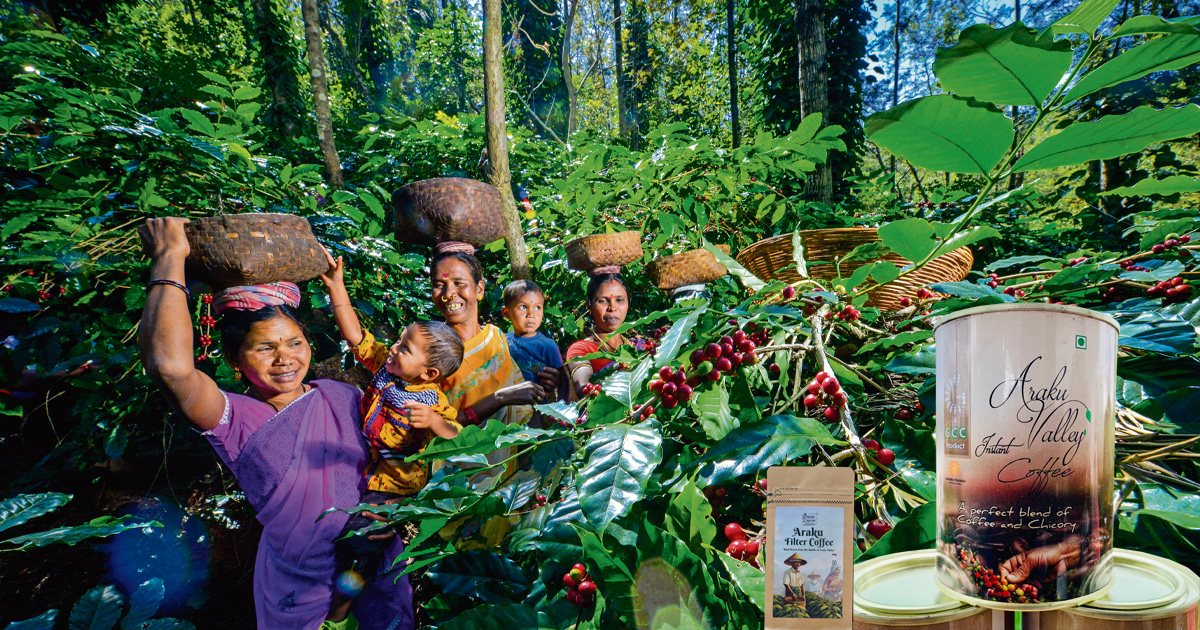
Tribal women harvesting organic coffee from a plantation near Girliguda village in Araku Valley | Image Source: The Hindu
By the early 2000s, Laxmi joined a tribal coffee cooperative formed under structured development initiatives. Earlier, her family earned only seasonal income. Within a few years, coffee gave them stable yearly earnings. She learned sorting, grading, and careful hand-picking of ripe cherries, skills that directly affected international quality standards. Coffee farming also gave her social confidence. Women, who traditionally worked quietly in fields, now became decision-makers in cooperative meetings.

Women hand-picking ripe cherries | Image Source: The Hindu Business Line
The biggest emotional moment for her came when she first heard that Araku Coffee was being sold internationally. Villagers gathered when officials told them their coffee was reaching Europe and Japan. Later, when news came that an Araku Coffee store had opened in Paris, it felt unreal. Laxmi often says she has never traveled outside Andhra Pradesh, but her work reaches people drinking coffee in countries she has only seen on maps.

Araku Coffee Store in Paris | Image Source: TripAdvisor
Over two decades, coffee transformed daily life in her village. Income improved. Children started going to school regularly. Houses shifted from mud-only structures to stronger, concrete homes. Most importantly, migration is reduced. Earlier, men often migrated for work. Now, coffee provides income locally. Laxmi’s daughter studies in college today, something almost unheard of in her grandmother’s generation.
Today, when Laxmi walks through coffee plantations during harvest season, she sees more than crops. She sees proof that development can happen without destroying culture. Festivals are still celebrated. Dhimsa dance is still performed. Forest worship continues. But alongside tradition, there is the dignity of income and global recognition. For Laxmi, Araku Coffee is not just a crop; it is proof that tribal knowledge, when respected, can change destinies.
.png)