Victory by Strategy, Not by Sword: The Untold Story of Ranjit Singh and the Koh‑i‑Noor
How did this same jewel come into the hands of the “Sher‑e‑Punjab,” Maharaja Ranjit Singh? And what is the real story behind the strategy that brought the Koh‑i‑Noor to Punjab?

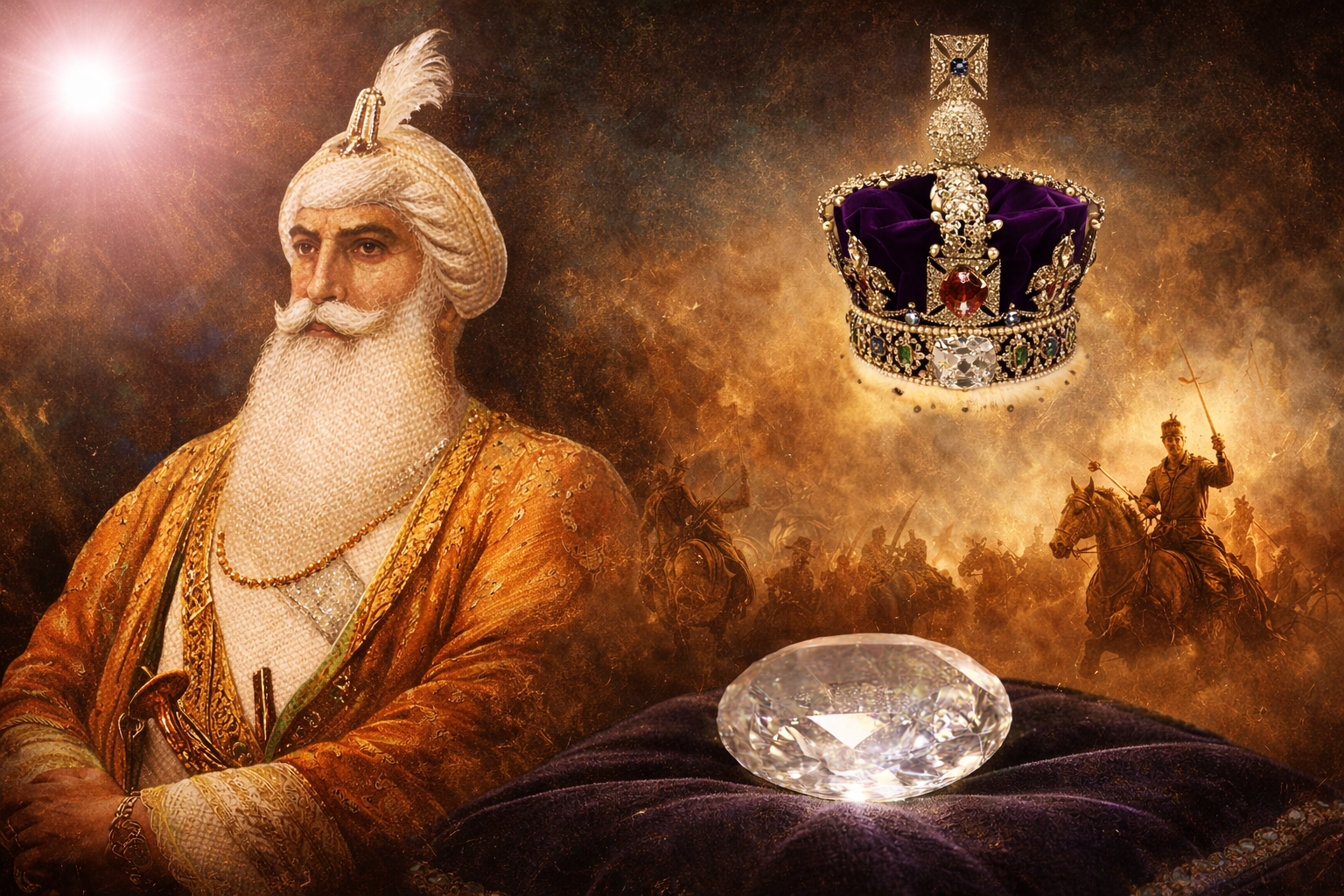
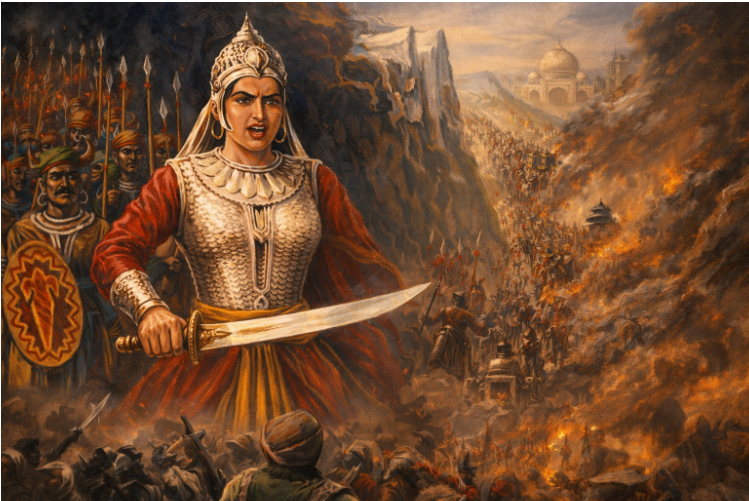
Maharaja Ranjit Singh and the Koh-i-Noor | This image is AI-generated
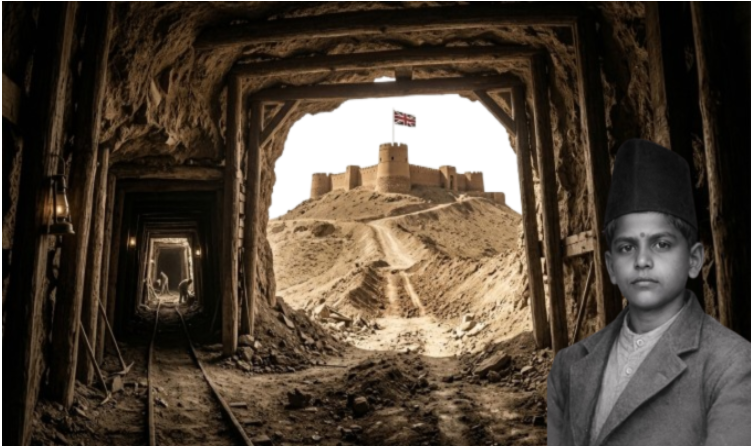
Born in the Kollur mines of Andhra, India, this legendary gem, then known as 'Syamantaka Mani,' once adorned the eyes of the goddess in the Kakatiya temple of Warangal, then became the crowning glory of the Sultans of Delhi—until, in 1739, it was snatched away by the Persian conqueror Nader Shah, who named it Koh‑i‑Noor, “The Mountain of Light.” From that day forward, the diamond became the greatest symbol of plundered wealth and imperial theft. But how did this same jewel come into the hands of the “Sher‑e‑Punjab,” Maharaja Ranjit Singh? And what is the real story behind the strategy that brought the Koh‑i‑Noor to Punjab?
At the time our story begins, the Koh‑i‑Noor was in the possession of Shah Shuja Durrani, the Afghan king who briefly ruled in 1803. But the hunger for power turned brother against brother. By 1809, Shah Shuja’s own brother, Mahmud Shah Durrani, deposed him from the throne. Now a fugitive, Shah Shuja fled to Kashmir, where the local governor, Ata Mohammad Khan, learned that the exiled king still carried the priceless diamond.
Blinded by greed, Ata Mohammad Khan trapped Shah Shuja under false pretences and held him as a prisoner in Kashmir around 1812. Shah Shuja’s wife, Begum Wafa, found herself in desperation. Her husband’s life was in the hands of a merciless governor, and the Koh‑i‑Noor—his last remaining treasure—was at stake.
Shah Shuja | Image Source: BBC
During this period, the court of Lahore stood as the proud seat of the Sikh Empire, shining under the rule of Maharaja Ranjit Singh. Into this grand darbar walked a woman in distress—Begum Wafa. She laid before the Maharaja a bold proposal: “If you rescue my husband, Shah Shuja, from the captivity of Ata Mohammad Khan, I will hand over the Koh‑i‑Noor to you.”
For Ranjit Singh, this was not simply about a gem. It was about restoring an Indian jewel to Indian soil, a symbol that foreign invaders had stripped away over centuries. Without hesitation, he accepted the challenge.
In December 1812, Ranjit Singh sent a powerful force of nearly 12,000 men, led by the shrewd Diwan Mohkam Chand, alongside the Afghan Wazir Fateh Khan. The army pressed through the icy passes of the Pir Panjal mountains, cutting a path through deep snow and treacherous slopes in pursuit of Kashmir’s freedom.
Fateh Khan, however, had his own designs—he hoped to seize Kashmir itself and keep the Koh‑i‑Noor for himself. But Mohkam Chand saw through the Afghan’s plans. Before Fateh Khan could reach Kashmir, the Sikh army stormed the Shergarh Fort, crushed Ata Mohammad Khan’s hold on the region, and rescued Shah Shuja from captivity. The deposed Afghan king, along with the promise of his treasure, was brought to Lahore as a grateful, though wary, guest.
Once free, Shah Shuja’s gratitude quickly faded. He handed over a large, glittering gem to Ranjit Singh, but it was not the Koh‑i‑Noor—it was a fake. The true diamond remained hidden.
For Ranjit Singh, this was no longer just a bargain over a jewel; it had become a test of his honour and sovereignty. He pressed Shah Shuja and Wafa Begum to fulfil their promise, but the former king refused to surrender the real stone.
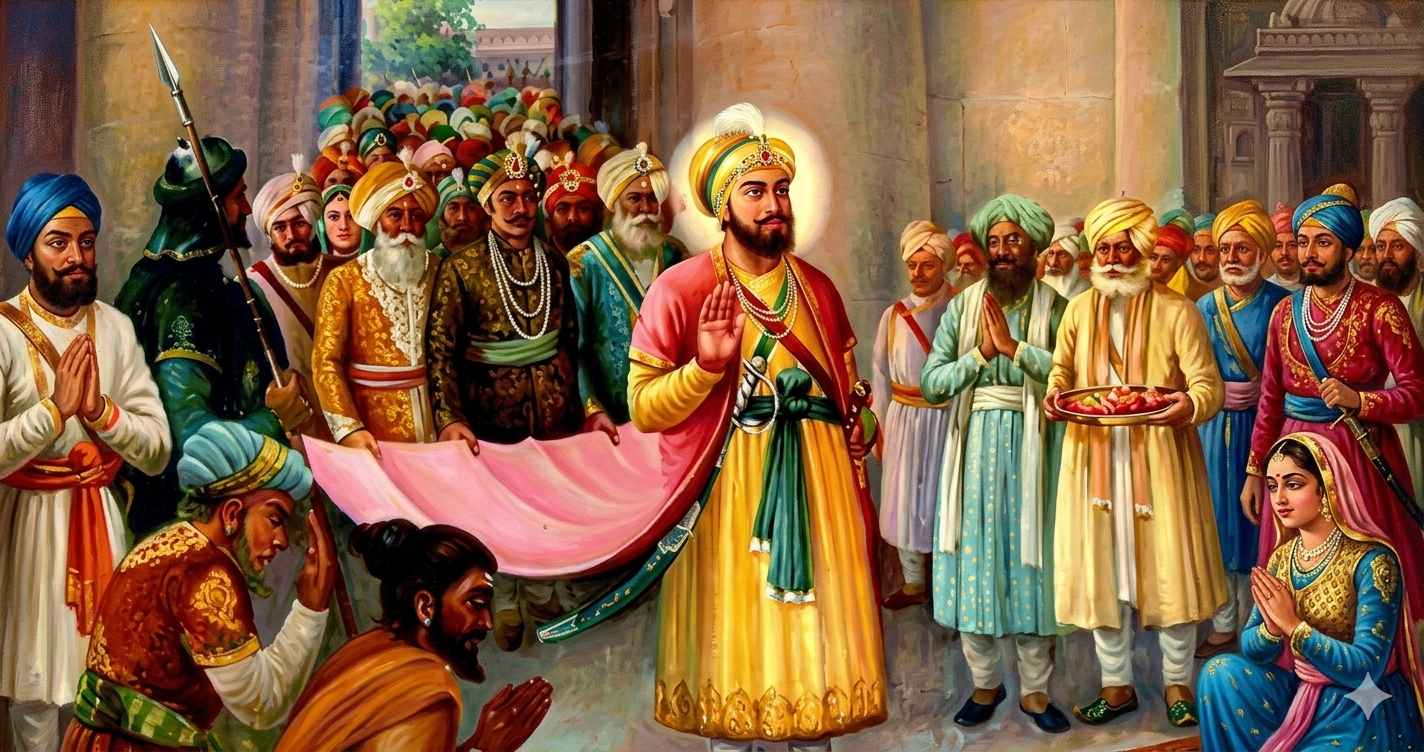
Finally, in June 1813, Maharaja Ranjit Singh decided to settle the matter not with a sword, but with strategy and tradition. In the Mubarak Haveli of Lahore, the two men sat face to face.
Ranjit Singh proposed a “pagri badal” ceremony—the traditional exchange of turbans, a sacred symbol of brotherhood and trust. To refuse such a gesture would be an unforgivable insult among nobles. Shah Shuja, unable to offend the Maharaja but still reluctant to hand over the Koh‑i‑Noor, accepted the proposal.
As they swapped turbans, legend has it that Shah Shuja had sewn the real Koh‑i‑Noor into the folds of his own turban. The moment the turbans changed hands, the world’s most famous diamond quietly passed into the possession of Maharaja Ranjit Singh.
No battle. No bloodshed. No war.
In this way, Ranjit Singh claimed the Koh‑i‑Noor without a single drop of blood, turning a story of plunder into a masterpiece of diplomacy and wit. The Maharaja had the diamond mounted in his armlet, and wherever he went, the “Mountain of Light” went with him, glittering as a symbol of Sikh honour and Indian pride.