When Mysore King Krishnaraja Wadiyar IV Sold His Jewels to Build KRS Dam, Turning Drought in Mysore Into Thriving Region
Built in 1931, the Krishna Raja Sagara Dam stands nearly a century later in 2026—still holding strong, still sustaining millions, and still proving that true vision outlives time.

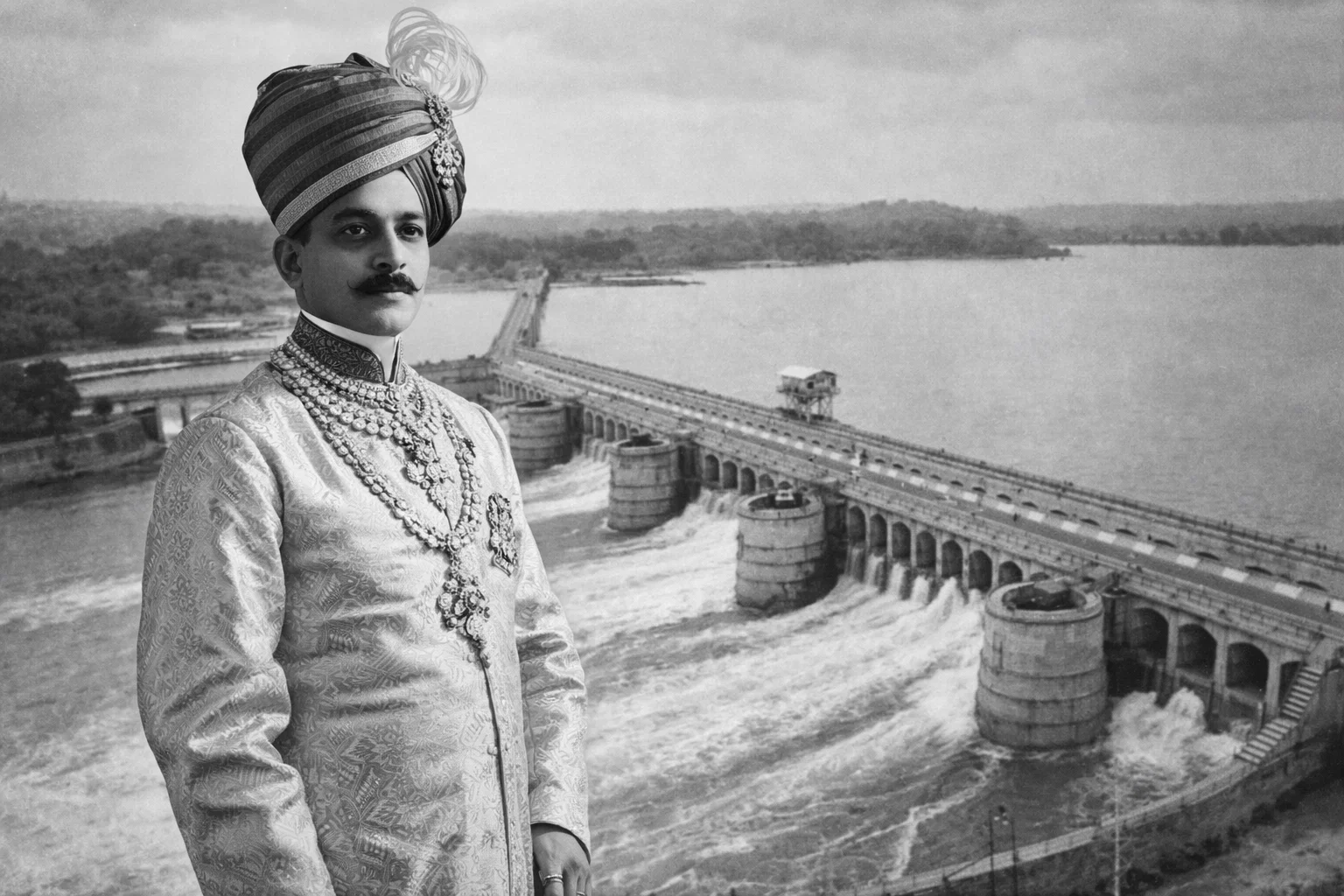
This image is AI-generated
In the late 19th century, the princely state of Mysore was not the green, thriving region as we see it today. It was a land of uncertainty, parched and fragile, owing to the drought of 1875–76, which was particularly devastating. Crops failed, irrigation was nearly non-existent, and water scarcity reached alarming levels. Entire communities were forced to migrate seasonally, fleeing the harsh summers in search of survival. The crisis was so severe that it wiped out nearly one-fifth of the kingdom’s population. It was in the shadow of this catastrophe that a long-term solution began to take shape: The Krishna Raja Sagara Dam (KRS), a massive infrastructure across the Kaveri River and a reservoir that could store water, irrigate fields, and power a new economy. The man behind this was Krishnaraja Wadiyar IV. Born on June 4, 1884, he was not just a patron of tradition and Sanatana Dharma, but a leader who chose to confront crisis with foresight, with a long-term solution that would redefine Mysore’s destiny. This is the story of how the transformative engineering marvel came to be and how it changed lives. Built in 1931, the Krishna Raja Sagara Dam stands nearly a century later in 2026—still holding strong, still sustaining millions, and still proving that true vision outlives time—all because one man, Krishnaraja Wadiyar IV, was determined to make it happen.
The King Who Made It Happen
It all began in 1909–1910, when India’s most celebrated engineer, a visionary thinker, and former Diwan of Mysore, M. Visvesvaraya, proposed to construct a large dam to manage the barren land in an attempt to fundamentally change how water was managed in the region. As per the proposal of M. Visvesvaraya, the dam was to be equipped with advanced automatic sluice gates, capable of storing enormous volumes of water and regulating its flow with precision.
However, the proposal was too good to be true at a time when such a project was seen as highly risky. It required immense financial investment, complex engineering, and long-term commitment, garnering scepticism from the British Raj. Nonetheless, when King Wadiyar came to know about it, he was determined to make it happen. He recognised that this was not merely an infrastructure project, but a civilisational necessity. He approved the construction of what would become the Krishna Raja Sagara Dam, standing firmly behind the plan despite its large-scale criticism.
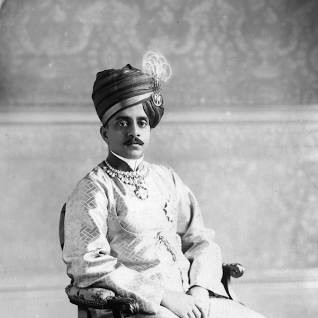
King Krishnaraja Wadiyar IV | Image Source: LinkedIn
The construction of the KRS Dam began in November 1911 at Kannambadi village and continued for nearly two decades, finally reaching completion in 1931. It was one of the most ambitious engineering projects of its time in India. Over 10,000 workers were employed at the site. Massive stones were quarried, transported, and assembled using traditional materials like “surki” mortar, a mixture that provided durability long before modern cement became widespread. The dam would eventually stand around 130 feet high and hold over 1.36 billion cubic metres of water.
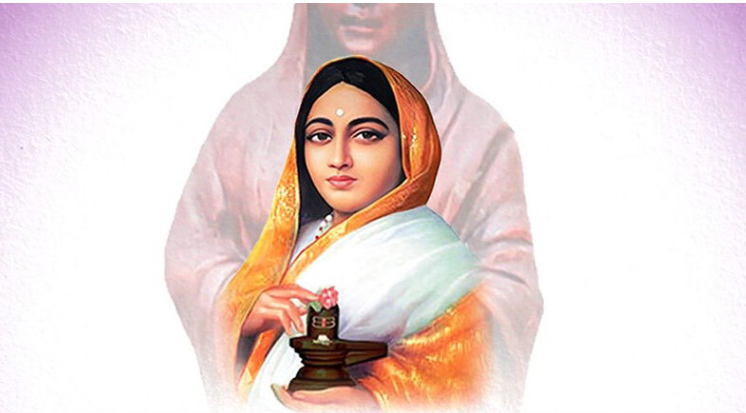
But the engineering feat tells only part of the story. Behind the glory, there is another side to it. As costs mounted and funds began to run short, Wadiyar turned to his personal wealth, selling his own jewellery to keep construction moving forward. To follow suit was Maharani Kempananjammanni Vani Vilasa Sannidhana, the mother of Maharaja Krishnaraja Wadiyar IV, who contributed her ornaments as well. Even then, the challenge persisted. In a remarkable moment of collective effort, villagers from surrounding regions came forward voluntarily, offering their labour without pay. Men, women, and even elders joined the effort, driven by the belief that the dam would transform their lives. In that moment, KRS didn’t just remain a government project; instead, it became a shared dream built by an entire community.
The KRS Dam in Mysore | Image Source: Vajiram & Ravi 
Challenge Came, But Was Dealt With
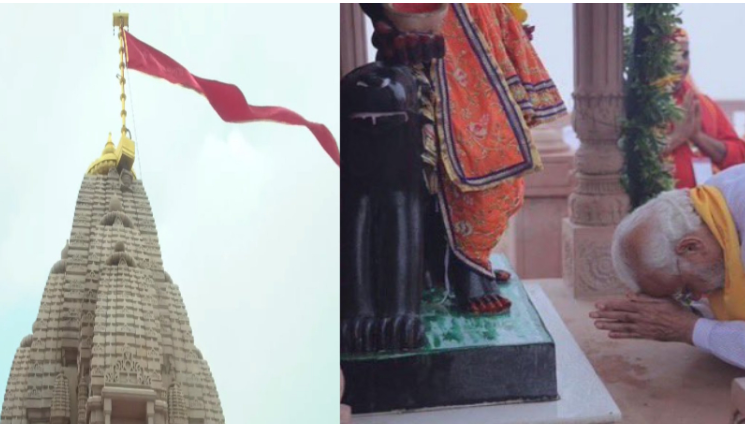
As the dam neared completion and the reservoir began to fill, the true cost of this transformation became visible. In the early 1930s, the rising waters of the dam slowly engulfed Kannambadi village, the very land where the construction of the dam took place. Homes, farmlands, and entire ways of life disappeared beneath the waters of the KRS Dam. Among the most poignant losses was the Venugopalaswamy Temple, a 12th-century Hoysala architectural masterpiece known for its intricate carvings and spiritual significance. More than 5,000 people were displaced; while the families who had lived on that land for generations had to leave, carrying with them not just belongings, but also their sacred Venugopala idol with them. Yet again, the Mysore king did not abandon his people and his land.
Recognising the human cost of the project, he ordered the establishment of a new settlement, Hosa Kannambadi, on a higher ground level. Displaced families were relocated, and efforts were made to ensure continuity of community life. Sacred idols, including that of Venugopala Swamy, were preserved safely. With this, he emerged as the true leader as he did not distance himself from the consequences of the dam; instead, he found solutions for them.
The Venugopalaswamy Temple near KRS backwaters in Mandya, in the submerged village of Kannambadi | Image Source: Facebook/@SrihariKaranth
How the Dam Built An Entire Ecosystem
With its completion in 1931, the KRS Dam became the backbone of a multi-purpose system designed to hold 49.45 TMC (Thousand Million Cubic Feet) of water that integrated irrigation, drinking water supply, and electricity generation.
Immediate Gains: The dam transformed the dry plains of Mandya into fertile agricultural land through an extensive canal network, enabling the cultivation of water-intensive crops like sugarcane and paddy. It provided a reliable source of drinking water to Mysore and, eventually, to Bengaluru, a city that would grow into India’s technological powerhouse. At the same time, the regulated flow of water supported the Shivanasamudra Hydroelectric Station, ensuring stable electricity generation of 42 MW throughout the year. The dam also contributed directly to three mini hydroelectric units—the 12 MW Brindavan plant, a 4 MW tailrace unit, and the 20 MW Visvesvaraya–Hanumanahalla plant—together producing a total installed capacity of 36 MW. Now, with a stabilised energy system, it led to the growth of key sectors such as the Bhadravati iron and steel plant and the sugar industry in Mandya. Thus, an interconnected economic ecosystem—one that linked water, power, agriculture, and industry—emerged.
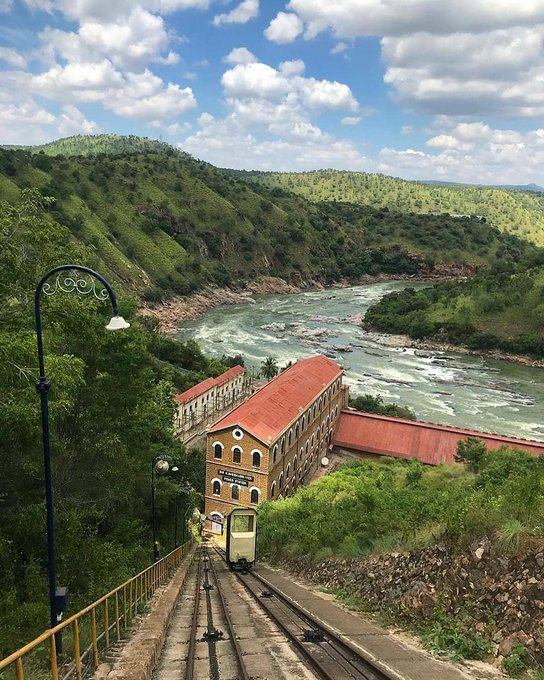
Shivanasamudra Hydroelectric Station | Image Source: X/@NammooruMandya
Contemporary Scenario: Now, coming to the contemporary situation, in 2026, nearly a hundred years after construction began, the KRS Dam continues to serve as a vital lifeline for southern India. It remains the primary water source, supplying over 30 TMC (Thousand Million Cubic Feet) of drinking water annually to Bengaluru, Mysore, and Mandya. Its irrigation network still supports agriculture across vast stretches of farmland, sustaining livelihoods and local economies. At the same time, favourable monsoons have ensured that the reservoir remains well-filled, even reaching full capacity multiple times in a single year. It continues to facilitate hydroelectric power generation primarily through the Shivanasamudra and Shimsha power stations. With the water from the KRS Dam, the Shivanasamudra Hydroelectric Plant is currently generating 154 million units (MU) annually, while the Shimsha power plant is producing around 3.6 million units annually.
From 1931 to 2026, the KRS Dam has not just endured the passage of time—it has defied it, standing tall as a living testament to foresight that continues to shape generations. This was only possible because of Krishnaraja Wadiyar IV. At a time when many of the kings were focused on short-term gains, Wadiyar invested in a long-term vision. He chose to address the root causes of suffering rather than its symptoms and built an infrastructural symbol for generations to come. In doing so, he did not just build a dam; he built a legacy that still flows through India.