The Sedition Trial of Bal Gangadhar Tilak in 1897: A Watershed in Colonial India’s Repression of Dissent

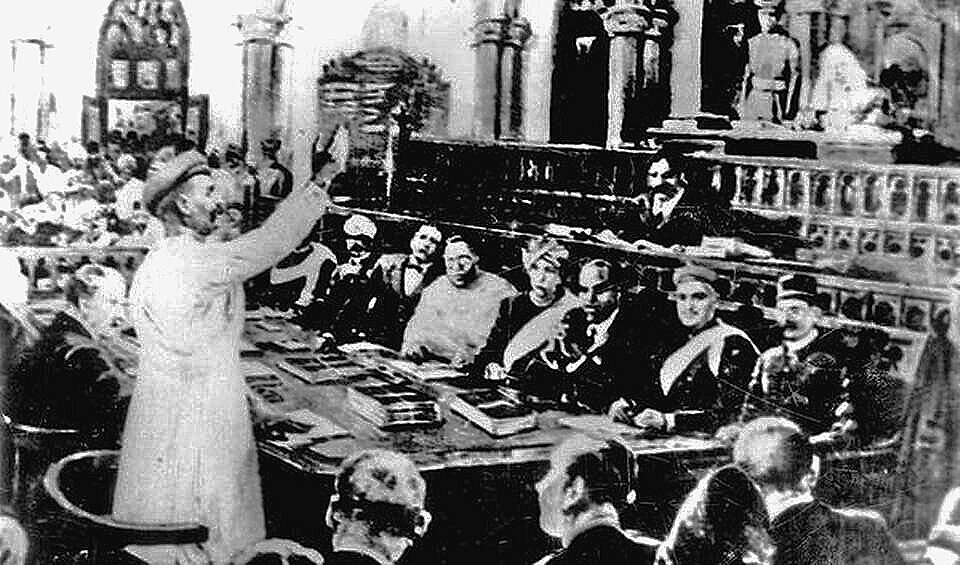
Sedition Enters the Indian Political Arena. The year 1897 marked a turning point in India’s political evolution under British rule. When Bal Gangadhar Tilak, a rising nationalist leader and editor of the fiery Marathi newspaper Kesari, was put on trial for sedition, it was only the second such case in British India. But its repercussions were far more widespread and politically resonant than anything seen before. The case helped define the terms of legal engagement between the colonial state and the nascent Indian political imagination.
Section 124A: A Law Designed for Colonial Control
The colonial administration added Section 124A to the Indian Penal Code in 1870, fearing the potential influence of rising nationalist sentiment. It defined sedition broadly, punishing any act that brought or attempted to bring “hatred, contempt or disaffection” toward the government. Though framed as a legal mechanism, it was fundamentally political—a tool to muzzle voices demanding Indian autonomy or exposing colonial injustices.
When Tilak was charged under this law in 1897, the state claimed he had “excited disaffection” through two writings in Kesari: an editorial on the Shivaji festival and a poem titled Shivaji’s Utterances. These writings were presented as dangerously subversive, even though they did not directly call for violence.
The Political Backdrop: Murder, Morality, and Marathi Identity
The trigger for the sedition charges lay in the political climate of Pune in 1897. The city had just hosted a grand public celebration of Shivaji Jayanti. At the event, Tilak and Fergusson College professor C.G. Bhanu delivered speeches extolling Shivaji’s courage and moral righteousness. Shortly after the event, two British officers—W.C. Rand and Charles Ayerst—were assassinated by the Chapekar brothers. Although there was no direct link between Tilak and the murder, the British administration used the incident to crack down on nationalist rhetoric.
The editorial and poem published in Kesari interpreted Shivaji’s actions, especially the killing of Afzal Khan, not as betrayal but as strategic moral resistance to tyrannical rule. Tilak asked whether morality and legality could be used to evaluate the deeds of a hero fighting for his people. He quoted the Bhagavad Gita to argue that the highest form of action lay beyond personal gain—one that aligned with duty (dharma), not colonial penal codes.
In the Courtroom: A Spectacle of British Legal Power
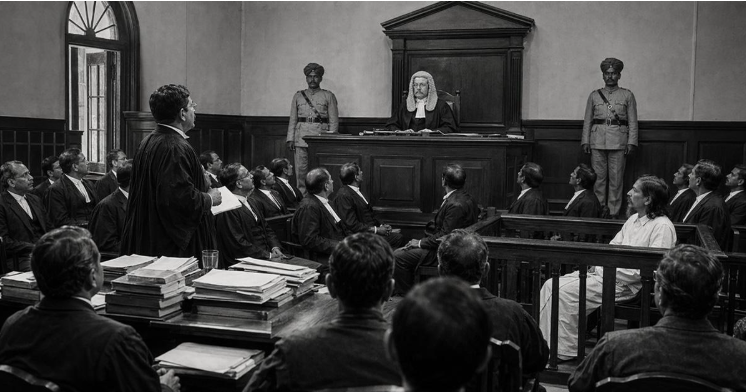
Tilak’s trial unfolded in the Bombay High Court over six days. As noted by the advocate S.S. Setlur in his published trial report, the case caused an unparalleled stir. The prosecution had little interest in exploring the political or philosophical underpinnings of Tilak’s texts. Instead, they focused solely on the effect of the articles—whether they were “calculated to excite disaffection.”
The poem Shivaji’s Utterances and the editorial were scrutinized not for what they intended but for how they might influence public opinion. Tilak’s attempt to revive a valiant Hindu past and apply its lessons to the colonial present was cast as dangerous. The jury found him guilty, and he was sentenced to 18 months in prison.
No Acts, Only Ideas: The Criminalisation of Thought
The most remarkable aspect of the 1897 sedition case is that Tilak was not accused of inciting a mob, plotting an assassination, or even engaging in protest. His writings—metaphorical, historical, and religious in tone—were themselves deemed seditious. The British administration, by prosecuting him for interpretation rather than incitement, established that even discourse was punishable.
This represented a shift in how colonial governance operated. Where once the state might have punished rebellion with force, it now began to criminalise mere speech as an act of rebellion. The power of interpretation shifted to the government, which would decide whether a metaphor was a call to arms or a poem was a political weapon.
Tilak’s Political Philosophy: Hindu Morality and Resistance
Tilak’s defence of Shivaji—and by extension his justification of political violence under certain conditions—came from a deeply moral and cultural worldview. He urged Indians to understand political action through the lens of indigenous thought. The Bhagavad Gita, for him, was not just scripture but a call to righteous action without attachment to results.
By quoting Krishna’s advice to Arjuna—who is told to fight even his own kin for the sake of dharma—Tilak implicitly argued that resistance against colonialism was not just a political right but a moral duty. His use of historical analogies, from European revolutionaries to Napoleon and Caesar, further exposed the hypocrisy of the British. Why were European insurgents heroes of progress while Indian patriots were branded as criminals?
Sedition’s Long Shadow: From Tilak to Modern India
The sedition trial of 1897 did more than just jail a single nationalist. It marked the beginning of a sustained state strategy to criminalise dissent in India—one that would be used against Mahatma Gandhi in 1922 and countless others in the years that followed.
Perhaps more alarmingly, the postcolonial Indian state retained and even extended these colonial legacies. Section 124A remains on the statute books. In 2020, over a century after Tilak’s trial, intellectuals, poets, and professors like Hany Babu were arrested under sedition and anti-terror laws in the Bhima Koregaon case. They were accused of “waging war against the state” through their writings and speeches—echoes of the same logic used against Tilak in 1897.
The Relevance Today: Colonial Continuities in Democratic India
As scholar Swati Parashar observes, the modern Indian state often mirrors its colonial predecessor in its methods of repression. It continues to see dissent not as part of democratic expression but as a threat to national order. The state remains anxious, particularly about educated voices who challenge its power through historical analogies, legal critique, or moral philosophy.
Tilak’s trial, then, is not just a chapter in the freedom struggle. It is a blueprint for understanding how power operates—how it disciplines language, polices memory, and criminalises thought.
A Trial that Changed the Terms of Indian Resistance
Bal Gangadhar Tilak’s sedition trial in 1897 was a foundational moment in India’s political history. It was not only about the imprisonment of a radical thinker but about how colonial power redefined resistance itself. By equating metaphor with militancy and thought with threat, the British laid down a precedent that continues to shape Indian jurisprudence and political culture.
Tilak walked into jail, not as a criminal, but as a nationalist philosopher who dared to offer his people a new vocabulary of resistance, rooted in history, faith, and righteous struggle. The echoes of that trial still resound in modern courtrooms, protests, and news headlines—reminding us that the battle over ideas, and who gets to speak them, is far from over.
.png)