All You Need to Know About Ganga Prasad Birla: The Billionaire Industrialist Who Shaped India’s Fortune

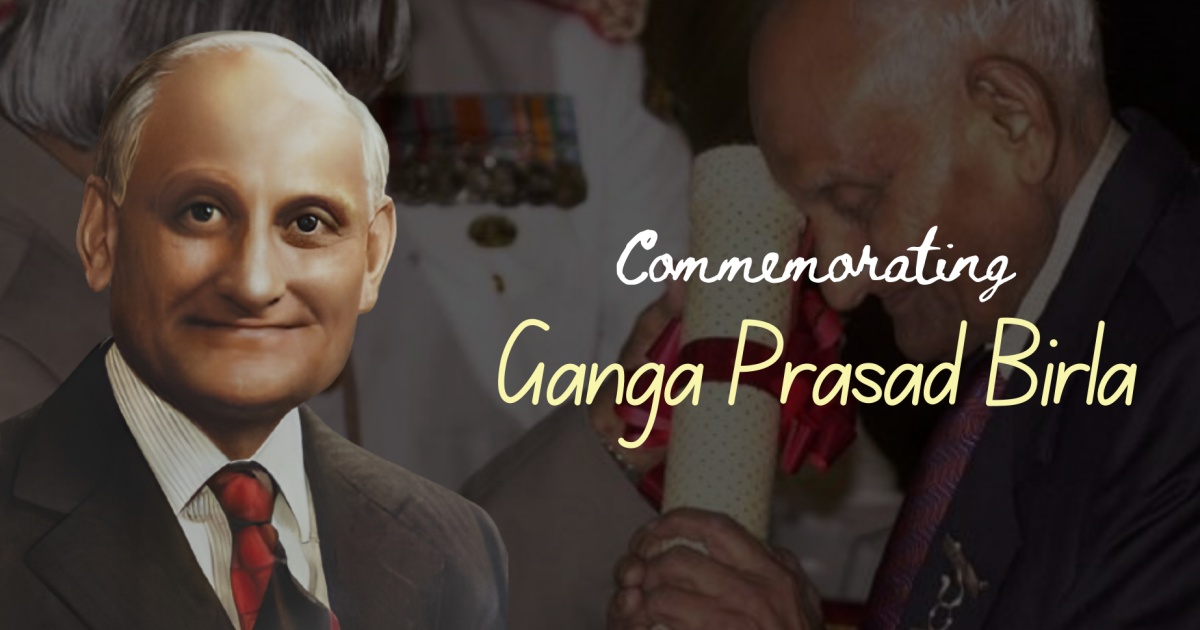
He was the quiet powerhouse behind one of India’s most trusted industrial empires. A man of simplicity who built a $1.2 billion legacy, founded schools, hospitals, and banks, and even gave Mahatma Gandhi shelter in his final days. Yet, after his death, his legacy was shaken by one of the most high-profile legal feuds in corporate India.
Ganga Prasad Birla wasn’t just a businessman. He was a nation-builder, institution-creator, and a philanthropic visionary. But behind the success was also a tale of ideological clashes, contested wills, and courtroom drama that shocked the Birla dynasty and the country. Here’s the incredible story of G.P. Birla.
1. Who Was Ganga Prasad Birla and Why Is He Important to India’s Industrial History? Ganga Prasad Birla (1922–2010) was a leading Indian industrialist and philanthropist from the influential Birla family. As the son of B.M. Birla, he carried forward a legacy of entrepreneurship rooted in nationalist values. Under his leadership, the Birla Group diversified into paper, automobiles, software, and heavy engineering. He turned the family enterprise into a $1.2 billion global powerhouse. Beyond business, his commitment to nation-building saw him establish iconic institutions in education, health, and scientific research, leaving a legacy that continues to shape modern India.
2. How Did G.P. Birla Expand the Industrial Footprint of the Birla Group? G.P. Birla was instrumental in scaling and diversifying the Birla Group’s industrial empire during India’s post-Independence economic boom. He oversaw companies like Hindustan Motors, Avtec, Birlasoft, and NEI. He also set up Orient Paper & Industries, Hyderabad Industries Ltd, and Nigeria Engineering Works. His vision extended beyond domestic markets—he expanded operations to four continents. By the 1980s, the group’s turnover had surpassed ₹5,000 crore ($1.2 billion). His managerial style was strategic yet grounded in Indian values, making him a bridge between traditional business ethics and modern industrial demands.
3. What Was His Leadership Style Like Behind Closed Doors? Despite his wealth, G.P. Birla was known for his humility and simple lifestyle. Even after retiring from active business following two heart attacks in 1981, he stayed connected to the Birla Building headquarters. He often held afternoon tea meetings with his cousin Basant Kumar Birla on the 16th floor. Known for his sharp memory and emotional intelligence, Birla had a deep sense of empathy for the common people. He was described by peers as a values-driven man, committed to ethical leadership and national progress.
4. What Role Did He Play in the World of Education and Philanthropy? G.P. Birla believed that education was the foundation of a strong nation. He established institutions such as the Birla Institute of Technology (Ranchi), Modern High School for Girls, and Rukmani Birla High School. His philanthropic ventures also led to the creation of the B.M. Birla Heart Research Centre and Calcutta Hospital. Through these, he supported science, medicine, and cultural research. These institutions continue to serve thousands, symbolizing his deep commitment to intellectual and social upliftment.
5. Why Was He Honoured with the Padma Bhushan? In 2006, the Government of India awarded G.P. Birla the Padma Bhushan—India’s third-highest civilian award—for his contributions to trade and industry. He was recognized not just for expanding the Birla empire but for aligning business with national service. His philanthropic efforts and the founding of iconic institutions across healthcare, culture, and education played a major role in earning him the prestigious award.
6. What Was His Relationship With Mahatma Gandhi? G.P. Birla shared a long and intimate association with Mahatma Gandhi. The Birla House in Delhi, where Gandhi spent his last days and was assassinated in 1948, was built by the Birla family. G.P. Birla published a 4-volume series titled “Bapu: A Unique Association”, documenting their correspondence. He provided monthly financial support to Gandhi and often acted as a bridge between him and British officials. Despite disagreements—especially on religious harmony—Birla supported Gandhi’s causes and was active in the Harijan Sevak Sangh.
7. How Did He Contribute to India’s Political and Economic Vision Before and After Independence? The Birlas were not just businessmen—they were nation-builders. G.P. Birla followed the legacy of his predecessors by being politically active. He was connected with FICCI, India’s first all-India business forum, which supported the Congress-led freedom movement. His family helped draft the Bombay Plan (1944)—a visionary economic roadmap co-authored with JRD Tata that envisioned India’s industrial future. He also co-founded UCO Bank during WWII to ensure Indian control over financial institutions. These initiatives helped shape modern India’s economic direction.
ALSO READ: ‘ If History Had Followed Mukherjee’s Path, What Would India Have Been Like?”
8. What Was His Role in Expanding Global Trade and International Ventures? Unlike many industrialists of his era, G.P. Birla looked beyond India. He was responsible for the establishment of Nigeria Engineering Works and other international business collaborations. These efforts helped position the Birla Group as a global force. His strategic foresight in technology transfer, manufacturing partnerships, and diversification set the stage for Indian companies to dream bigger on the world stage.
9. What Were His Religious and Cultural Beliefs? While G.P. Birla was a strong nationalist, he held deeply conservative social views. He supported reconversions to Hinduism through the Arya Samaj and often criticized aspects of Gandhi’s philosophy—especially religious unity and non-violence as political tools. However, he never let these ideological differences come in the way of his loyalty to Gandhi. He also managed several Hindu religious trusts and contributed to temple upkeep and cultural preservation.
10. How Did the Legal Battle Over Priyamvada Birla’s Will Tarnish the Birla Legacy? One of the biggest controversies surrounding G.P. Birla’s later life was the 2004–2008 legal dispute over the ₹5,000 crore estate of Priyamvada Birla. She allegedly left her entire fortune to R.S. Lodha, sparking outrage in the Birla family. G.P. Birla contested the will as executor of a prior 1982 version, leading to a high-profile legal battle. In 2008, the Supreme Court ruled that only G.P. Birla had the right to challenge the new will. Even after his death, litigation continued between the Lodha and Birla families, impacting corporate governance at Birla Corp.
11. What Impact Did This Controversy Have on Birla Group Companies? The extended legal war over Priyamvada Birla’s assets deeply impacted group firms like Birla Corp. In 2020, the Calcutta High Court temporarily barred Harsh Vardhan Lodha (son of R.S. Lodha) from holding office in certain companies. The case raised questions about succession planning, trust governance, and internal corporate control in one of India’s most respected business dynasties. It highlighted how even the most storied legacies are vulnerable to internal conflict.
12. What Is G.P. Birla’s Lasting Legacy in India Today? G.P. Birla’s name lives on through the institutions he built and the people his work uplifted. From students in the classrooms of Birla Institute of Technology to patients at the B.M. Birla Heart Research Centre, his impact continues across generations. His model of inclusive industrialization and socially conscious entrepreneurship offers a blueprint for modern Indian business leaders.
13. How Is He Remembered by the Nation and Its Leaders? Upon his death in March 2010, President Pratibha Patil wrote to his wife Nirmala Birla, stating that the country had “lost an illustrious personality.” He was not just seen as an industrialist, but as a visionary who combined capital with compassion. Tributes poured in from across political and business circles, praising his contributions to national development, values-based leadership, and unwavering commitment to India’s growth.
Ganga Prasad Birla was more than just an industrialist. He was the silent architect of modern India’s private sector, a patriot with a philanthropic soul, and a man whose legacy defies boardrooms and balance sheets. His journey from Varanasi to global boardrooms is a story that deserves to be remembered—not just in textbooks but in the living institutions that still bear his name.
.png)
.jpg)