The Scientist Who Turned Famine into Food Security: Remembering Dr. M.S. Swaminathan On His Birth Anniversary

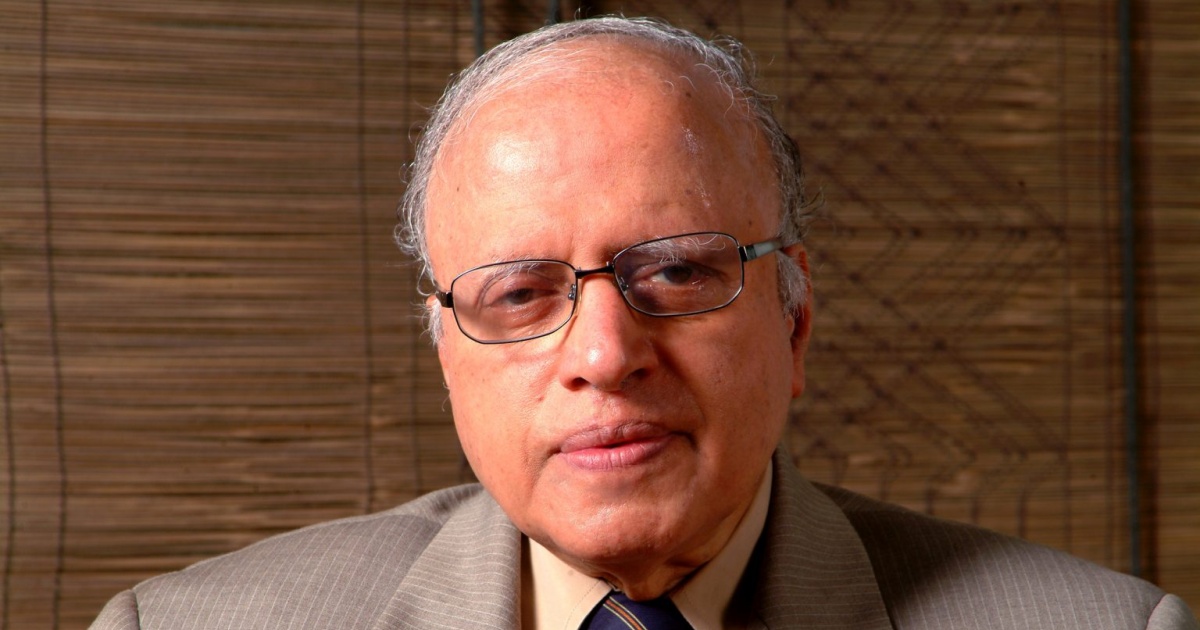
Every year, 7th August reminds us of another kind of nation-building, in grains, green fields, and groundbreaking science. On this day, we remember Dr. M.S. Swaminathan, the legendary agricultural scientist who redefined India’s relationship with food, farming, and famine. Often hailed as the Father of the Green Revolution in India, his work marks a historical shift from a food-deficient nation to one of self-reliance, and remains deeply relevant today as India grapples with climate change, rural distress, and food security challenges.
This article explores Swaminathan’s visionary role in transforming Indian agriculture, his relentless advocacy for farmer welfare, and his lasting impact on sustainable food systems. It also reflects on how his science-driven compassion continues to inspire future policy and innovation in agriculture.
In tracing his life and legacy, we not only honor a scientist but also revisit the roots of a revolution that still feeds a billion, and that journey begins here.
Life Sketch and Education
- M.S. Swaminathan was born on August 7, 1925, in Kumbakonam, Tamil Nadu. After losing his father at age 11, he was raised by his paternal uncle.
- He started his studies in the local high school before transferring to the Catholic Little Flower High School in Kumbakonam.
- He passed the matric exam at the age of 15.
- He got two undergraduate degrees among them one was in zoology from University of Travancore in 1944 and another one was in agriculture from the Agricultural College from University of Madras in 1947.
- He attended the Indian Agricultural Research Institute (IARI) in New Delhi for his postgraduate studies, graduating with a Master’s degree in Genetics and Plant Breeding in 1949. He also attended Wageningen Agricultural University in the Netherlands as a UNESCO Fellow.
- After earning a PhD from Cambridge in 1952, Swaminathan attended the University of Wisconsin to study cytogenetics and potato breeding before joining India’s rice hybridization program in Cuttack.
- His keen interest in agricultural science, coupled with his father’s participation in the freedom movement and Mahatma Gandhi’s influence, inspired him to pursue higher studies in the subject.
- He met Mina Boothalingam in 1951 while they were both enrolled in Cambridge, and the two eventually got married. Soumya Swaminathan, Madhura Swaminathan, and Nitya Rao are their three daughters.
- The “Father of India’s Green Revolution,” M. S. Swaminathan, died on September 28, 2023, at the age of 98, at his home in Chennai.
How did Prof. M.S. Swaminathan helped India become food-secure from food-deficiency in the 1960s?
By leading the Green Revolution in the 1960s, Prof. M.S. Swaminathan was instrumental in turning India from a food-deficient to a food-secure country.
“Poverty has many dimensions beyond income: education, health, environment, water, sanitation, livelihood security, and peace” – M.S. Swaminathan.
- Concerned by India’s “ship-to-mouth” dependence on food imports, Prof. Swaminathan envisioned boosting staple food production to achieve national food security.
- Prof. Swaminathan focused on developing high-yield, fertilizer-responsive crop varieties with reduced height but full grain panicles through hybridization, radiation, and chemical mutagenesis.
- Prof. Swaminathan laid the genetic groundwork for high-yield crop types by tracking down the dwarfing genes “Norin-10” from Japan for wheat and “Dee-Geo-woo-Gen” from China for rice.
- Later he worked with Professors Orville Vogel and Norman Borlaug to import and produce Mexican dwarf wheat varieties for Indian agriculture, including “Lerma Rojo” and “Sonora-64.”
- In 1964, he successfully demonstrated high yields, high quality, and disease-resistant wheat varieties in 150 one-hectare demonstration plots that were developed to ease farmer concerns.
- Following more laboratory adaptations of the wheat types for Indian circumstances, production surged to 17 million tonnes in 1968, five million more than the previous crop.
- A significant turning point in agricultural transformation was reached in 1971 when the Indian government announced that the country was self-sufficient in food production.
- Swaminathan is known as the *Father of India’s Green Revolution* when his Green Revolution defied fatal famine forecasts.
What was the Green Revolution in India, and how did it transform agriculture and food production?
In India, the 1960s and 1970s saw the Green Revolution, a revolutionary agricultural movement that increased the production of food grains, particularly rice and wheat, through the use of irrigation, chemical fertilizers, and high-yielding varieties (HYVs). It transformed India, which was a food-deficient country, into a self-sufficient one under the leadership of Dr. M.S. Swaminathan and with assistance from Norman Borlaug. But it also brought with it health risks from excessive use of chemicals and water supplies, ecological issues, and regional inequalities.
What were the Green Revolution’s major positive and negative impacts in India?
- Positive Impacts of Green Revolution in India
- Increase in Production and Productivity: HYVP was restricted to only five crops – Wheat, Rice, Jowar, Bajra and Maize. Therefore, non-food grains were excluded from the ambit of the new strategy. Wheat has remained the mainstay of the Green Revolution over the years.
- Deceleration in Agricultural Growth Rates in the Reform Period: After registering impressive performance during the 1980s, the agricultural growth decelerated in the economic reform period (commencing in 1991). As is clear, the rate of growth of production of food grains fell from 2.9 percent per annum in 1980s to 2.0 per cent per annum in 1990s and stood at 2.1 per cent per annum in the first decade of the present century.
- Regional Dispersal of Green Revolution and Regional Inequalities: HYVP was initiated on a small area of 1.89 million hectares in 1966-67 and even in 1998-99 it covered only 78.4 million hectares which is just about 40 per cent of the gross cropped area. Naturally, the benefits of the new technology remained concentrated in this area only.
- Negative Impacts of Green Revolution in India
- Loss of Biodiversity: The spread of Green Revolution agriculture affected both agricultural biodiversity and wild biodiversity. There is little disagreement that the Green Revolution acted to reduce agricultural biodiversity, as it relied on just a few high-yield varieties of each crop.
- Greenhouse gas emissions: According to a study published in 2013 in PNAS, in the absence of the crop germplasm improvement associated with the Green revolution, greenhouse gas emissions would have been 5.2-7.4 Gt higher than observed in 1965–2004.
- Dependence on non-renewable resources: Most high intensity agricultural production is highly reliant on non-renewable resources. Agricultural machinery and transport, as well as the production of pesticides and nitrates all depend on fossil fuels.
What significant contributions to Indian and international agriculture has Professor M.S. Swaminathan made?
- Green Revolution Leadership: Instrumental in introducing high-yielding varieties (HYVs) of wheat and rice in India during the 1960s, significantly boosting food production and averting famine.
- Institution Building: Founded the M.S. Swaminathan Research Foundation (MSSRF) in 1988 to promote sustainable agriculture and rural development.
- Scientific and Administrative Leadership:
- Director, Indian Agricultural Research Institute (IARI) (1961–1972)
- Director General, ICAR and Secretary, DARE (1972–1979)
- Agriculture Secretary, Government of India (1979)
- Deputy Chairman (Acting), Planning Commission (1980–1982)
- International Contribution: Prof. M.S. Swaminathan became the first Indian to serve as Director General of the International Rice Research Institute in the Philippines from 1982 to 1988.
- Policy Influence: Prof. Swaminathan chaired the National Commission on Farmers (2004–2006), advocating for an MSP at least 50% above the weighted average cost of production, and later served as a nominated Rajya Sabha member (2007–2013) for his contributions to agriculture and policy-making.
How did M.S. Swaminathan strengthened India’s farm research through ICAR, DARE, ARS, ASRB, and AICRP?
- As Director General of ICAR, Prof. Swaminathan modernized and expanded India’s agricultural research network, elevating the country’s global standing in agri-research and education.
- Under ICAR, India established 113 research institutes, 76 agricultural universities, and 731 Krishi Vigyan Kendras (KVKs) coordinated by 11 ATARIs, significantly expanding the agricultural research and education infrastructure.
- In order to foster national cooperation among agricultural experts, Prof. Swaminathan was instrumental in the establishment of the All-India Agricultural Research Service (ARS).
- In order to guarantee transparent recruitment of scientists through competitive examinations and the National Eligibility Test (NET), Prof. Swaminathan backed the creation of the Agricultural Scientists Recruitment Board (ASRB) in 1973.
- Through ICAR’s international partnerships, Prof. Swaminathan contributed to the strengthening of DARE, which was founded in 1973 as the principal organization for worldwide agricultural research cooperation.
- Forming the foundation of the Green Revolution, Prof. Swaminathan, as Director of IARI, initiated the first All India Coordinated Research Project (AICRP) for food crops.
- By encouraging inter-state, inter-institutional, and interdisciplinary collaboration, AICRPs promoted a national research culture and made it possible for rapid technology testing in a variety of settings.
- A major governance accomplishment, Swaminathan’s AICRP model specifically promoted strong center-state coordination in agricultural research, even though agriculture is a state issue.
- Swaminathan oversaw the establishment of NAREES from 1967 to 1971, changing India’s reputation as a “begging bowl” to one that produces its own food.
What was M.S. Swaminathan’s key contributions to India’s agriculture, food security, sustainability, and farmers’ welfare?
- As the architect of the Green Revolution, Prof. Swaminathan introduced and promoted high-yielding wheat and rice varieties, transforming India into a self-sufficient food producer and ending its dependence on imports.
- Prof. Swaminathan extended the idea of food security beyond agricultural output by promoting universal food availability and an effective Public Distribution System (PDS).
- Prof. Swaminathan developed the idea of the “Evergreen Revolution,” which advocates for integrated farming methods to maintain productivity while preserving the environment, and he emphasized the ecological dangers of excessive chemical use.
- As chair of the National Commission on Farmers (2004–06), Prof. Swaminathan recommended key reforms including MSP at 50% above production cost, land reforms, improved nutrition, and comprehensive farmer protection policies.
- The M.S. Swaminathan Research Foundation was established in 1988 by Prof. Swaminathan with the goals of advancing rural development, biodiversity conservation, and sustainable agriculture.
- By advocating for gender equality in farming, supporting legislation such as the Protection of Plant Varieties and Farmers’ Rights Act (2001), and advancing nutrition-sensitive agriculture through biofortification, Prof. Swaminathan improved the wellbeing of farmers.
What is the significance of NAAS, and how did Prof. M.S. Swaminathan contributed to its creation?
The National Academy of Agricultural Sciences (NAAS) was founded in 1990 as a result of Prof. M.S. Swaminathan’s advocacy for the establishment of an independent think tank focused on agricultural policy. NAAS encourages excellence in research, produces important policy statements, and provides a forum for scientific discussion. It uses knowledge-driven guidance to address multifaceted concerns like food security, sustainability, and poverty.
What criticisms have been associated with M.S. Swaminathan?
- Promotion of HYV Monocultures & Biodiversity Loss
- Environmental Degradation
- Regional Disparity in Agricultural Development
- Social & Economic Inequality
- Food Security vs Nutritional Security
- Seed Dependency & Loss of Traditional Knowledge
- Genetically Modified Crops & Corporate Influence
What awards and recognitions did M.S. Swaminathan receive?
- He has received over 80 honorary doctorates from universities all over the world.
- He chaired the Task Force (of the Ministry of External Affairs) to oversee agricultural projects in Afghanistan and Myanmar.
11 important awards National and International Awards
- Bharat Ratna (2024) – India’s highest civilian honour, awarded posthumously for his revolutionary contributions to agriculture and food security.
- World Food Prize (1987) – Often referred to as the “Nobel Prize for Food and Agriculture”; awarded for leading India’s Green Revolution.
- Padma Vibhushan (1989) – India’s second-highest civilian award, for outstanding service in the field of agriculture.
- Ramon Magsaysay Award for Community Leadership (1971) – For pioneering work in food production and rural development.
- Albert Einstein World Science Award (1986) – Honoured for scientific innovation in crop improvement and food security.
- UNEP Sasakawa Environment Prize (1994) – For promoting sustainable agricultural and environmental practices.
- Indira Gandhi Prize for Peace, Disarmament and Development (2000) – For ensuring food security and using science for peace and development.
- Franklin D. Roosevelt Four Freedoms Medal (2000) – Recognized for advancing freedom from want through agricultural innovation.
- Volvo Environment Prize (1990) – For transforming India’s food landscape through sustainable methods.
- Ordre du Mérite Agricole (France, 1997) – Conferred by the French government for distinguished service to agriculture.
- UNESCO Mahatma Gandhi Gold Medal (1999) – For extending biotechnology to marginalized communities and promoting sustainable rural development.
What have been the major government-backed agricultural transformations in India since 2014?
The Modi government has placed a high priority on the growth of the farm sector, as evidenced by the five-fold rise in India’s agriculture budget to ₹1.25 lakh crore since 2014. Prime Minister Modi has placed a strong emphasis on encouraging sustainable practices and lowering reliance on imports for essential foods like edible oils. He urged moral responsibility to preserve soil health in his 2019 Independence Day speech, cautioning against the excessive use of chemical pesticides and fertilizers. Given that half of the population depends on agriculture for their livelihood, the government is actively promoting natural and organic farming.
Drawing inspiration from ancient Indian texts like the Vedas, Brihat Samhita, Arthashastra, and Mahabharata, the government has revived traditional farming wisdom. Key initiatives include:
- Paramparagat Krishi Vikas Yojana (PKVY) (2015–16): A comprehensive scheme supporting farmers in organic farming through a cluster approach and Participatory Guarantee System (PGS) for certification. It has covered 11.85 lakh hectares so far, with an additional 6 lakh targeted by 2025-26.
- Bharatiya Prakritik Krishi Paddhati (BPKP) (2020–21): A sub-scheme under PKVY promoting chemical-free farming using natural resources like cow dung and biomass. So far, 4.09 lakh hectares have been brought under BPKP.
- National Mission on Natural Farming (2023–24): Launched to scale natural farming with a budget of ₹459 crore.
- Mission Organic Value Chain Development for North Eastern Region (MOVCDNER): Expanded organic farming over 1.73 lakh hectares, benefitting 1.89 lakh farmers and establishing infrastructure like FPOs, processing units, and branding.
How is Prime Minister Narendra Modi’s government transforming Indian agriculture through the Agriculture Infrastructure Fund (AIF)?
The early focus of Prime Minister Narendra Modi’s third term reflects his dedication to strengthening farmers. Under Atmanirbhar Bharat, the 2020 Agriculture Infrastructure Fund intends to increase post-harvest losses, improve storage and processing facilities, and raise farmer incomes across the country.
AIF-backed infrastructure, such as warehouses, cold storage facilities, and processing units, is addressing post-harvest losses, which are estimated to account for 16–18% of global food output. Over ₹47,500 crore has been approved under AIF thus far, and ₹30,000 crore has been disbursed, contributing to the funding of 74,695 projects in India. These consist of cold chains, grading units, bespoke hiring centers, and more.
The initiative has:
- Bridged a 500 lakh metric tonne storage gap,
- Saved ₹5,700 crore in food losses,
- Created 3.5 lakh MT capacity for horticulture storage, saving ₹1,250 crore annually,
- Generated over 8 lakh jobs, with a projected 25 lakh in the future.
Additionally, the government is promoting entrepreneurship among farmers, and encouraging youth participation in agriculture through innovations like hydroponics, vertical farming, and solar energy integration (under PM-KUSUM).
Further scheme expansions now allow individual beneficiaries (not just groups) to take up modern projects and enable integrated post-harvest processing for higher returns. Credit support, interest subvention, and NABARD collaboration make loans cheaper, especially for Primary Agricultural Cooperative Societies (PACS).
PM Modi’s agricultural reforms aim to double farmer incomes, reduce rural distress, and build a self-reliant, resilient, and modern agriculture sector, contributing to the vision of a “Viksit Bharat.”
.png)