26 Facts You Must Know: From Empire’s Sword to Nation’s Shield, The Untold Story of Indianisation of the Indian Army

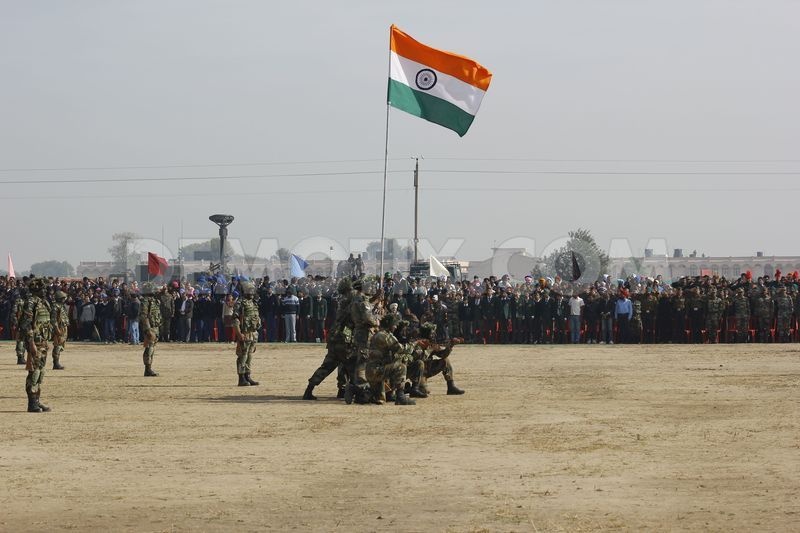
India gained its independence 78 years ago, But The Indian Army has regiments which are older than 250 years.
1. How old are some regiments of the Indian Army as India enters its 75th year of independence?
Some regiments of the Indian Army are nearly 250 years old, despite India having completed 75 years of independence.
2. Why does the Indian Army have regiments older than India’s independence, and what was its role during British rule?
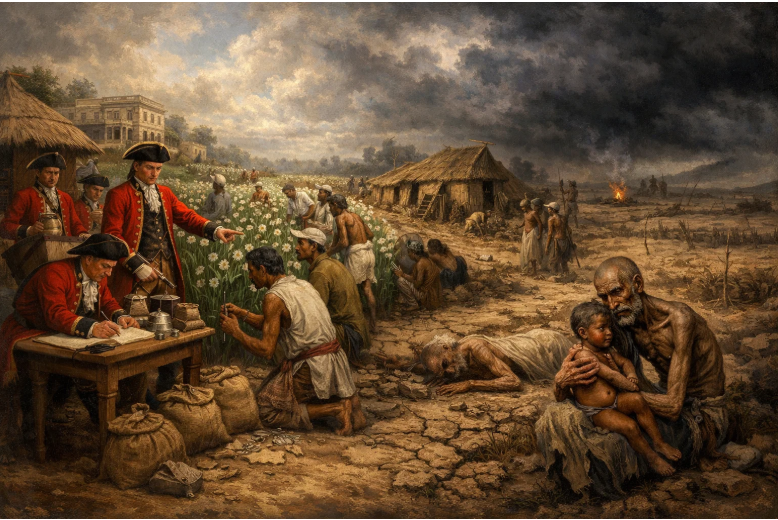
As India enters its 75th year of independence, many of its Army regiments are nearly 250 years old because the Indian Army was shaped under Imperial Britain and served as the sword arm of the British Raj. It was deliberately kept away from public control and aligned with colonial interests rather than nationalist movements.
3. What was Mahatma Gandhi’s stance on involving the Indian Army in the freedom movement?
Mahatma Gandhi firmly opposed involving Indian troops in the freedom struggle, as he believed their participation would inevitably lead to violence, contradicting his vision of a strictly non-violent movement.
4. How did the Indian Army prove its value at the time of Independence?
As the British prepared to leave and violence erupted across the subcontinent, the newly independent nation realised the urgent need for a disciplined, professional army. The Indian Army rose to the occasion and did not let the nation down, maintaining order during a volatile transition.
5. What was the meaning and motivation behind the demand for Indianisation of the Indian Army?
Though seemingly contradictory, ‘Indianisation’ referred to the movement to recruit Indians into the officer corps of the British Indian Army, which had long been manned by Indians but commanded solely by British officers. Nationalists like Motilal Nehru, Jinnah, Sivaswamy Iyer, Amarnath Jha, and H.N. Kunzru demanded not only officer inclusion but also equalitarian recruitment and eventual nationalization of the Indian military.
6. Who were the key Indian leaders advocating for Indianisation, and what were their broader goals?
Leaders such as Motilal Nehru, Muhammad Ali Jinnah, Sivaswamy Iyer, Amarnath Jha, and H.N. Kunzru were vocal in the Governor-General’s Legislative Assembly, demanding Indianisation. Their goal extended beyond just recruiting Indian officers — they also advocated for equalitarian recruitment in the ranks and eventual nationalisation of the Indian military, moving it from a colonial force to a national one.
7. What steps did the British take in response to early Indianisation demands?
Following the Indian Army’s commendable performance in World War I, the British made a tentative start by founding the Prince of Wales Royal Indian Military College (RIMC) at Dehradun in 1922. It aimed to prepare elite Indian boys for training at Royal Military College, Sandhurst in the UK. Successful candidates became King’s Commissioned Indian Officers (KCIOs), though their numbers were kept extremely low.
8. How did Indian dissatisfaction shape officer training within India?
Due to widespread discontent with the slow pace of officer recruitment, the British established the Indian Military Academy (IMA) in 1932, also in Dehradun, to train Indian Commissioned Officers (ICOs). However, these officers were posted only to units selected for Indianisation and could not command British officers. Among IMA’s first batch were Sam Manekshaw (later Field Marshal and Army Chief), and future chiefs of Pakistan (Mohammad Musa) and Burma (Smith Dun). Sandhurst intake was discontinued, and the goal was set to fully Indianise the officer corps in 75 years.
9. How did World War II affect Indianisation and the structure of the Indian Army?
World War II forced rapid Indianisation. The Indian Army expanded massively—from 1,89,000 in 1939 to 2.6 million in 1945, becoming the largest volunteer army in the world. The number of officers grew from 2,800 to 22,000, with 8,500 Indians among them. Indians proved themselves across three continents and were largely responsible for halting the Japanese advance into India and driving them back.
10. What was the state of the Indian officer corps by the time of independence in 1947?
When the British left in 1947, post-demobilization, the Indian Army had a significant number of Indian officers, though most held lower or middle-level ranks. Thanks to wartime expansion and earlier Indianisation efforts, India inherited a partially Indianised but battle-hardened army, ready to serve the new nation.
11. Is it true that Indian officers in the British Indian Army were indifferent to the Indian freedom movement?
A. No, this is a false assumption. Many Indian officers were deeply nationalistic and conscious of the independence movement, despite being part of a colonial army. They endured racism, hostility, and exclusion from the British officer brotherhood, but continued to serve with professionalism and a vision for a future Indian Army.
12. What challenges did Indian officers face within the colonial military establishment?
A. Indian officers faced systemic racism, social exclusion in the Mess, and professional hostility from British officers who resented the inclusion of “natives” in their ranks. Despite this, they remained committed and gradually built the foundation of an apolitical and professional Indian Army.
13. Did any Indian officers consider resigning to join the freedom movement?
Yes. According to Humphrey Evans, the biographer of General K.S. Thimayya, during the Civil Disobedience Movement, Thimayya and several other young officers, stirred by nationalist fervour, considered resigning their commissions to actively participate in the freedom struggle.
14. What advice did Motilal Nehru give to nationalist-leaning Indian officers during the freedom movement?
Motilal Nehru advised General Thimayya and his peers not to resign. He told them that their resignation would only benefit the British, who would be pleased to see nationalist officers leave. He emphasized that India was on the verge of winning the fight for Indianisation and Independence, and that after the British left, India would need a strong, professional army led by Indians for its security and survival.
15. How did the Indian officers respond to Motilal Nehru’s guidance, and what was the result?
The officers heeded Nehru’s advice, choosing to remain in service. Their decision helped ensure that, post-independence, India would inherit a core of loyal, trained, and capable Indian officers, who would lead a truly national and apolitical army, capable of safeguarding the nation without foreign dependence.
1857 Mutiny and Its Aftermath www.nam.ac.uk/explore/decisive-events-indian-mutiny
16. What impact did the Revolt of 1857 (Indian Mutiny) have on British trust in Indian troops?
The Rebellion of 1857 deeply shattered British confidence in Indian soldiers. After sepoy units across the Bengal Army turned against their British officers, the colonial authorities began to distrust Indians in military command roles
17. When and how did governance in India change following the mutiny?
In response to the rebellion, the British Parliament passed the Government of India Act 1858 on August 2, transferring authority from the East India Company to the British Crown. This marked the start of direct Crown rule, known as the British Raj, which lasted until 1947.
18. How was the Indian Army reorganised after 1857? After the mutiny, the British reorganised the Indian Army to prevent future rebellions:
They increased the proportion of British troops and made the structure depend more on British leadership
Artillery and other key branches were reserved for British control; Indian soldiers were reduced to an auxiliary role
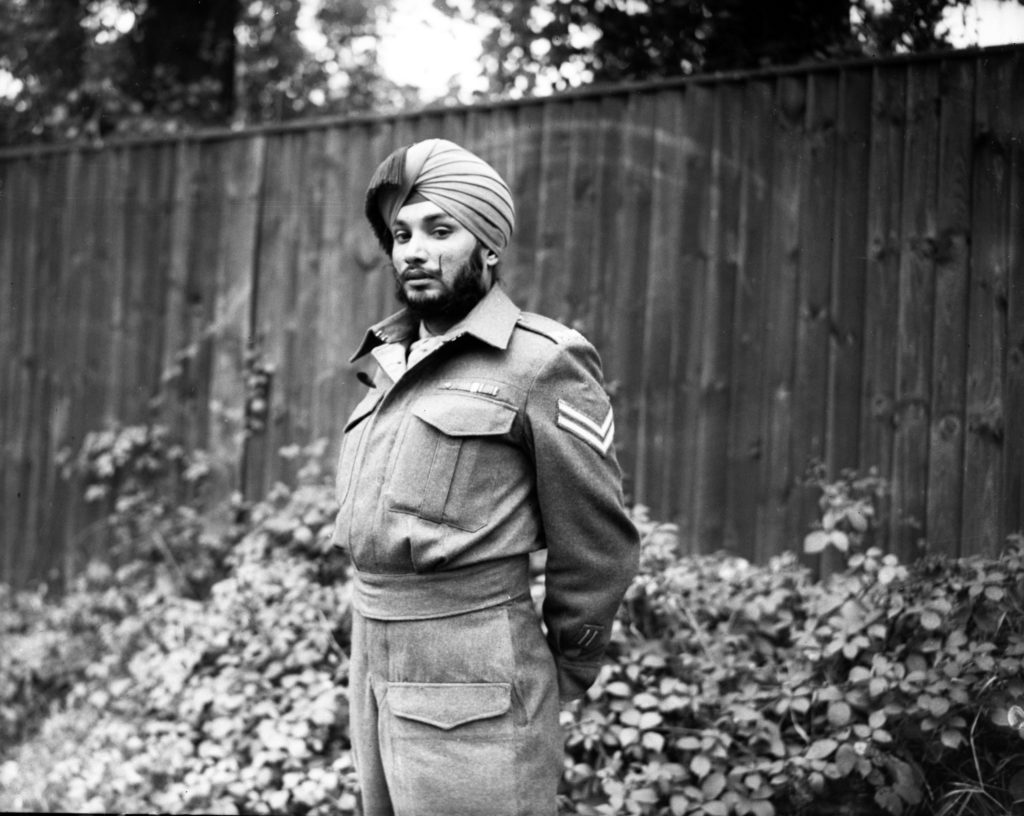
19. Which groups did the British prefer in military recruitment, and why? To reduce rebellion risk, the British adopted a “martial races” strategy, recruiting from communities they considered more loyal and warlike, such as Punjabis, Sikhs, Gurkhas, Pathans, and Baluchis—while distancing themselves from mutiny-prone groups like high-caste Hindus from the Ganges Valley.
20. In what ways were officer ranks insulated from Indian access post-1857? Following the mutiny, Indian soldiers were no longer trusted for leadership roles:
- Commissioned officer positions remained reserved for British personnel.
- Indians were limited to Viceroy’s Commissioned Officers, with no access to full commissioning until much later
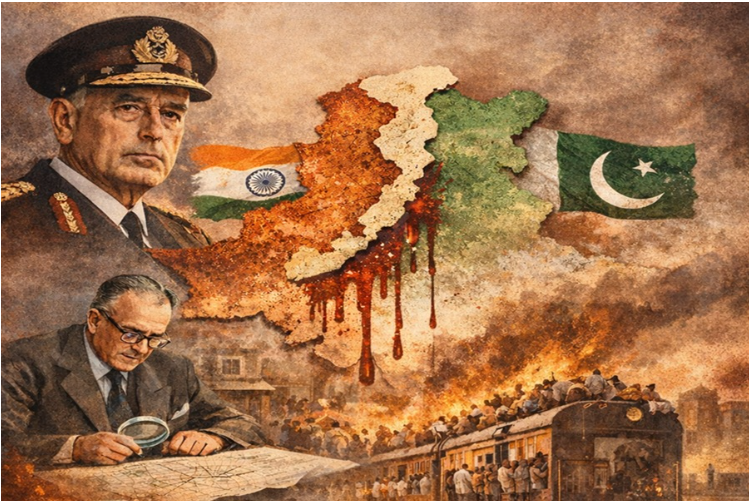
21. How Partition Affected the Indian Army? (impact on the Army)
- The end of British rule also marked the end of the existing Indian Army structure and administration.
- Field Marshal Sir Claude Auchinleck was in charge of dividing the Indian Army.
- Approx. 260,000 soldiers, mostly Hindus and Sikhs, were allocated to India.
- Approx. 140,000 soldiers, mostly Muslims, were allocated to Pakistan.
- The Brigade of Gurkhas, originally recruited from Nepal, was divided between India and Britain.
- Several British officers remained to help during the transition period.
- General Sir Robert Lockhart became India’s first Chief of Army Staff.
- General Sir Frank Messervy became Pakistan’s first Chief of Army Staff.
Individual regiments were reorganised along communal lines:
- The 19th Lancers in Pakistan swapped Jat and Sikh soldiers for Muslim soldiers from Skinner’s Horse in India.
Contradictions in Post-Independence Indianisation(impact on the Army)
22. Did India immediately discard British military symbolism after gaining independence in 1947?
No. Despite political independence, British imperial symbols remained embedded in the Indian military structure and ceremonial traditions for some time. The full shedding of these vestiges was gradual and delayed, not immediate.
23. How did the Indian Army establish its credibility soon after independence?
The Indian Army quickly demonstrated professional competence and decisive leadership during the 1947–48 war with Pakistan over Kashmir, asserting itself as a sovereign military force despite lingering colonial affiliations.
24. What diplomatic dilemma arose when India tried to honour soldiers for their gallantry in this war?
Since both India and Pakistan were still British Dominions, governed by Governor Generals representing the British Crown, gallantry awards had to be approved by the British monarch. This created a diplomatic embarrassment because it meant awarding medals to soldiers from two dominions that had just fought each other in battle.
25. What features of the Indian Independence Medal of 1948 reflected this colonial-national contradiction? The 1948 Indian Independence Medal, awarded to all armed forces personnel serving at the time of Independence, was a hybrid of Indian and British imagery:
- It bore the Ashokan Dharma Chakra (India’s national symbol), topped with the British Tudor Crown.
- The obverse carried the British monarch’s Latin inscription: “GEORGIUS VI D:G: BRITT: OMN: REX: FID DEF” (George VI, by the Grace of God, King of all Britons, Defender of the Faith).
- The reverse featured the Ashoka Lions with the words “INDIAN INDEPENDENCE” and the date 15th August 1947.
26. What does this contradiction reveal about India’s early post-colonial statecraft?
It reveals that while India had achieved political sovereignty, its military and institutional decolonisation was not instantaneous. Symbolic and procedural ties to the British Crown lingered, illustrating the complex process of transitioning from colonial dependency to full national autonomy.
.png)