Ishwar Chandra Vidyasagar: The Visionary Who Lit the Path of Social Reform in Bengal

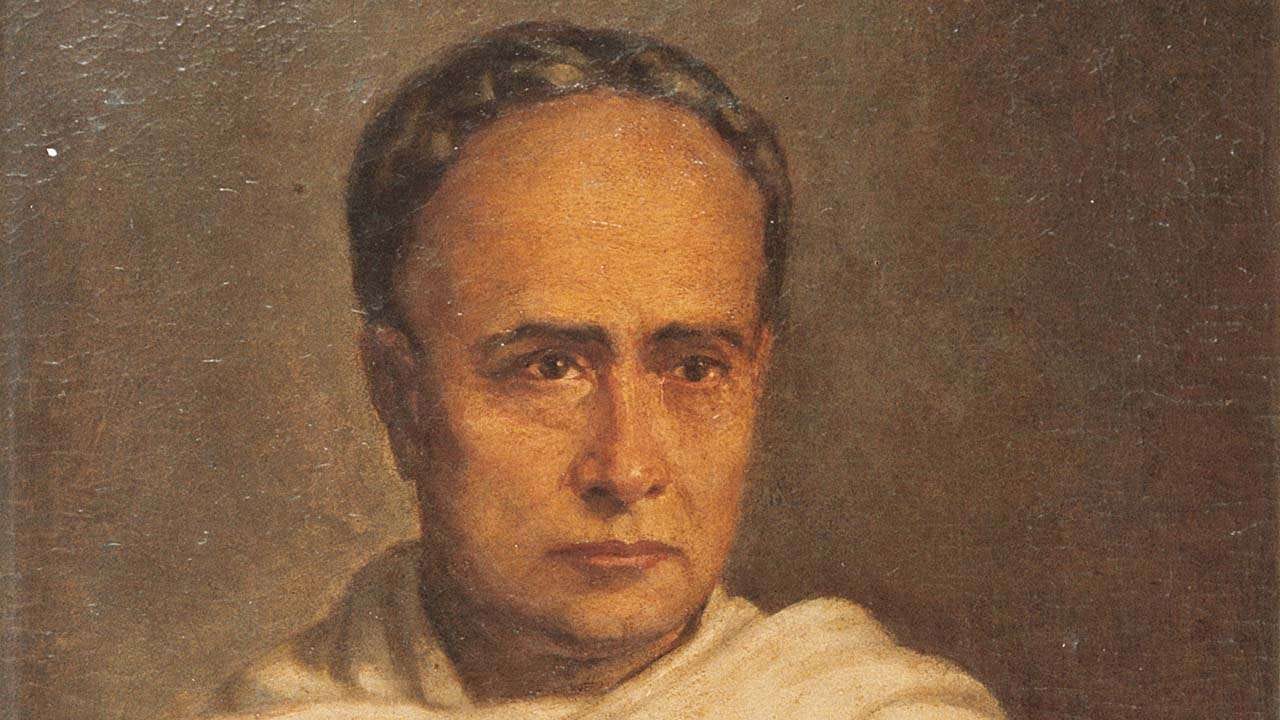
In the history of India’s social and educational reform movements, few names shine as brightly as Ishwar Chandra Vidyasagar. Born on 26 September 1820 in Birsingha, a small village in present-day West Bengal, Vidyasagar’s life was a story of grit, scholarship, and an unwavering dedication to truth. He became one of the greatest reformers of the 19th-century Bengal Renaissance, remembered not only as a pioneer of education but also as a moral compass who stood firmly against the social evils of his time.
Early Life of Struggle and Learning
Ishwar Chandra was born into a poor Brahmin family. His father, Thakurdas Bandyopadhyay, struggled to make ends meet, and his mother, Bhagavati Devi, raised her children with immense sacrifice. From a very young age, Ishwar Chandra displayed an unusual thirst for learning. When he moved to Calcutta to study at Sanskrit College, his life was marked by immense hardship. He often had to live with almost no food, but his perseverance never wavered.
At the Sanskrit College, he mastered subjects like Sanskrit grammar, literature, philosophy, and logic. It was here that he earned the title “Vidyasagar,” meaning ocean of knowledge, a name that perfectly reflected his intellectual depth.
A New Vision of Education
Vidyasagar’s greatest contribution lay in his revolutionary ideas about education. He believed that knowledge should not be confined to the upper castes or to men alone. Education, in his eyes, was the foundation for a stronger, more progressive society.
As a teacher and later as the principal of Sanskrit College, Vidyasagar introduced bold reforms. He modernized the curriculum, bringing in Western sciences and philosophy alongside Sanskrit texts. He also emphasized the use of the Bengali language in education, making learning more accessible to common people.
He authored several textbooks in simple Bengali that helped spread education to rural areas. His Bengali primer, Barnaparichay, remains iconic even today as it laid the foundation for modern Bengali prose and teaching methods.
Champion of Women’s Rights
While education was one pillar of his reform movement, Vidyasagar’s most courageous battle was for the dignity of women. During the mid-19th century, women in Bengal, like in many parts of India, faced crushing social restrictions. Child marriage was common, and widows, even if very young, were condemned to a life of isolation, often subjected to cruelty and humiliation.
Vidyasagar challenged this injustice head-on. He strongly argued that widows had the right to remarry and live dignified lives. His campaign for widow remarriage faced violent opposition from conservative sections of Hindu society. Pamphlets were printed against him, and he was attacked both verbally and socially. Yet Vidyasagar did not retreat.
With his deep knowledge of scriptures, he proved that widow remarriage was not against Hindu tradition, and he presented these arguments to both society and the British colonial government. His tireless efforts bore fruit in 1856 when the Widow Remarriage Act was passed. This landmark legislation was not just a legal reform but a moral victory for progressive thought in India.
Fighting Child Marriage and Polygamy
Another major front of Vidyasagar’s reformist zeal was the fight against child marriage and polygamy. He was deeply disturbed by the plight of young girls forced into marriages with much older men. He condemned the practice as both immoral and destructive for society.
Although legal reforms in this area came much later, Vidyasagar’s consistent advocacy planted the seeds of change. He also spoke out against polygamy, criticizing how it degraded women’s dignity. His courage to raise such issues at a time when society was bound by orthodoxy highlighted his moral strength.
The Bengali Renaissance and Its Wider Influence
Vidyasagar was not working in isolation. He was part of the broader Bengal Renaissance, a period when social, cultural, and intellectual movements reshaped Bengal under the influence of both Indian traditions and Western modernity. Yet, Vidyasagar stood apart for his fearlessness and his uncompromising honesty.
He collaborated with other reformers but never compromised on his principles. Unlike many who sought reforms only through elite discussions, Vidyasagar connected directly with ordinary people. His simplicity, humility, and dedication won him deep respect across classes.
Honesty as a Guiding Light
What made Vidyasagar truly remarkable was not just his intellectual brilliance but his moral integrity. He lived by the principle of truth. Despite facing fierce criticism, slander, and threats, he never abandoned his path. He once said, “If truth prevails, no fear remains.”
Even when social leaders and influential figures opposed him, Vidyasagar’s courage remained unshaken. His entire life became a testimony to the power of truth and moral conviction in transforming society.
Recognition and Legacy
In recognition of his immense contributions, the British government conferred upon him the title “C.I.E.” (Companion of the Indian Empire) in 1877. But Vidyasagar’s true reward was the love and respect he earned from the common people.
His reforms in education laid the foundation for Bengal’s modern learning system, while his advocacy for women’s rights inspired future reform movements across India. He also helped establish schools for girls, something revolutionary in his era.
Today, Vidyasagar is remembered not just as a reformer but as a nation-builder. His fight for widow remarriage, women’s education, and against social evils remains landmark in India’s journey towards modernity. Statues of Vidyasagar in Kolkata and other parts of Bengal remind us of his towering role in history.
Lessons for Today
In modern India, when debates on gender equality, education, and social justice continue, Vidyasagar’s life offers timeless lessons. He showed that true reform requires both courage and compassion. It demands not just intellectual arguments but also personal sacrifice.
His insistence on women’s education paved the way for future generations of women to participate in society as equals. His fearless battle against blind tradition demonstrated that change is possible when one stands firmly on truth.
Ishwar Chandra Vidyasagar was more than a reformer. He was a symbol of resilience, honesty, and vision at a time when Bengal and India were trapped in regressive customs. His life’s work created ripples that continue to shape Indian society even today.
Born in poverty, he rose through sheer determination to become an “ocean of knowledge.” But more importantly, he used his knowledge not for personal gain but for the upliftment of society. His legacy is not measured merely in books or laws, but in the millions of lives touched by his reforms.
In the annals of Indian history, Vidyasagar stands as a beacon of truth and humanity, a reminder that even in the darkest times, one individual’s courage can light the path of progress for an entire nation.
.png)