How Karnataka’s First Female Sculptor Kanaka Murthy Journeyed into Sculpture?

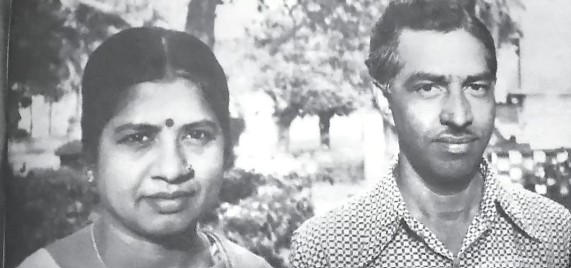
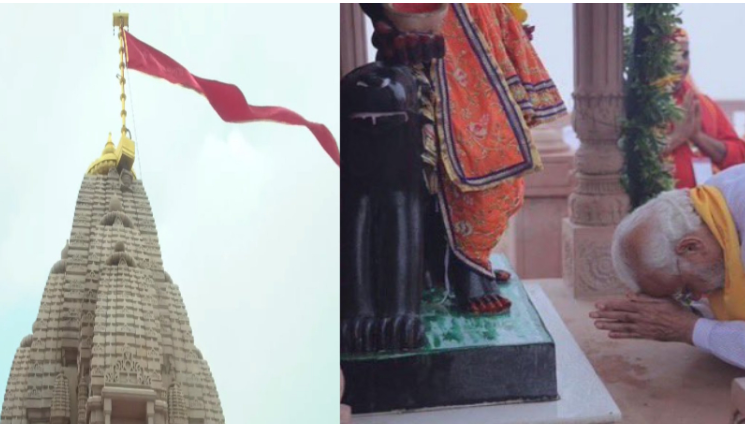
The 11-foot-tall Hanuman idol at Banasavadi Temple, the captivating Ganesha at Whitefield’s Sai Baba Hospital, the Kuvempu statue at Lalbagh West Gate, and the Wright Brothers statues at Visvesvaraya Industrial and Technological Museum—all these are creations of Karnataka’s first female sculptor, Kanaka Murthy. But how did she become the artist behind these timeless works?
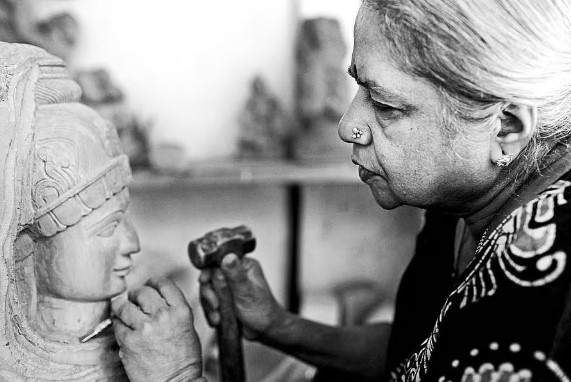
Kanaka Murthy chiseling stone in her studio, sparked by a 1965 temple visit that ignited her lifelong passion for sculpture | Source: Prajvani
Becoming Karnataka’s First Female Sculptor
Kanaka Murthy’s journey to becoming a sculptor is a tale of inspiration from stone and the fervor born of unwavering determination. It all began in 1965. Already immersed in arts like painting and singing, Murthy visited a temple in Mysore and was captivated by the stone sculptures of deities there. This encounter sparked a profound fascination, drawing her to visit the temple daily with the ambition to master the craftsmanship behind those magnificent carvings.
Kanaka Murthy was born on December 2, 1942, in T. Narsipur. She holds a BSc degree. Having grown up without any connection between her studies and profession, she turned her passion into her livelihood. Her attraction to sculpture led her to Devalakunda Vadiraj, a renowned traditional sculptor famous for his artistry. Unlike many who might reject her simply for being a woman, Vadiraj recognized her genuine interest and accepted her as his disciple. Under his guidance, Kanaka Murthy began with clay modeling and gradually mastered both traditional and contemporary sculpture techniques.
There is No Fixed Size for a Sculptor’s Stone
Once, a 15-day sculpture camp was organized in Badami. Kanaka Murthy’s responsibility was to help the participants select the right stone and mark it for them. For this purpose, various stones had been brought in. According to her instructions, each participant was given a stone. One of the participants, after receiving his stone, looked at a small stone nearby and asked her, “Madam, which one should I give you?”
Kanaka Murthy immediately understood the hidden meaning behind his words and his glance. She pointed at the largest stone lying there and said, “Leave that one for me.”
Everyone was stunned. Their expressions seemed to say, “Is this even possible for a woman?”
From the very next day, she began her work. Seeing the speed and intensity with which she worked, the participants were amazed. They abandoned their work and gathered around her. Within just a few days, a magnificent sculpture emerged from that huge stone.
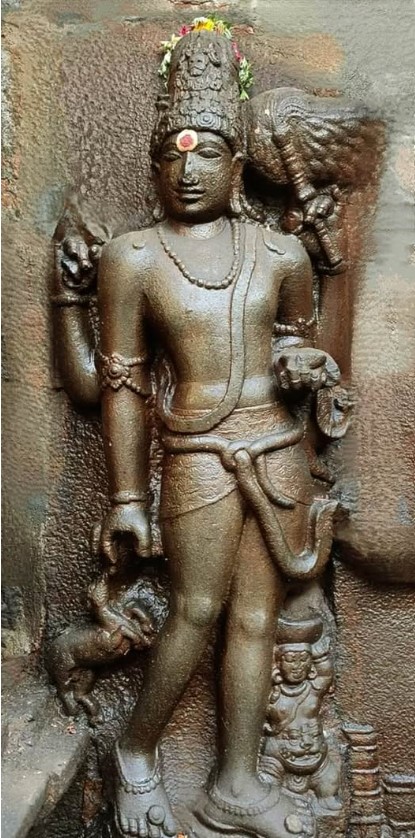
One of the 64 forms of Mahadeva at Sri Vasishteswarar Temple, Karanthai, Tanjavur, Tamil Nadu | Source: Facebook
The Creator of Over 200 Sculptures
Kanaka Murthy’s first completed idol, the Prashanta Ganesha sculpture, was not just a work of art; it was a symbol of her triumph over prejudice. From that moment onward, she never looked back. Over the next five decades, she created more than 200 sculptures that now stand in temples, public spaces, and institutions across India.
Following the path laid out by her guru, she travelled across India and abroad, including countries like the UK and Russia, to participate in sculpting programs. As a woman, she initially faced doubt and dismissal, especially when selecting stones for her projects. Yet her perseverance and growing recognition helped her break through these barriers.
Kanaka Murthy worked with stone, wood, and fiberglass. But she was especially drawn to traditional art forms, constantly striving for perfection. Her life story is a powerful example of determination and dedication. The many sculptures that emerged from her hands stand as timeless testimony to her skill and passion in a field dominated by men.
This great sculptor, Kanaka Murthy, passed away on May 13, 2021, due to COVID-19. She had wished for her body to be donated to a hospital after her death, but because she succumbed to the infection, her final wish could not be fulfilled.
“I did not choose the stone, the stone chose me, and I answered its call,” she once said. To her, sculpting was not merely a craft; it was a spiritual journey. Even today, her statues stand silently across Karnataka, eternal reminders of a woman who dared to carve her own destiny from stone.
.png)