44 Key Facts You Must Know About the Doklam Standoff: India’s Firm Response to China

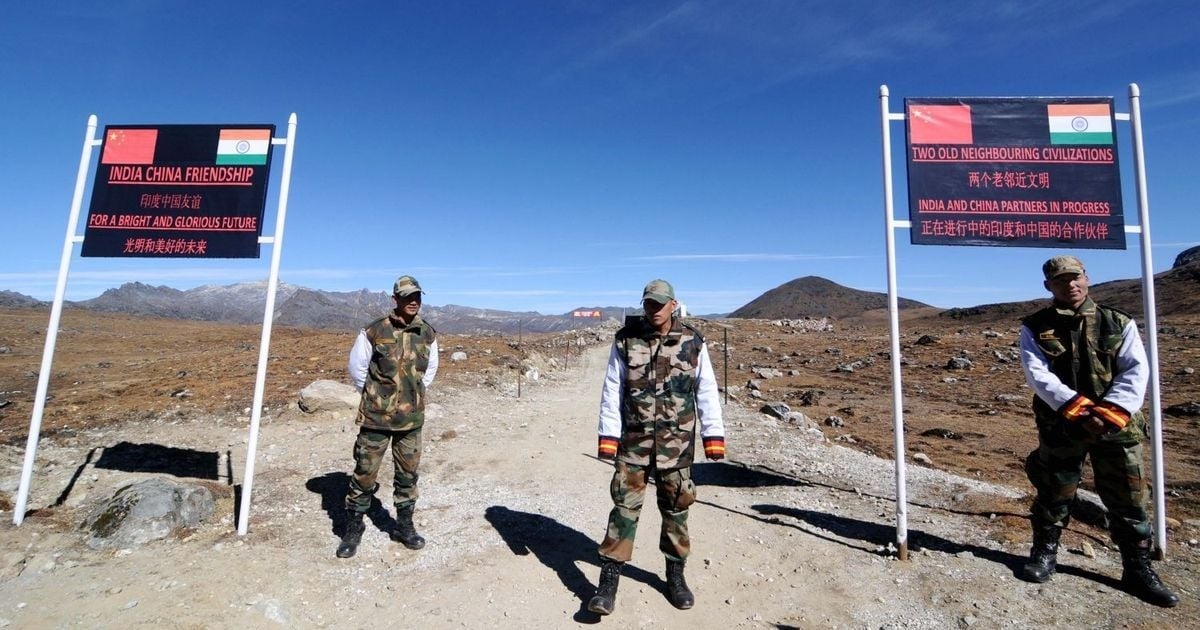
Q1. What is the Doklam region and why is it important? A: Doklam is a plateau near the India-Bhutan-China trijunction. It is claimed by both Bhutan and China. Strategically, it overlooks the Siliguri Corridor (India’s narrow link to its northeast), making it extremely sensitive for India’s national security. Location-wise, Doklam (also called Doka La or Donglang) is about 90 km² in area, situated near the sensitive Chumbi Valley and close to India’s “Chicken’s Neck”, the Siliguri Corridor connecting Northeast India to the rest of the country.
Q2. Why did the standoff between India and China begin in June 2017? A: On 16 June 2017, China began extending a road from Doka La into the Doklam region. India considered this a threat to its strategic interests and a violation of Bhutanese sovereignty. India responded by sending troops to halt the road construction. China and Bhutan have long contested Doklam. China had been building infrastructure in the area since at least 2005. India, in alignment with Bhutan, regarded these moves as strategically threatening, especially due to Doklam’s proximity to the Siliguri Corridor.
Q3. What was “Operation Juniper”? A: On 18 June 2017, around 270 Indian troops crossed into Doklam with bulldozers under “Operation Juniper” to prevent Chinese road construction.
Q4. What was Bhutan’s response to the Chinese road-building? A: On 29 June 2017, Bhutan officially lodged a diplomatic protest against China’s activities, affirming its territorial claim over Doklam and opposing unilateral road construction by China toward Bhutanese military positions.
Q5. How did China react to India’s intervention? A: On 2 August 2017, China issued a 15-page document accusing India of violating its sovereignty, misusing its friendship with Bhutan, and interfering in what it called its sovereign territory. It cited the 1890 Sino-British Treaty to justify its claims.
Q6. How long did the standoff last and how was it resolved? A: The standoff lasted 73 days, from 16 June to 28 August 2017. Both sides agreed to a mutual disengagement. India withdrew its troops to pre-June positions, and China halted its southward road extension.
Q7. Were there any casualties during the Doklam standoff? A: No. The Doklam standoff did not result in any physical clashes or casualties. It remained a high-tension but non-violent military face-off.
Q8. What happened in the Doklam region after the standoff ended? A: Post-disengagement, China resumed infrastructure buildup north of Doka La (outside the directly contested zone), including new roads, helipads, barracks, and observation posts. India also reinforced its military preparedness in the region.
Q9. Why is the Siliguri Corridor (Chicken’s Neck) crucial for India? A: The Siliguri Corridor is a narrow 20–25 km stretch connecting mainland India to the northeastern states. A Chinese military presence in Doklam could potentially cut off this corridor, endangering access to the northeast and threatening national integrity.
Q10. How did India view China’s road-building in Doklam? A: India perceived it as a strategic attempt to unilaterally alter the status quo, potentially enabling China to dominate the Siliguri Corridor and thereby compromising Indian security.
Q11. Did the standoff impact India-Bhutan-China relations? A: Yes. Bhutan reaffirmed its territorial claim and alliance with India. China grew more assertive diplomatically. India’s intervention signaled its firm commitment to Bhutanese sovereignty and regional balance.
Q12. What military advantages did China initially have during the standoff? A: China had better high-altitude logistics and acclimatized troops in Tibet, giving it a temporary tactical edge. However, India swiftly reinforced its positions and neutralized this advantage through rapid troop deployment.
Q13. What broader strategic lessons emerged from Doklam? A: India reaffirmed that territorial status quos cannot be altered unilaterally.
China tested India’s red lines using infrastructure push (a “salami-slicing” tactic).
The episode proved that strong diplomatic stance and firm ground posture can de-escalate border crises without direct conflict.
Q14. How is the region being monitored today? A: Both India and China maintain heightened surveillance and troop presence near Doklam. India continues infrastructure upgrades in the northeast, while China has strengthened its logistics and military capabilities in Tibet.
Q15. What is the significance of the Doklam standoff in Indian foreign policy? A: The standoff marked a shift in India’s border assertiveness. It reinforced Indo-Bhutan ties, projected India as a credible regional stabilizer, and served as a strategic deterrent against future Chinese encroachments.
Q16. What triggered the Doklam standoff on June 16, 2017? A: On June 16, China’s PLA attempted to build a motorable road in Doklam near the Siliguri Corridor. India perceived this as a direct and unacceptable threat.
Q17. What was China’s response when India stopped the road construction? A: On June 28, China accused India of intruding into its sovereign territory and cited the 1890 Sino-British Treaty as justification for its road-building activity.
Q18. How did Bhutan react to the Chinese activity in Doklam? A: On July 5, Bhutan issued a formal demarche to the Chinese envoy, objecting to China’s road construction toward its military camp in the Zomplri area and demanding a return to status quo.
Q19. What happened to the planned Xi Jinping–Narendra Modi G20 meeting? A: On July 6, China canceled the formal meeting, citing the tense atmosphere. However, the two leaders had a brief informal conversation on the sidelines.
Q20. What was India’s diplomatic stand in early July? A: On July 11, Foreign Secretary S. Jaishankar said India could manage Doklam the way it had handled past border situations, expressing confidence in peaceful resolution.
Q21. How did China respond to Jaishankar’s comments? A: On July 12, China rejected the comparison to previous border issues, asserting Doklam involved a clearly defined boundary unlike undefined areas elsewhere.
Q22. What diplomatic steps did India take domestically? A: On July 15, India briefed opposition parties and confirmed ongoing diplomatic negotiations with China to defuse tensions.
Q23. Did China escalate military posture during the standoff? A: Yes. On July 16, China conducted live-fire drills in Tibet and reportedly deployed tens of thousands of tonnes of equipment, including vehicles and troops, to the region.
Q24. What was India’s official statement in Parliament? A: On July 19, Sushma Swaraj stated that any unilateral attempt to change the tri-junction status quo would directly threaten India’s security interests.
Q25. How did China portray India’s role? A: On July 24, Chinese Foreign Minister Wang Yi blamed India for the crisis and insisted on complete Indian troop withdrawal.
Q26. What did Xi Jinping declare during this period? A: On July 29, Xi addressed a military parade, stating that PLA would never allow any part of China to be split off and was capable of defeating all invaders.
Q27. What claim did China make about Indian troop presence? A: On August 2, China claimed Indian troop numbers in Doklam had decreased from over 400 to 40. India rejected this assertion.
Q28. What was the outcome of India-China negotiations in August? A: On August 8, China rejected India’s call for simultaneous troop withdrawal and questioned India’s logic by raising hypothetical entries into Kalapani or Kashmir.
Q29. What warning did China issue regarding tri-junctions? A: Also on August 8, Chinese official Wang Wenli warned that China could use the same logic to enter Kalapani or Kashmir, challenging India’s position.
Q30. What steps did India and Bhutan take mid-August? A: On August 10, Sushma Swaraj met Bhutanese Foreign Minister Damcho Dorji. Bhutan called for a peaceful solution, and India reinforced its troop presence along the border.
Q31. Did Prime Minister Modi speak on the issue? A: Yes. On August 15, in his Independence Day address, PM Modi lauded the armed forces and affirmed India’s ability to defend its borders.
Q32. What was the U.S. position on Doklam? A: On August 16, the U.S. urged both nations to engage in dialogue and return to the previous status quo.
Q33. Did China engage in propaganda during the standoff? A: Yes. On August 16, China’s Xinhua news agency released a video mocking India with racial overtones, accusing it of committing “Seven Sins” in Doklam.
Q34. Did any other countries support India? A: On August 17, Japan voiced support for India, stating that no country should use force to change the status quo in Doklam.
Q35. Did China continue military maneuvers during the standoff? A: On August 20, China conducted another military drill in western China, reportedly to signal strength and “awe” India.
ALSO READ:”Horrors of Partition: The Silent Genocide Behind British Early Exit and India’s Independence”
Q36. How did the Doklam standoff end? A: On August 28, both India and China announced an agreement for expeditious troop disengagement. India confirmed withdrawal, while China said it would continue patrolling the area, suggesting only partial resolution.
Q37. Are the Doklam standoff (2017) and Galwan clash (2020) connected?
A: Yes, they are strategically linked. Both are part of a broader pattern of Chinese assertiveness along the India–China border and India’s evolving response to it.
Q38. How did the Doklam standoff signal China’s strategic intent?
A: Doklam was an early warning of China’s “salami-slicing” strategy — slowly changing facts on the ground through infrastructure building in disputed areas, testing India’s response without direct conflict.
Q39. What did India’s response in Doklam establish?
A: India showed it would not tolerate unilateral changes to the status quo near strategic zones like the Siliguri Corridor. It set a precedent for firm military and diplomatic resistance.
Q40. How did this precedent influence the Galwan Valley incident?
A: After Doklam, India improved border infrastructure and surveillance. This helped India rapidly deploy and match China’s strength in Galwan in 2020, where both sides clashed violently.
Q41. Were India’s military strategies shaped by Doklam?
A: Yes. Lessons from Doklam led to quicker troop mobilization, infrastructure upgrades, and a more assertive posture, all of which played a key role in India’s handling of Galwan.
Q42. Did both standoffs trigger long-term diplomatic processes?
A: Yes. Doklam led to disengagement talks in 2017, while Galwan resulted in multiple rounds of military–diplomatic negotiations from 2020 to 2024. Both culminated in efforts to restore peace and patrolling protocols.
Q43. How does the 2024 patrolling agreement relate to these incidents?
A: The October 2024 agreement to resume pre-2020 patrolling patterns is the result of sustained negotiations post-Galwan, rooted in the firm response strategy India adopted since Doklam.
Q44. What is the key strategic lesson from both Doklam and Galwan?
A: India has made it clear that it will resist any attempt to alter the status quo at the border, combining military readiness with sustained diplomacy to manage China’s tactics.
.png)