Honouring Shivaram Karanth: The Iconic Kannada Artist Who performed Yakshagana at his 90th Birthday

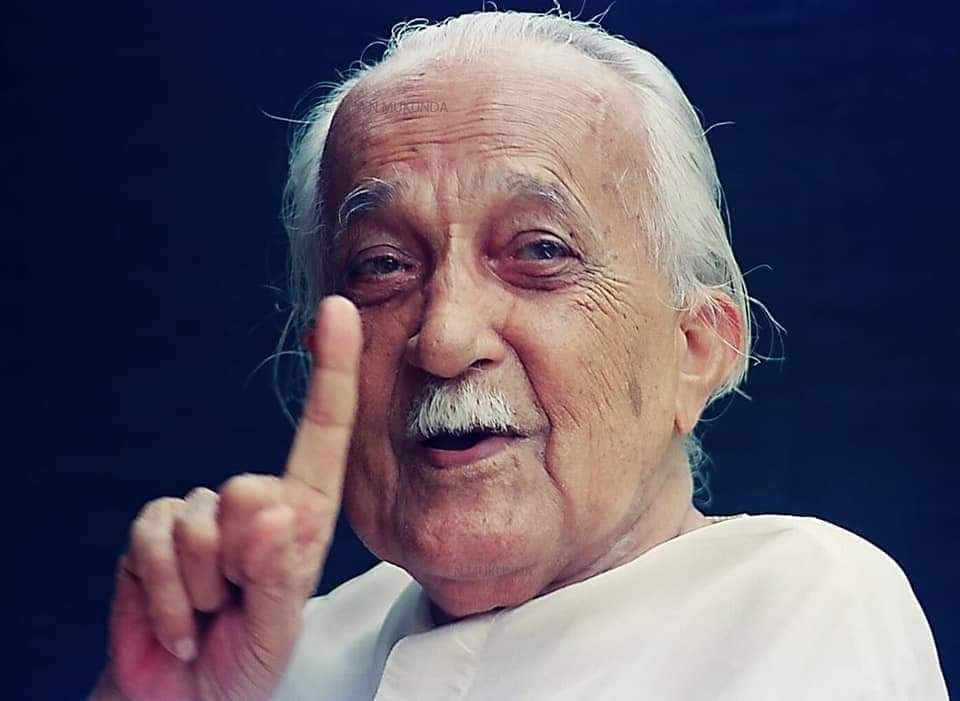
Dr. Kota Shivaram Karanth, born on October 10,1902 was an extraordinary Kannada writer, artist, and social activist from Karnataka.
This October, We honour his dedication to Karnataka and Bharat by highlighting his 7 contributions.
1. In 1991, during his 90th birthday celebrations, Dr. Kota Shivaram Karanth danced Yakshagana. He stunned everyone by performing an energetic dance with a gong tied to his leg for 30 minutes. This incident summarised his lifelong dedication to this traditional Karnataka folk art.
Yakshagana is a traditional theatre-dance form native to coastal Karnataka. This vibrant folk art combines dance, music, singing, dialogue, and colorful costumes to tell stories from Hindu epics like the Ramayana and Mahabharata.
Yakshagana features striking costumes and elaborate makeup, with performers wearing grand headgear and jewelry to depict gods, demons, and mythical heroes. The music ensemble, called Himmela, uses traditional instruments such as the chande and maddale drums, harmonium, and flute. The dance movements are energetic, involving intricate footwork, jumps, and expressive hand gestures known as mudras to convey emotions and narrative.
2. Shri Karanth played a pivotal role in popularizing and modernizing Yakshagana.
Traditionally, these performances usually take place outdoors from dawn to dusk over a period of 10-12 hours in village spaces after harvest festivals. 15-20 artists and a master narrator called the Bhagavatha are normally a part of this art form.
In order to make the art more accessible to the modern generation, Karanth introduced reforms to shorten them to about two and a half hours. He also incorporated Western musical instruments and directed innovative Yakshagana ballets, bringing fresh life to this centuries-old tradition.
3. He wrote over 400 books including novels, plays, poems, and scientific works. Known as the “Bhargava of the Beach,” Karanth was a versatile figure deeply engaged with Karnataka’s rich literary and cultural traditions.
4. Karanth’s seminal book “Yakshagana Bayalata” (1957) remains a foundational text on Yakshagana’s history, performance techniques, and cultural significance. His scholarship helped take Yakshagana to national and international stages.
5. In honor of his cultural contributions, a theme park in his native village, Kota (Udupi district), celebrates Karanth’s legacy. The park features a bronze statue of Karanth, sculptures depicting famous characters from his novels, and statues representing the two main Yakshagana styles—Badagutittu and Thenkuthittu, which differ in costume styles, musical instruments, and dance techniques.
6. He was awarded the Padma Bhushan by the Government of India in 1958 for his literary and social contributions. However, in 1975, he returned the award in defiance of the Emergency.
7. When the government tried to take over the Guru Narasimha Temple in his village, the villagers asked for Karanth’s help. Then Karanth himself took the initiative, collected all the legends and documents of that temple, and fought in court on behalf of the temple with his brother, who was a lawyer. Due to his efforts, the temple remained in the custody of the villagers.
Shivram Karanth passed away at the age of 95. What he left behind is an art form that embraced modernity, 100s of books, and knowledge that can inspire future generations of Bharat.
.png)