Horrors of Partition: How RSS Helped Elderly, Women, And Children during 1947 Partition

1. Background Context
The Scale And Brutality of Partition Violence The 1947 Partition unleashed genocidal violence as mass migrations overwhelmed regions. With millions displaced, frail infrastructure crumbled. No formal refugee framework existed—only ad-hoc shelters run by volunteers. Elderly, women, and children were particularly vulnerable amid railway disruptions and communal panic.
The scale and brutality of Partition violence Partition violence was catastrophic: thousands massacred, trains ambushed, homes torched. The Rawalpindi massacres alone killed 2,000–7,000 Sikhs/Hindus and marked the beginning of systematic ethnic cleansing. Over 100,000 women and children disappeared or were abducted across provinces.
Specific threats to elderly, women, and children (abductions, killings, displacement) Non-combatants faced targeted brutality: elderly were beaten or abandoned, women raped and kidnapped, children orphaned or trafficked. Official records note 100,000 missing women/children in Punjab. Survivors described children alongside slain parents, many later sent to orphanages or adopted abroad.
Breakdown of law and order Police and administrative systems collapsed; mob rule overtook civil control. Refugee camps were rife with violence and theft. With official agencies paralyzed, volunteers and disorganized community groups filled the security vacuum, providing escorts, vigilante patrols, and makeshift fire brigades.
2. RSS’s Ground Presence Pre-Partition By 1947, RSS had expanded heavily in undivided Punjab with ~1,500 daily shakhas and over 100,000 swayamsevaks. In Sindh, about 80 shakhas were operational. They staffed local communities with volunteers prepared for civil defence and relief work.
Number of shakhas and swayamsevaks in Punjab, Sindh, NWFP Under M.S. Golwalkar’s leadership, RSS ramped up mobilisation. He toured Punjab extensively before Partition, joined by pracharaks like Babasaheb Apte and Balasaheb Deoras. Notably, 52 full‑time volunteers—L.K. Advani among them—were active in Sindh and Pakistan areas.
Setup of Relief Wings (Punjab Relief Committee, Hindu Sahayata Samiti) RSS established dedicated relief bodies: Punjab Relief Committee and Hindu Sahayata Samiti headquartered in Lahore. Chaired by Raibahadur Badridas with Dr Gokulchand Narang as treasurer, they managed camps, food, clothing, and transport for displaced families.
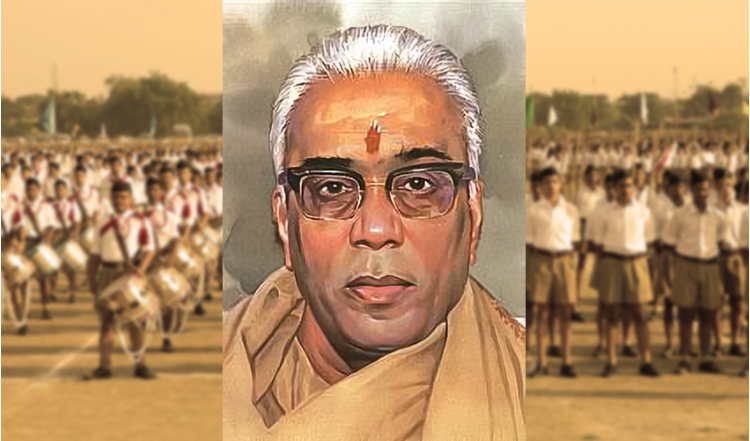
Early Organization and Leadership (L.K. Advani, Golwalkar) M.S. Golwalkar (“Guruji”) was RSS chief during Partition. He emphasized disciplined service and national unity, expanding RSS across Punjab and Sindh. L.K. Advani, then a swayamsevak in Karachi, was among 52 full-time pracharaks in Pakistan. Their grassroots structure enabled rapid humanitarian response amid collapsing civil authority.
3. Rescue Operations & Evacuations
RSS swayamsevaks set up round-the-clock vigilant patrols and fire-engine brigades in riot-hit towns, directly intervening to rescue the most vulnerable. They used lorries, buses, and trains, sometimes under gunfire, to evacuate seniors, women, and children. Volunteers often sustained injuries or were killed during these operations, showcasing extreme commitment.
Escorting Women, Children & Elderly In brutal communal attacks, RSS teams escorted vulnerable groups across dangerous zones. They “fought with the tyrant mobs” to protect thousands, even evacuating Muslim women and children from Hindu areas to Muslim League camps to ensure interfaith safety.
Use of Trucks, Trains & Convoys RSS organized transport logistics by forming truck-fired relief convoys, arranging escort services on trains, and coordinating bus movements. These convoys ensured safe passage from volatile Punjab and Sindh regions to relief camps in safer zones.
4. Shelter & Relief Camps RSS organized relief camps in Delhi, Punjab, and Uttar Pradesh via the Punjab Relief Committee and Hindu Sahayata Samiti. They offered safe havens for displaced elderly, women, and children, evacuating them from hostile zones and coordinating transport with the Indian Army.
Provision of Food, Medicine & Clothes RSS volunteers supplied essentials—meals, medical aid, clothing—in relief camps for months. Using lorries and buses, they distributed rations, arranged first aid, and clothed vulnerable groups. These services operated continuously, even under threat.
Psychological & Moral Support Swayamsevaks stayed with traumatized women and children, offering comfort, protection, and emotional support. They accompanied them in convoys, maintained discipline, and safeguarded dignity. Personal testimonies describe them as first responders who provided not just physical but mental relief.
5. Protection Against Riots & Arson RSS volunteers formed local defence teams to patrol Hindu and Sikh neighborhoods, guard temples and community centers, and actively fight arson attacks. They backed firefighting teams at critical moments—helping extinguish flames in Punjab towns like Lahore and Amritsar—safeguarding vulnerable elders, women, and children.
Self-Defense Units & Local Guards They trained swayamsevaks in lathi-wielding self-defense, creating units that escorted refugee convoys and guarded settlements amid chaotic evacuations. They offered armed protection when police and army withdrew, ensuring safe passage for women, elderly, and children through hostile areas.
Firefighting Groups Created by RSS In numerous riot-affected towns, volunteers formed makeshift fire brigades equipped with basic tools to combat arson. These groups operated under dangerous conditions, extinguishing fires set by mobs, helping preserve shelters for displaced civilians—especially the elderly and women .
6. Testimonies and Memoirs
A.N. Bali’s Now It Can Be Told English professor A.N. Bali recounts in his 1949 memoir how RSS swayamsevaks in Lahore and Punjab evacuated Hindu and Sikh women, children, and elderly from danger zones, provided food, clothing, medical aid, and even arms training to protect communities during Partition violence.
K.M. Munshi (Congress Leader) Congress leader and freedom fighter K.M. Munshi praised RSS volunteers in Akashvani (Oct 1949), stating they displayed “unparalleled bravery” in Punjab and Sindh, rescuing thousands of women and children amid brutal communal violence, with many RSS men sacrificing their lives.
M.S. Golwalkar (RSS Chief) RSS chief M.S. Golwalkar wrote in Purushartha magazine that swayamsevaks showed “unparalleled courage” in rescuing entire families. He recounts army officers and refugees expressing gratitude, acknowledging that, without RSS efforts, many women and children wouldn’t have survived.
Civilian & Army Officer Statements Accounts include army officers who personally praised RSS volunteers’ bravery, noting their “discipline” and “physical strength” in rescue efforts, and civilians who credited RSS for evacuating “every Mohalla,” safeguarding communities when official help collapsed.
Refugee Accounts from Camps & Convoys Refugees recall RSS-organized relief camps offering shelter, meals, medical care, and escort services. Testimonies mention safe passage via trains and buses, with RSS staff remaining “first to arrive and last to leave,” dedicating months to displaced elderly, women, and children.
7. Non‑Partisan Humanitarian Role During the 1947 Partition, RSS volunteers ran relief camps in Punjab and Sindh, providing food, clothes, and first aid to displaced elderly, women, and children. They paused ideological leanings, often coordinating with Army and civil officials, to focus purely on saving lives at great personal risk.
Escorting Muslim Women & Children There are documented cases where RSS swayamsevaks escorted Muslim women and children from Hindu-majority mohallas to designated Muslim refugee centers in Lahore, ensuring their safety during the communal carnage—demonstrating mercy across communal lines amid widespread violence.
Maintenance of Discipline & Interfaith Decency Reports from RSS internal records emphasize how volunteers displayed strict discipline, refrained from profiteering, and conducted activities with dignity. In camps and corridors of conflict, they maintained order, respected religious boundaries, and encouraged humane conduct—even amidst extreme communal tension.
Praise from Congress Leader K.M. Munshi K.M. Munshi, a prominent Congress figure and freedom fighter, publicly commended RSS swayamsevaks in a 1949 Akashvani press statement. He lauded their “unparalleled bravery” in Punjab and Sindh, noting they “saved the honour and lives of thousands of women and children,” some sacrificing their lives.
8. Challenges Faced by RSS Volunteers RSS swayamsevaks operated amid intense communal violence and complete lawlessness. Despite their humanitarian mission, they were often viewed with suspicion, caught in crossfire, and threatened by hostile mobs. In some towns, their convoys were ambushed, and rescuers narrowly escaped, illustrating the extreme dangers they endured.
Being Targeted or Arrested Despite Helping Refugees On February 4, 1948—just days after Mahatma Gandhi’s assassination—the government banned the RSS under emergency laws. Around 17,000 to 20,000 swayamsevaks, including leader M.S. Golwalkar were arrested despite no charges linking them to violence.
Limited Resources but Wide Responsibilities Operating without governmental support, RSS volunteers improvised medical aid, food distribution, relief camps, and makeshift fire brigades across riot-hit regions. They organized convoys and protected elderly, women, and children—all while managing scarce financial and material resources under extreme pressure.
Sacrifices Made—Fatalities Among Swayamsevaks During Partition rescues, many swayamsevaks faced lethal attacks from mobs and armed gangs. While systematic casualty records are scarce, contemporary memoirs—like those of Golwalkar and Munshi—mention “many young men laid down their lives while carrying out this task,” reflecting the personal cost of their humanitarian work.
9. Impact and Legacy: How RSS assistance influenced refugee narratives RSS-operated relief camps and evacuations during Partition conveyed a powerful message: “The Sangh stood by them when others fled.” This narrative became deeply embedded in refugee memory, fostering enduring loyalty and gratitude among displaced Hindus and Sikhs.
Long‑term influence on India’s relief systems RSS institutionalized rapid-response systems—like Bastuhara Sahayata Samiti—that later inspired broader NGO frameworks. Their disaster-relief models, combining shakha networks with volunteer mobilization, were replicated in flood, famine, and earthquake relief across post‑Partition India. This cemented RSS’s role in humanitarian aid.
Role in shaping post‑Partition Hindu/Sikh confidence in North India RSS rescue efforts empowered displaced communities, reinforcing self-reliance and communal security across North India. By offering organized aid, training, and patrols, they infused confidence and trust among Hindus and Sikhs, strengthening their resolve to rebuild lives and firmly anchoring RSS influence in the region.
.png)