India’s 10 Significant Crackdowns Against Pakistan Following Pahalgam Attack

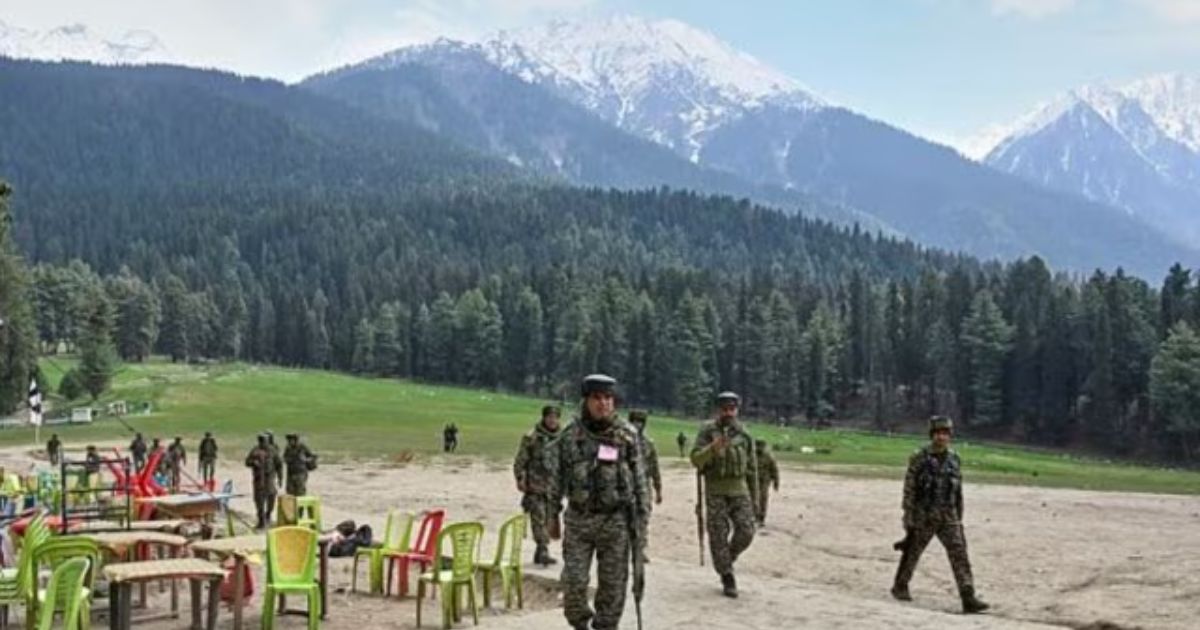
In a horrifying incident, 26 Hindu pilgrims were killed in a brutal terrorist attack on April 22, 2025, in the Pir Panjal region of Jammu and Kashmir’s Anantnag district. This planned and targeted massacre has shaken the entire nation. According to reports, the terrorists ambushed the group and separated them based on their religion. Eyewitnesses said the victims were forced to recite Islamic prayers, and those who failed or resisted were shot dead mercilessly.
India has taken strong actions against Pakistan because of its support for terrorism across the border. On Saturday, India made three major decisions in one day. India banned all imports from Pakistan. India stopped all postal services between the two countries. The country also banned Pakistani ships from docking at Indian ports. These actions were taken in response to Pakistan’s role in supporting cross-border terrorism.
Complete List Of Crackdowns Against Pakistan After The Pahalgam Terror Attack
India Shuts Doors: All Imports from Pakistan Banned
To stop all Pakistani goods from entering India—whether directly or through other countries—the Indian government has announced a total ban on their import and transit. This decision was made official in a notice from the Commerce and Industry Ministry on May 2. Earlier, on April 24, India had already stopped direct trade with Pakistan and closed the Attari border checkpoint after the deadly terror attack in Pahalgam. That move affected trade worth nearly ₹3,900 crore. However, some Pakistani goods were still reaching India through third countries.
Now, the government has made it clear: no goods from Pakistan can be imported or passed through India in any way, unless the Indian government gives special permission. India used to send items like soybeans, poultry feed, vegetables, and plastic products to Pakistan, and imported goods such as dry fruits, dates, cement, glass, salt, and herbs from there.
Indian Ports Close: No Pakistani Ships Allowed
India announced that Pakistani ships can no longer enter Indian ports. At the same time, Indian ships are also banned from going to any ports in Pakistan. This decision was made by India’s maritime authority, the Directorate General of Shipping (DGS). They said the move was taken immediately to protect Indian ships, cargo, and port infrastructure, and it will stay in place until further notice.
The order clearly said: “A Pakistani ship cannot visit any Indian port, and an Indian ship cannot visit any port in Pakistan.” Trade by sea between India and Pakistan has always been very limited. Even though both countries share a sea border in the Arabian Sea, their tense relationship has kept shipping activities to a minimum.
Mail Freeze: All Postal Services with Pakistan Suspended
On Saturday, the Indian government officially stopped all mail and parcel exchange with Pakistan, using both air and land routes. This is part of new actions taken against Pakistan due to cross-border tensions. The order came from the Department of Posts, under the Ministry of Communications. It told all postal offices across the country that no mail or parcels should be received from Pakistan anymore, whether by air or by land.
However, in reality, postal services between India and Pakistan had already been stopped for almost five years. In August 2019, Pakistan had stopped accepting Indian mail after India removed Article 370, which gave special status to Jammu and Kashmir. This was the first time in history that such a step was taken between the two countries.
Social Media Clampdown: Pakistan’s YouTube Channels & Celebrities Banned
The Indian government has banned 16 YouTube channels from Pakistan, including big news channels like Dawn News, Samaa TV, ARY News, and Geo News. These channels were blocked for spreading false information and content that could create tension between communities. They were also accused of making negative claims about India and its Army.
YouTube channels of former Pakistani cricketers Shoaib Akhtar and Basit Ali were also blocked. In addition, Instagram accounts of several popular Pakistani celebrities—such as Fawad Khan, Atif Aslam, Hania Aamir, and Mahira Khan—have been disabled. Actor Fawad Khan was supposed to return to Bollywood after nine years in a movie called Abir Gulaal, but the release of the film is now uncertain due to the current situation, according to news agency PTI
Indus Waters Treaty Suspended: India Hits Back
For the first time ever, India has suspended the Indus Waters Treaty (IWT) with Pakistan. This decision was made a day after the deadly terror attack in Pahalgam. India’s Foreign Secretary, Vikram Misri, said the treaty will stay on hold until Pakistan stops supporting cross-border terrorism in a clear and permanent way. The Indus Waters Treaty was signed in 1960 after nine years of talks between the two countries. It has survived four wars and many years of tension and violence. But now, due to rising security concerns, India has decided to pause the agreement.
Wagah Border Shutdown: Attari Closed to Pakistan
The Attari-Wagah border between India and Pakistan was completely closed on May 1, after a week of heavy movement across the border. This happened after the Indian government ordered all Pakistani citizens with short-term visas to leave the country. The border’s Integrated Check Post had already been shut on April 25. Since then, over 780 Pakistani nationals have gone back to Pakistan. At the same time, about 1,560 people—including Indian citizens and Pakistanis with long-term visas—have crossed into India.
Visa Exemption Axed: Pakistani Nationals Face SAARC Ban
After the Pahalgam terror attack, the Indian government held a high-level security meeting and made a big decision: Pakistani nationals can no longer travel to India under the SAARC Visa Exemption Scheme (SVES). Foreign Secretary Vikram Misri said that any SVES visas already given to Pakistani nationals are now cancelled, and those who are already in India on such visas have 48 hours to leave the country.
The SAARC Visa Exemption Scheme started in 1992 after a decision at the 1988 SAARC Summit. It allowed visa-free travel for certain important people like officials, judges, MPs, businesspeople, journalists, and sportspersons from South Asian countries.
Pakistan’s Military Advisors Expelled: Diplomatic Tensions Rise
After a top-level security meeting on April 24, the Indian government told the Defence, Naval, and Air Advisors at the Pakistani High Commission in New Delhi to leave the country within a week. They were declared persona non grata, which means they are no longer welcome. At the same time, India also said it will bring back its own Defence, Naval, and Air Advisors from its High Commission in Islamabad, Pakistan. These positions are now officially cancelled. In addition, five support staff from each country’s mission will also be withdrawn.
Diplomatic Downsizing: India Slashes Pakistani Personnel
India has decided to reduce the number of its diplomatic staff at the High Commission in Pakistan. Starting May 1, the total number of Indian diplomats in Islamabad will go down from 55 to 30. This move is part of a series of steps taken by India after recent tensions between the two countries.
Authorities Level Nine Homes Tied to Terror Suspects in Sweeping Crackdown
After the Pahalgam terror attack, security forces in Jammu and Kashmir have destroyed at least nine houses. These houses belonged to families of people wanted for militancy in the region. The demolitions started with the house of Adil Ahmad Thoker, a terrorist from the group Lashkar-e-Taiba, who is believed to be involved in the attack. Homes of other suspects were also destroyed in areas like Pulwama, Bandipora, and Kupwara.
.png)