Jammu and Kashmir After Article 370 Abrogation: Equal Rights, Development & Security

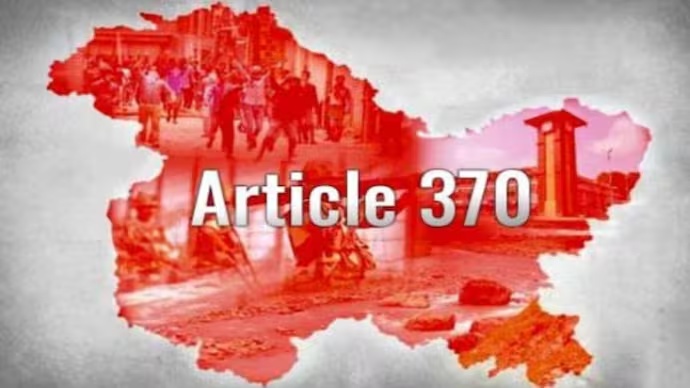
Historical Background
1947 Maharaja Hari Singh Signs the Instrument of Accession
On October 26th, 1947, Maharaja Hari Singh, the last ruler of Jammu and Kashmir, signed the Instrument of Accession acceding to the Dominion of India.
1950 Constitution of India Comes Into Force
On January 26th, 1950, the Constitution of India came into force. Article 370 set three broad frameworks. Broadly, Article 370 stipulated India would not make laws in Jammu & Kashmir outside the scope set out by the Instrument of Accession, without the ‘concurrence’ of its government. Further, it stated that except Article 1, which declared India as a ‘Union of States’, and Article 370 itself, no part of the Constitution would apply to Jammu & Kashmir.
1950 The President Issues First Constitutional Order Under Article 370
Subsequently, the President of India, Rajendra Prasad, issued his first order, the Constitution (Application to Jammu and Kashmir) Order, 1950, under Article 370, which specified the scope and full extent of the powers that the Parliament would exercise in Jammu and Kashmir.
1951 Constituent Assembly of Jammu and Kashmir is Formed
On October 31st, 1951, 75 Jammu and Kashmir Constituent Assembly members gathered for the first time on an autumn day in Srinagar. They belonged to the National Conference Party led by the then Prime Minister of Jammu and Kashmir, Sheikh Abdullah. Their goal was to draft a Constitution for Jammu and Kashmir.
1952: The Delhi Agreement is Formed
The Delhi Agreement, 1952, was between the Government of India and the Government of Jammu and Kashmir. The agreement concerned residuary powers (Article 248) exercised by the Parliament that fell outside of the scope of the State or Concurrent Lists. The Delhi Agreement stated that such powers would be vested in the hands of the Government of Jammu and Kashmir.
1954 President issues the Constitutional Order of 1954, Implements the Delhi Agreement
On May 14th, 1954, President Rajendra Prasad issued the Presidential order to implement the terms agreed to in the Delhi agreement of 1952 of the Indian Constitution. The presidential order guaranteed territorial integrity to Jammu and Kashmir and introduced Article 35A, which conferred special rights to permanent citizens of Jammu and Kashmir.
What is Article 35A?
Article 35A of the Indian Constitution gave the Jammu and Kashmir state legislature the authority to define “permanent residents” of the state and grant them specific rights and advantages. It was included in the Indian Constitution through a presidential order called The Constitution (Application to Jammu and Kashmir) Order, 1954. This order was made by the then President of India under Article 370. A permanent resident of the state is defined as “a person who was a state subject on 14 May 1954, or who has been a resident of the state for 10 years, and has “lawfully acquired immovable property in the state.
1957 Constitution of Jammu and Kashmir Comes Into Force
After a five-year process, on January 26th, 1957, the Constitution of Jammu and Kashmir came into force with a declaration—‘The State of Jammu and Kashmir is and shall be an integral part of the Union of India’.
1959 SC Holds that All Presidential Orders are Subject to the Approval of the Constituent Assembly
In Prem Nath Kaul v Union of India, the Supreme Court highlighted the significance of the ‘final decision of the Constituent Assembly’ of Jammu and Kashmir under Article 370(3). This provision mandates that a declaration by the President is subject to approval by the Constituent Assembly. The case involved the constitutionality of the Big Landed Estates Abolition Act, 1950, which was challenged by the petitioners because the Maharaja of Jammu and Kashmir, who enacted the Act, lacked legislative powers to do so.
1962 SC Holds that President Has Wide Powers to Amend Constitutional Provisions in Jammu and Kashmir
In Puranlal Lakhanpal v The President of India, a Presidential Order allowed Jammu and Kashmir to be represented in the Lok Sabha only through indirect elections, while other states had direct elections.
Petitioners challenged the Order contending that the President can only make ‘minor’ modifications to constitutional provisions. The Supreme Court upheld the Presidential Order, stating that the word ‘modification’ in Article 370 should be interpreted broadly to include even an amendment. The Court ruled that the term ‘modification’ should be given the ‘widest possible amplitude’ within the context of Article 370.
1968 SC Holds that Article 370 is a Permanent Feature of the Constitution
In the case of Sampat Prakash v State of Jammu & Kashmir, the Supreme Court dealt with the constitutional validity of two Presidential Orders extending the application of Article 35(c) in Jammu & Kashmir.
What is Article 35(c)?
Article 35(c) was a special provision which provided immunity to preventive detention laws from fundamental rights claims in the state.
1972 SC Holds that the President Can Amend Interpretation of Certain Words Through Article 370
In the case of Maqbool Damnoo v State of Jammu & Kashmir, the President issued an Order to modify Article 367, the interpretation clause of the Constitution, to change the meaning of ‘Sadar-i-Riyasat’ to ‘Governor’. The petitioners challenged this Order, arguing that it lacked the ‘recommendation’ of the Constituent Assembly, which had already dissolved. The Supreme Court upheld the validity of the Presidential Orders. The Court viewed the Amendment as a mere clarification since the office of the ‘Sadar-i-Riyasat’ no longer existed.
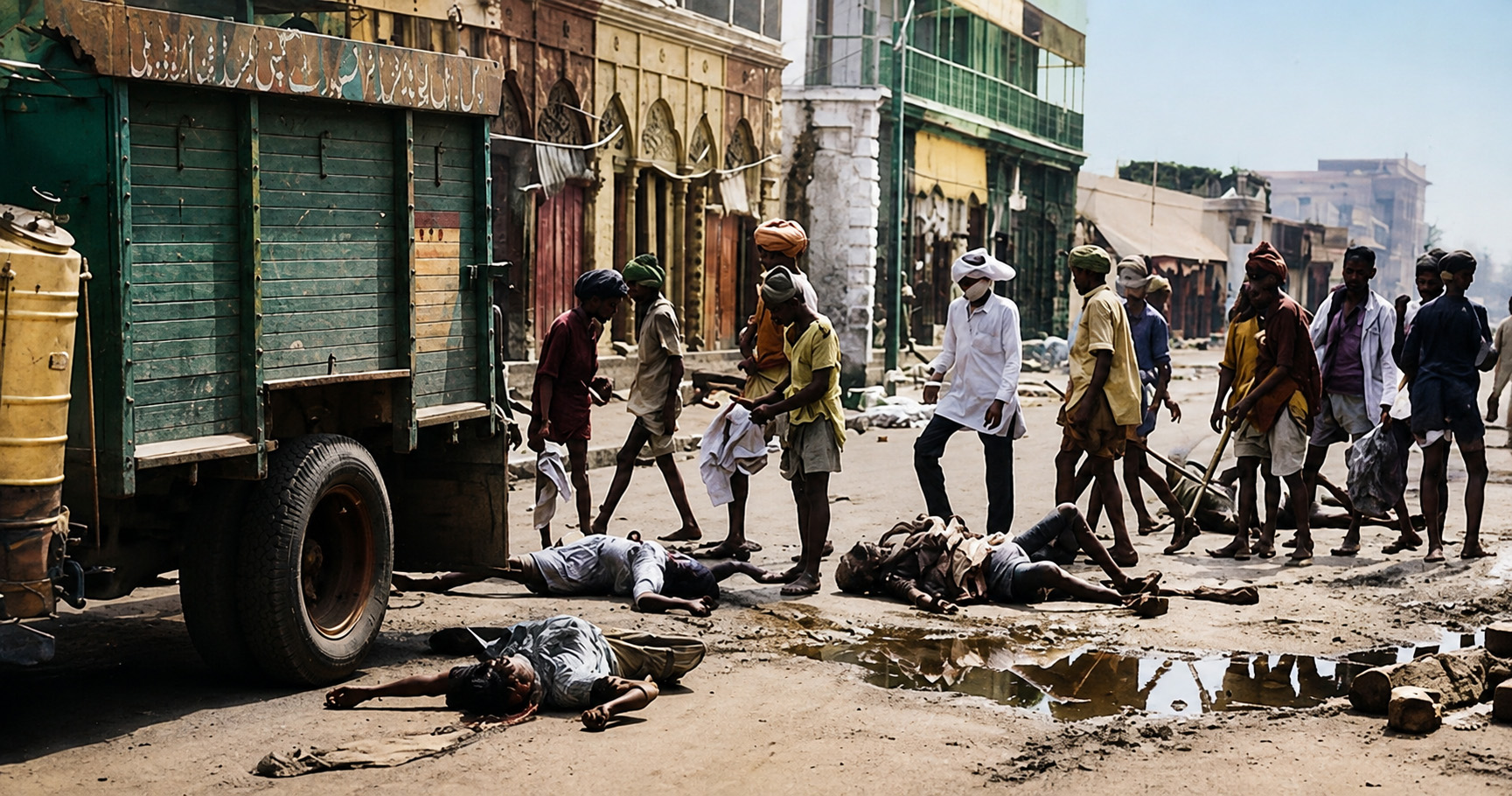
1990 Kashmiri Pandits Exodus (CAN BE TAKEN OR REMOVED, AS PER CHOICE)
In the late 1980s, Kashmir experienced escalating political instability and insurgency. The situation deteriorated further after the controversial 1987 state elections, leading to increased militancy. Prominent Kashmiri Pandits, including BJP leader Tika Lal Taploo and retired judge Neelkanth Ganjoo, were assassinated in 1989, instilling fear within the community.
Estimates suggest that approximately 150,000 to 160,000 Kashmiri Pandits fled the valley during this period. The exodus is viewed as a significant human rights crisis, involving the forced displacement of a minority community due to targeted violence and threats
Many displaced Pandits lived in refugee camps under challenging conditions, facing economic hardships and social alienation.
2016 SC Holds: Article 370 will Cease to Operate Only After the Recommendation of the Constituent Assembly
In State Bank of India v Santosh Gupta, the Supreme Court addressed a challenge against the Securitisation and Reconstruction of Financial Assets and Enforcement of Security Interest Act, 2002, a Union government legislation. The petitioners contended that this Act clashed with the Jammu and Kashmir Transfer of Property Act, 1920— legislation specific to Jammu and Kashmir. The Supreme Court upheld the Union’s legislation.
2018 Governor’s Rule in Jammu and Kashmir
On Jun 20, 2018, the imposition of the Governor’s rule in Jammu and Kashmir occurred as a result of a political breakdown when the Bharatiya Janata Party (BJP) withdrew its support from the People’s Democratic Party (PDP). Under Article 92 of the Constitution of Jammu and Kashmir, the Governor’s rule cannot be extended beyond six months.
2018 Jammu and Kashmir under Presidents Rule
On December 19th, 2018, President Ram Nath Kovind issued a proclamation imposing President’s Rule in Jammu and Kashmir under Article 356 of the Constitution of India. This came at the heels of the Governor’s Rule imposed in June 2018. This proclamation was approved by both houses of the parliament in December 2018 and January 2019.
2019 Presidents Rule Extended by 6 Months | June 12
The President’s Rule over Jammu and Kashmir was expected to expire on July 2nd, 2019. The Union Cabinet extended this by six months, starting from July 3rd 2019. The decision to extend the President’s Rule was based on a report prepared by the Governor of Jammu and Kashmir, stating that the ‘prevailing situation in Jammu and Kashmir’ requires further continuation of the rule.
2019 President Issues an Order Amending the Meaning of ‘Constituent Assembly’ | August 5
In a move resembling Maqbool Damnoo, President Ramnath Kovind issued an Order (C.O. 272) amending the interpretation of ‘Constituent Assembly’ under Article 370(3) to ‘Legislative Assembly’ by amending Article 367—the interpretation clause. Specifically, this meant that any presidential order would be subject to the approval of the ‘legislative assembly’. As Jammu and Kashmir was under President’s Rule, the need for the consent of the ‘legislative assembly’ was satisfied by the Parliament.
2019 Abrogation of Article 370
On 5th of August 2019, Prime Minister Shri Narendra Modi Ji took a visionary decision to abrogate Article 370 from Jammu and Kashmir.
2019 Jammu and Kashmir is Bifurcated into Two Union Territories | August 9
A 3-Judge Bench led by former Chief Justice Ranjan Gogoi, along with former Chief Justice S.A Bobde and Justice Abdul Nazeer, commenced hearing arguments on the Constitutionality of the Order. Following two days of arguments, the Bench deemed it essential to refer the matter to a Constitution Bench for further consideration.
POST ABROGATION OF ARTICLE 370
Media, Information & Communication
Initial Lockdown (Aug 2019 – Jan 2020):
- Initial Lockdown (Aug 2019 – Jan 2020): On 4 August 2019, mobile phone services, internet connectivity (2G/4G) and landlines were snapped across most of Jammu & Kashmir in anticipation of the constitutional changes. Political leaders were placed under restraint, and restrictions on physical movement were imposed in various districts.
- Landline connections were permitted from 18 August 2019; postpaid mobile services resumed on 14 October 2019.
- Broadband use (for essential services) was restored on 15 January 2020; 2G internet access (on a whitelist basis) was reinstated on 24 January 2020, though 4G remained suspended.
Gradual Restoration (2020 – Feb 2021):
- The Supreme Court, on 10 January 2020, held that indefinite internet restrictions were prima facie violative of Article 19(1)(a). It constituted a committee to assess security and developmental needs, refusing to immediately restore 4G but mandating review of all curbs.
- Trial-based reinstatement of 4G services began on 16 August 2020 in two districts; full high-speed (4G) mobile internet was finally restored on 5 February 2021.
Media Monitoring & Easing of Restrictions (Post-2020):
After 2020, restrictions on print and electronic media were relaxed incrementally. By late 2020 and early 2021, most censorship orders were withdrawn, though monitoring for “incitement” continued at times under Section 144 CrPC.
Legal Challenges
Multiple Petitions in Supreme Court (Aug 2019 Onward): Immediately after the August 5, 2019 Presidential Orders, over 23 petitions were filed challenging the abrogation—these included pleas by Shah Faesal, Shehla Rashid, the PUCL, and the Jammu & Kashmir High Court Bar Association.
2019: Reference to a 5‑Judge Constitution Bench (28 Aug 2019):
On 28 August 2019, a three‑judge bench (led by CJI Ranjan Gogoi) referred the challenge to a five‑judge Constitution Bench, holding that issues of federal structure and Article 370’s legal reach demanded adjudication at the highest level.
2020: SC Refuses to Refer to a Larger Bench (2 Mar 2020):
In Shah Faesal v. Union of India, a five‑judge bench (headed by Justice N.V. Ramana) rejected pleas to refer the case to a seven‑judge bench. The Court ruled there was no direct conflict between Prem Nath Kaul (1959) and Sampat Prakash (1968) decisions regarding Article 370’s permanence, so the existing five‑judge bench could continue hearing.
2023: Re‑listing Before New 5‑Judge Bench (3 Jul 2023):
On 3 July 2023, the Supreme Court case management identified a fresh Constitution Bench (five judges, led by CJI D.Y. Chandrachud) to hear a consolidated batch of petitions against the 2019 abrogation.
2023: Day‑to‑Day Hearings Commence (2 Aug 2023):
The Constitution Bench began day‑to‑day hearings on 2 August 2023, examining arguments on legality of the Presidential Orders, Parliament’s power under Article 370, and whether “final approval” could be given without the Constituent Assembly (dissolved in 1957).
2023: Judgment Reserved (5 Sep 2023):
After concluding oral arguments, the Bench reserved judgment on 5 September 2023 to deliberate on the myriad legal questions, including whether Article 370’s “temporary” tag made it permanently inoperative or not.
2023: Constitution Bench Upholds Abrogation (11 Dec 2023):
On 11 December 2023, a 5‑0 unanimous verdict upheld the constitutional validity of Presidential Orders C.O. 272 and 273 (5 Aug 2019). The Court held that, “under President’s Rule, the Governor’s assent was effectively the State’s concurrence” and that Parliament’s reorganisation of J&K into two Union Territories was constitutionally permissible.
Terrorism
- Decline in Terrorist Incidents (2018 vs 2023): According to the CID, J&K, terror‑initiated incidents fell from 228 in 2018 to 43 up to 30 Nov 2023—a 81% drop in civilian casualties and a 63% decline in security‑forces deaths. • Enounters rose from 189 (2018) to 48 (2023), but this reflected enhanced counter‑terror ops rather than increased violence.
- Record Arms Recoveries & Neutralizations (Post‑2019): Home Ministry data show a “zero tolerance” policy led to unprecedented arms seizures (small arms, explosives, narcotics). By January 2024, Amit Shah announced a 66% decline in terror incidents, 81% drop in civilian deaths, and 48% fewer security‑force fatalities since August 2019. EconomicTimes • Local security agencies report that active local militants are at their lowest levels in 35 years (as of May 2025), with successive encounters in Pulwama’s Tral reducing the number of home‑grown militants to a multi-decade low.
Political Landscape
A. Panchayat & DDC Elections (2019, 2020)
Panchayat Polls began in November 2019 (Phase I), conducting elections in staggered stages despite communication restrictions—over 22,000 zila panchayat, block, and village council members were elected, marking grassroots democracy’s return.
In December 2020, the first‑ever District Development Council (DDC) polls were held in eight phases for 280 territorial constituencies. Voter turnout exceeded 51% (over 30 lakh ballots cast). The People’s Alliance for Gupkar Declaration (PAGD) won 110 seats, while the BJP secured 75 seats, and independents/others the remainder.
B. Emergence of New Political Voices:
After the abrogation of Article 370, Jammu & Kashmir Apni Party (JKAP), formed in March 2020 by dissidents who favored “development over secession.” They contested DDC seats and now hold key DDC chairperson posts in Srinagar and Shopian.
J&K People’s Conference (JKPC), led by Sajad Lone, which left the PAGD in January 2021 but retained a local power base in Shopian and Baramulla DDC seats.
C. J&K Assembly Elections
The Delimitation Commission (Feb–Mar 2020) redrew boundaries for 90 assembly constituencies (plus 24 “Pakistan‑occupied Kashmir” seats). The Election Commission announced three phases for polling:
- Phase I: 18 Sep 2024 (26 seats)
- Phase II: 25 Sep 2024 (26 seats)
- Phase III: 1 Oct 2024 (38 seats)
Counting concluded on 8 Oct 2024 with the NC + Congress alliance winning a majority. Omar Abdullah secured both Budgam and Ganderbal seats, and was set to become Chief Minister. BJP won 5 seats (all in Jammu), while NC dominated the Valley. Overall, voter turnout was 63%, highest in key Valley segments.
Economic Impact
A. Investment Proposals
Jammu and Kashmir has received 6,851 investment proposals to the tune of Rs 1.19 lakh crore, as of August 2024. 4.61 lakh potential jobs are expected to be created through these initiatives, official sources said.
A package of Rs 28,000 crore, which has been announced, will create 4.5 lakh expected jobs, while 6,851 investment proposals worth Rs 1.19 lakh crore have been received under which 4.61 lakh jobs are expected to be created, the government sources said.
B. Tourism Boost
As Kashmir valley sees a thriving tourist season this winter, Home Minister Amit Shah said he takes pride in highlighting that normalcy has returned in Jammu Kashmir, which is why tourists are visiting various places in the Union Territory. In 2022, some 1.80 crore tourists visited Jammu and Kashmir.
Improved road and rail connectivity (Zojila, Z‑Morh tunnels, Srinagar–Banihal railway) boosted arrivals: 1,92,000 by air, 1.6 lakh by rail, and over 3.6 lakh pilgrims to Vaishno Devi in 2023
C. Real-Estate Boost
Investment projects worth nearly Rs. 25 thousand crore are under execution in the union territory while proposals to the tune of over Rs. 80 thousand crore are under process
Social and Demographic Changes
End of “Permanent Resident” Exclusivity: Abrogation of Article 35A (5 Aug 2019) meant the Jammu & Kashmir Domicile Act (2020) granted domicile to: West Pakistan Refugees (WPRs), ~20,000 families, now enjoy voting, land ownership, government jobs, and educational quotas. Valmiki Community (~200 families initially relocated in 1957) and Gorkhas, previously disenfranchised, obtained voting rights (first DDC elections 2020; first Assembly elections 2024). hindustantimes.comlivemint.com Better Access to Central Schemes: With 890+ Central laws now applicable (e.g., SC/ST (Prevention of Atrocities) Act, RTE Act, NFSA, MGNREGA, PMAY, Ujjwala, Ayushman Bharat), marginalized groups (Schedule Caste, Schedule Tribe, minority, and refugee communities) could avail welfare entitlements.
Domicile Certificates Issued: By Apr 2025, over 83,000 individuals (Valmiki, Gorkha, WPRs, PoJK migrants, residually domiciled professionals) secured domicile certificates, facilitating reservation quotas, job applications, and educational benefits.
Better Access to Central Schemes: With 890+ Central laws now applicable (e.g., SC/ST (Prevention of Atrocities) Act, RTE Act, NFSA, MGNREGA, PMAY, Ujjwala, Ayushman Bharat), marginalized groups (Schedule Caste, Schedule Tribe, minority, and refugee communities) could avail welfare entitlements.
Domicile Certificates Issued: By Apr 2025, over 83,000 individuals (Valmiki, Gorkha, WPRs, PoJK migrants, residually domiciled professionals) secured domicile certificates, facilitating reservation quotas, job applications, and educational benefits.
Development and Governance
- Extension of 890+ Central Laws (e.g., RTE Act, SC/ST Act).
- Big infrastructure push:
- Railways: Udhampur–Srinagar–Baramulla line nearing completion.
- Roads: Zojila and Z-Morh tunnels.
- Health and Education: AIIMS, IIM, IIT, and new medical colleges.
Key Benefits Extended to Several Communities
Kashmiri Pandits Post-Abrogation
The government introduced special job schemes for Kashmiri migrant youth as part of the rehabilitation efforts. As of early 2021, approximately 3,800 migrant candidates had returned to Kashmir to take up these jobs. PIB
Kashmiri Pandit students have been provided with educational quotas and scholarships to facilitate higher education. Financial assistance schemes have been introduced to support the community’s resettlement and livelihood.
Many Kashmiri Pandits view the abrogation of Article 370 as a pivotal step toward reclaiming their ancestral homes and rights. The move has been seen as a restoration of their identity and a correction of historical injustices. The New Indian Express
West Pakistani Refugees (WPRs)
Citizenship and Voting Rights: Post-abrogation, WPRs were granted Indian citizenship, enabling them to vote in Jammu and Kashmir elections for the first time.
Land Ownership: The Jammu and Kashmir government granted land ownership rights to WPRs, empowering thousands of families across the region
1.5 Lakh Refugees Become Full Citizens
Nearly 1.5 lakh people from these long-marginalized communities, many of whom had lived in Jammu and Kashmir for over 70 years, voted and celebrated their newfound rights. Refugee leaders expressed gratitude to Prime Minister Narendra Modi and Home Minister Amit Shah, crediting them for restoring their dignity and enabling land ownership, education, jobs, and electoral participation.
Valmikis, brought to J&K in 1957, and the Gorkha community, with military roots in the Dogra army, also voted for the first time. Leaders from both groups called it a “historic moment” and a “new era,” as they now plan to demand better living standards, contest elections, and access opportunities long denied under the previous legal framework.
Valmiki Community Domicile Certificates and Voting Rights: Members of the Valmiki community, previously restricted to sanitation jobs, were issued domicile certificates, allowing them to vote and apply for various government jobs.
Gorkha Community Permanent Residency: The Gorkha community, long-time residents of Jammu and Kashmir, were granted permanent resident certificates, restoring their rights and dignity.
Women of Jammu and Kashmir Property and Inheritance Rights: The nullification of Article 35A ensured that women retained property and inheritance rights, even after marrying non-residents.
Scheduled Castes (SCs), Scheduled Tribes (STs), and Other Backward Classes (OBCs) Equal Rights and Protections: Post-abrogation, these communities received rights and protections under central laws, aligning them with the rest of the country.
.png)
.jpg)