Kanakana Kindi: This Is Not a Tale of Caste Discrimination, But of Devotion

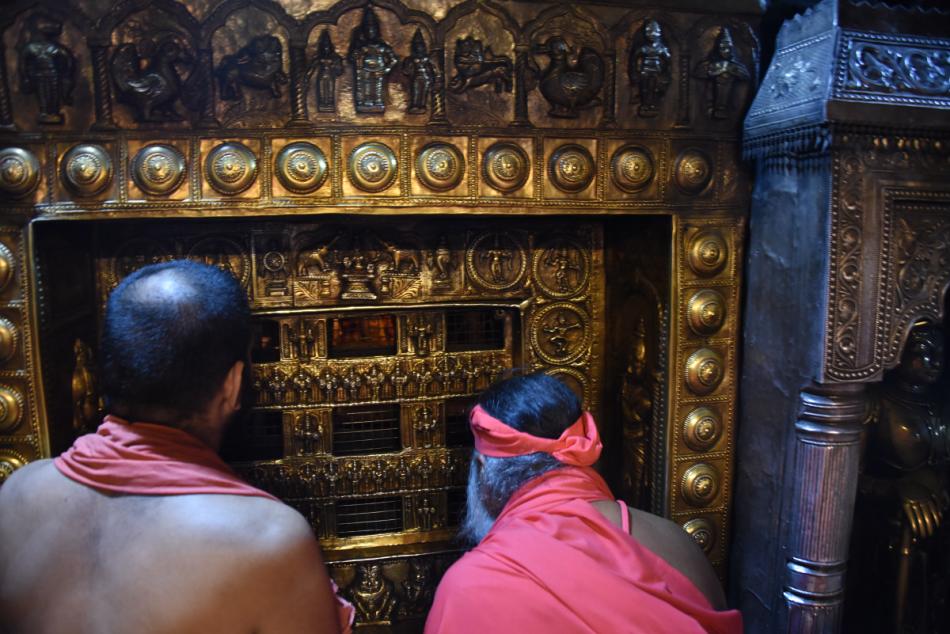
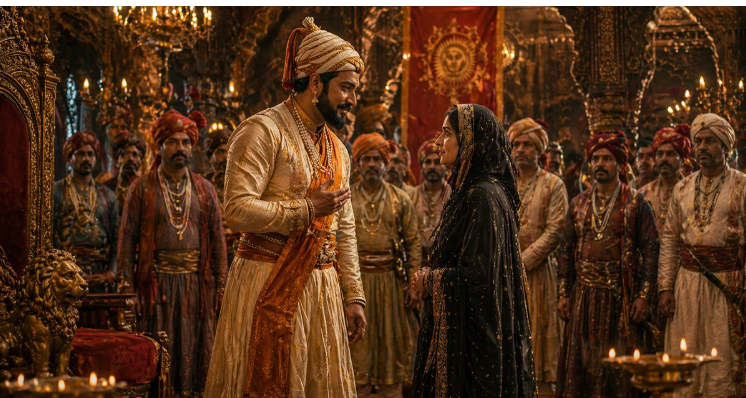
The 16th-century revered poet-saint Kanakadasa is often portrayed as a victim of caste-based discrimination. Over the years, a popular legend has taken shape — one that claims he was denied entry into the Udupi Sri Krishna Temple. According to this tale, Sri Krishna himself turned around and granted Kanaka a divine vision through a small window, now famously known as Kanakana Kindi (Kanaka’s window).
However, a detailed study of Kanakadasa’s biography, architectural evidence, and historical records reveals that this story is a later fabrication. So, what is the true story behind Kanakana Kindi?
Background: Kanakadasa’s Social Standing and Historical Role
Born as Thimmappa Nayaka, Kanakadasa hailed from the lineage of the Kuruba chieftains of Kaginele. His father, Beeragowda, was a Dandanayaka — a military commander — who governed over seventy-eight villages. This made their family influential in military, economic, and social spheres.
Kanaka earned the title “Kanaka Dasa” — meaning “the servant blessed with gold” — for his magnanimous patronage of religion and temples, particularly in Kaginele. He is said to have used his personal wealth and gold to fund temple renovations and religious causes.
Kanakadasa was not merely a poet and philosopher; he was also an active warrior and leader.
Contrary to popular assumptions of untouchability, historical records indicate that the founders of the Vijayanagara Empire, along with several regional royal dynasties, belonged to the Kuruba community.
For centuries, Kurubas held prominent positions in Karnataka as military chiefs, temple patrons, and community leaders. Epigraphic and ethnological evidence supports this.
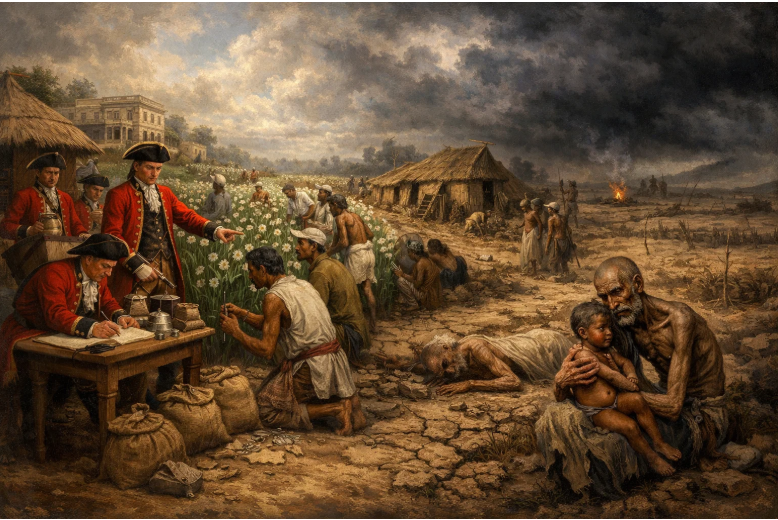
Scholars have also strongly refuted the claim that medieval Indian society practiced rigid untouchability or birth-based caste segregation as later understood. This idea, they argue, took root during colonial intervention, when the British administration institutionalized caste identities through censuses and legal classifications, thereby fracturing India’s social fabric.
Considering all this, the notion that Kanakadasa was denied temple entry solely because he was from the Kuruba community is historically inaccurate and far from the truth.
Architectural Evidence, Ritual Practices, and Temple Records
In the 16th century, Sri Vadiraja Tirtha of Udupi installed small shrines of Mukhyaprana (Hanuman) and Garuda directly in front of the main Krishna idol. These shrines remain there to this day. If the Krishna idol had indeed turned around to face Kanakadasa, as the legend claims, these sub-shrines would logically now be situated behind the deity, which is not the case.
Moreover, the Krishna idol installed by Madhvacharya in the 13th century was originally oriented westward, not eastward. The claim that the idol miraculously turned from east to west is not supported by any historical evidence. Temple records clarify that the eastern entrance was closed for practical reasons related to crowd management and ritual maintenance, not as a result of any miraculous event.
Scholarly and Critical Consensus
Modern scholars, including the eminent Bannanje Govindacharya, have concluded through rigorous research that there exists no inscriptional, textual, or historical evidence to support the claim that Kanakadasa was ever denied entry into the Udupi temple.
The legend of his exclusion appears to have emerged much later — during and after the colonial period — shaped by British-influenced caste narratives that sought to reinterpret Indian history through the lens of social division. Neither Kanakadasa’s original biographies, oral traditions, nor temple records contain any mention of such an incident.
On the contrary, religious authorities of the time held Kanakadasa in high regard. The renowned Dvaita saint, Vyasaraja accepted him as a cherished disciple, while Vadiraja Tirtha arranged for his residence near the temple itself — clear proof that Kanakadasa was respected, not ostracized.
The Real Story of Kanakana Kindi
Vadiraja Tirtha provided Kanakadasa with a dwelling near the western gate of the temple. One night, as Kanaka sat immersed in devotional song, a subtle tremor passed through the area. The next morning, it was discovered that a crack had appeared in the western wall of the temple — and through that narrow opening, Kanaka could directly behold the image of Lord Krishna.
This, according to Vadiraja Guruvaracharitamrita, is how the window came to be known as “Kanakana Kindi” — Kanaka’s Window.
What We See in Udupi Today
The small window through which devotees now have darshan of Sri Krishna is often mistaken for Kanakana Kindi. In truth, that window — with nine square perforations — is known as the Navagraha Window, symbolizing the nine celestial bodies.
In front of the garbhagriha (sanctum sanctorum) lies a small pavilion, and beyond it, toward the west, stands a congregation hall. The wall of this very hall bears the Kanakana Kindi, the sacred spot associated with Kanakadasa’s divine vision.
This, then, is the authentic story of Kanakadasa and Kanakana Kindi — a story not of social rejection, but of divine connection, faith, and grace.
Let us therefore honour our rich historical and spiritual heritage with reverence, and distance ourselves from colonially inspired myths that distort the truth of India’s sacred traditions.
.png)