Kartar Singh Sarabha: The Young Revolutionary Who Redefined Courage and Journalism

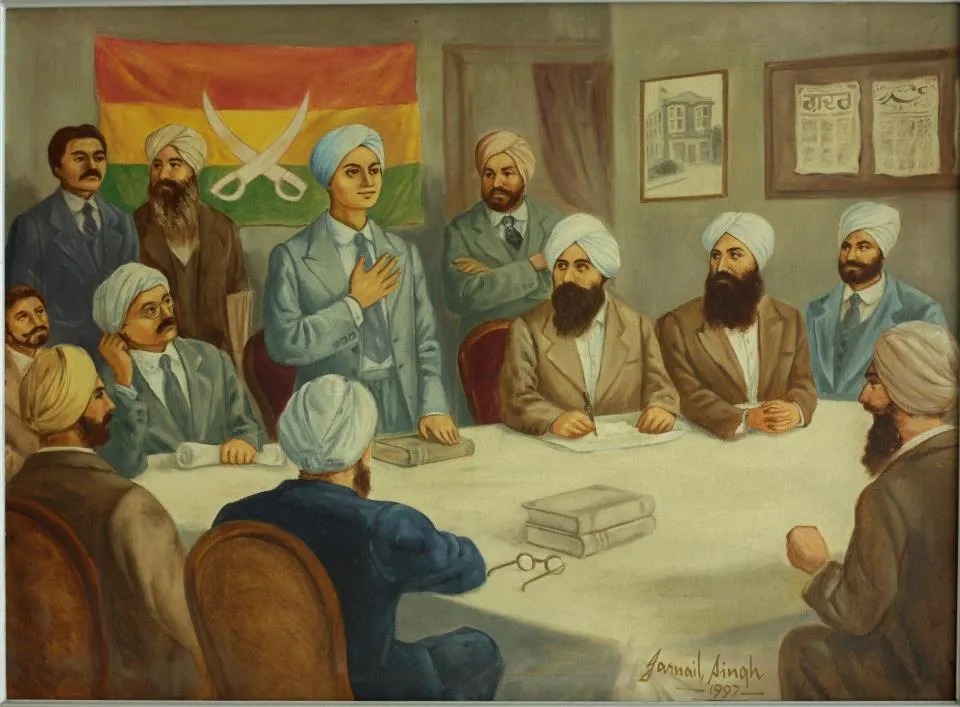
Let’s take a moment to travel back over a century. Imagine being just a teenager, full of dreams and hopes, yet carrying the weight of an entire nation’s freedom on your shoulders. That was the life of Kartar Singh Sarabha, a boy from Punjab who, at the age of just 19, became a symbol of courage, sacrifice, and moral integrity in India’s struggle against British rule. Every year, on 16th November, we remember him not merely as a martyr executed by the British in 1915, but as a young revolutionary whose ideals inspired generations, including the legendary Bhagat Singh. This date is significant because it marks the ultimate sacrifice of a youth who embodied fearlessness, strategy, and ethical revolutionary conduct, setting a blueprint for others to follow.
Kartar Singh Sarabha’s life is remarkable not only for his bravery but also for his extraordinary moral compass. During a revolutionary dacoity in the village of Rabbon, one of his own accomplices misbehaved with a local girl. Sarabha intervened immediately, confronting the man, forcing him to apologize to the girl and her mother, and even allowing the family to take what they needed from the loot for the girl’s wedding. This incident shows that Sarabha’s rebellion was guided by principle; he believed revolutionary actions should serve the nation, not harm innocents.
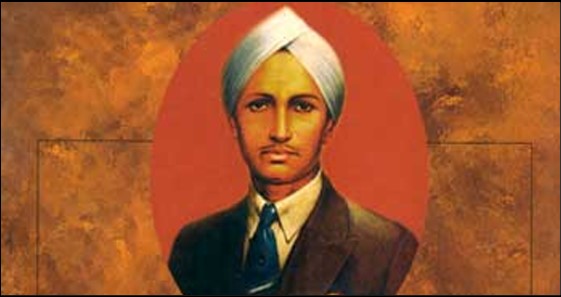
Kartar Singh Sarabha, a young revolutionary from Punjab | Image Credit: Jammu Kashmir Now
Sarabha was also a master of strategy and organization at an astonishingly young age. Before his death at 19, he had already traveled between America and India, coordinating secret missions, smuggling arms and literature for the Ghadar movement, and inspiring hundreds of young Indians to join the cause. His youth made his achievements even more extraordinary; his dedication, intelligence, and leadership were far beyond his years, proving that age is no barrier to revolutionary greatness.
Also Read: Komagata Maru and the Fire of Ghadar: When Injustice Ignited a Revolution
Beyond action, Sarabha nurtured patriotism through words and poetry. He wrote passionate Punjabi couplets urging Indians to rise against oppression. His writings circulated secretly, motivating young revolutionaries and spreading the fire of rebellion even under the threat of British suppression. This combination of moral discipline, courage, and intellectual engagement made him a complete revolutionary, one who acted with integrity and purpose.
Sarabha’s influence extended beyond his lifetime, most notably inspiring Bhagat Singh. The young Bhagat Singh carried a photograph of Sarabha in his pocket, often showing it to his mother as a source of courage. He memorized Sarabha’s favourite Punjabi couplets, understanding that the path of patriotism is fraught with hardship and sacrifice. Bhagat Singh saw in Sarabha not just a historical figure, but a personal mentor and moral guide, someone who combined fearlessness in action with purity of character.
The revolutionary ideals Sarabha exemplified were visible even in his attitude toward death. When warned of the consequences of his actions, he remained defiant, reportedly stating, “You would hang me to death? What else? We are not afraid of that.” He expressed a desire to be reborn repeatedly to fight for India’s freedom, embracing martyrdom with an extraordinary sense of purpose and courage. This fearlessness became a hallmark of the next generation of revolutionaries, proving that true patriotism sometimes demands the ultimate sacrifice.
Even in small, human acts, Sarabha’s character shone.
During the Rabbon incident, after correcting the misconduct of his accomplice, he personally ensured that the mother could take the amount she needed from the loot for her daughter’s marriage, returning the rest with respect and blessing. It was a simple yet profound gesture that demonstrated how revolutionary objectives could coexist with ethics, empathy, and respect for human dignity.
Kartar Singh Sarabha’s story is also one of ubiquitous revolutionary activity. The court tribunal noted his presence in every department of conspiracy planning in America, organizing during voyages, and acting in India. His all-encompassing dedication became a template for later revolutionaries like Bhagat Singh, who similarly embraced multi-faceted roles in India’s struggle for freedom.
Today, when we look back at his brief life, it’s evident that Sarabha was not just a martyr but a living embodiment of revolutionary ideals. He taught that courage must be coupled with ethics, that youth is no barrier to leadership, and that sacrifice can be both personal and moral. His fearlessness, poetry, strategic thinking, and compassion continue to inspire, reminding us that true revolution is not just about defying an empire, it is about living with honor, integrity, and unwavering devotion to the motherland.
Kartar Singh Sarabha’s legacy lives on as a guiding star for every generation of Indians seeking justice and freedom. On this day, we don’t just remember the young man hanged by the British; we celebrate a life that turned rebellion into a lesson in courage, morality, and enduring inspiration.
.png)

.jpg)