Komagata Maru and the Fire of Ghadar: When Injustice Ignited a Revolution

In the spring of 1914, a ship named Komagata Maru dropped anchor in Vancouver’s harbor. On board were 376 hopeful souls — mostly Sikh farmers and ex-soldiers from Punjab — seeking a better life in Canada. They were British subjects, yet the Canadian government refused them entry under a discriminatory law called the Continuous Journey Regulation.
For two agonizing months, these passengers were stranded at sea. They faced hunger, humiliation, and hostility. When the ship was finally forced to return to India, they came back not as defeated migrants — but as symbols of resistance. At Budge Budge Port near Calcutta, British troops opened fire on them. Nineteen were killed. Many more were arrested.
That moment — 29 September 1914 — became a spark.
Across the ocean, in North America, the Indian diaspora was shaken. Workers, students, and farmers saw the truth: racism abroad and colonial oppression at home were two faces of the same empire. The tragedy of Komagata Maru didn’t just break hearts — it lit a fire. And that fire found its voice in a newspaper called Hindustan Ghadar.
A Newspaper That Roared
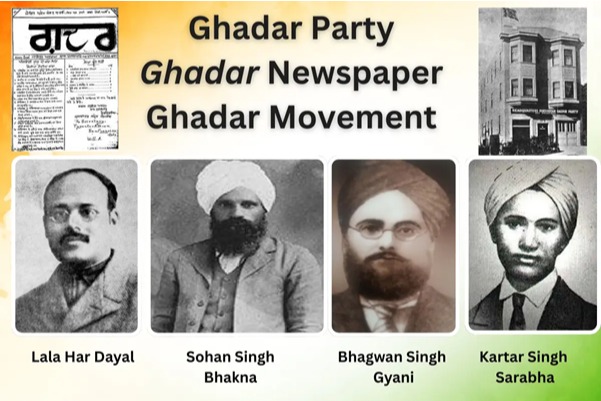
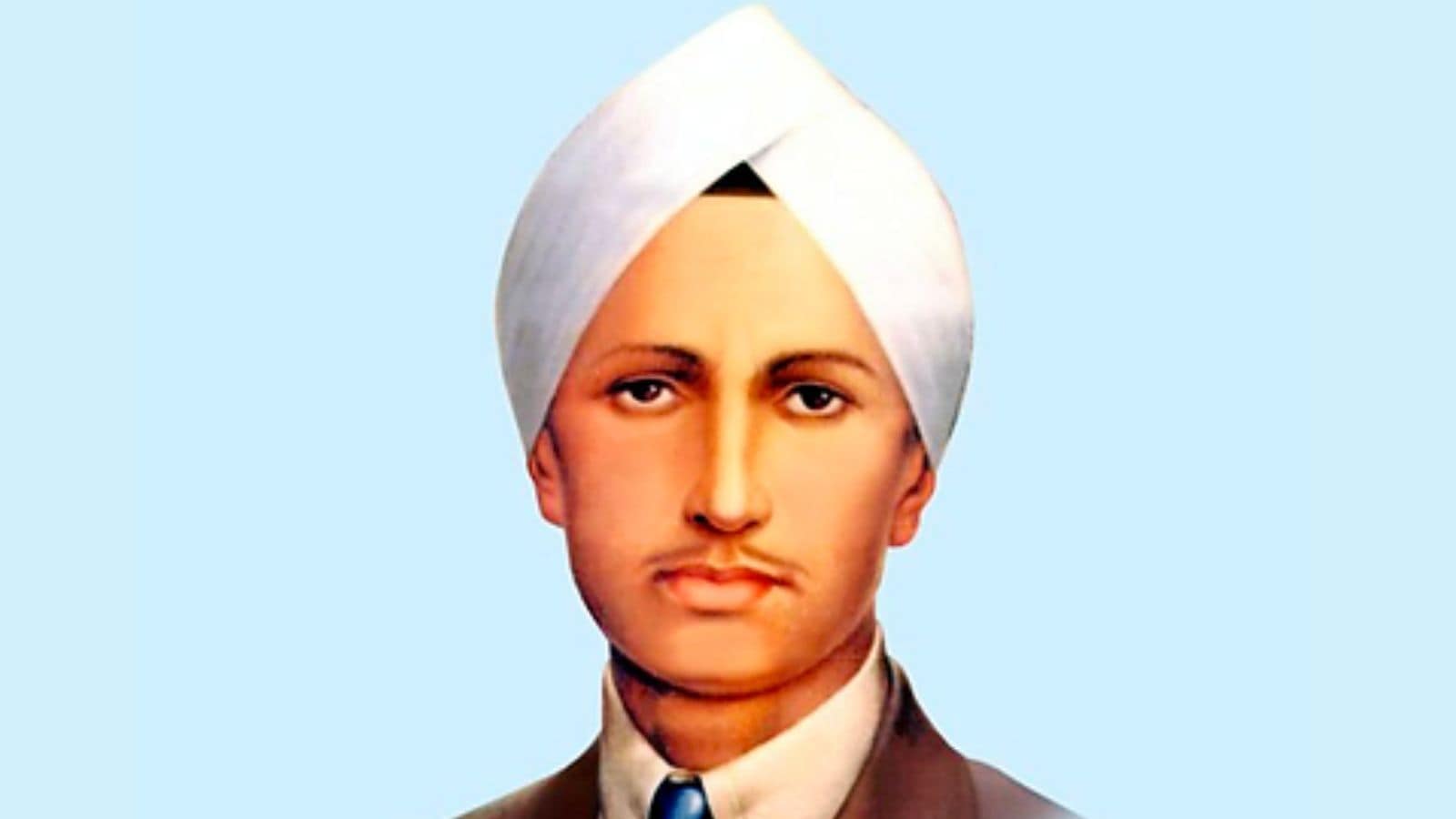
The Ghadar Party had already begun its mission in 1913, from a modest building in San Francisco called Yugantar Ashram. Its founders — Lala Hardayal, Sohan Singh Bhakna, and the teenage firebrand Kartar Singh Sarabha — believed freedom wouldn’t come from petitions. It had to be fought for.
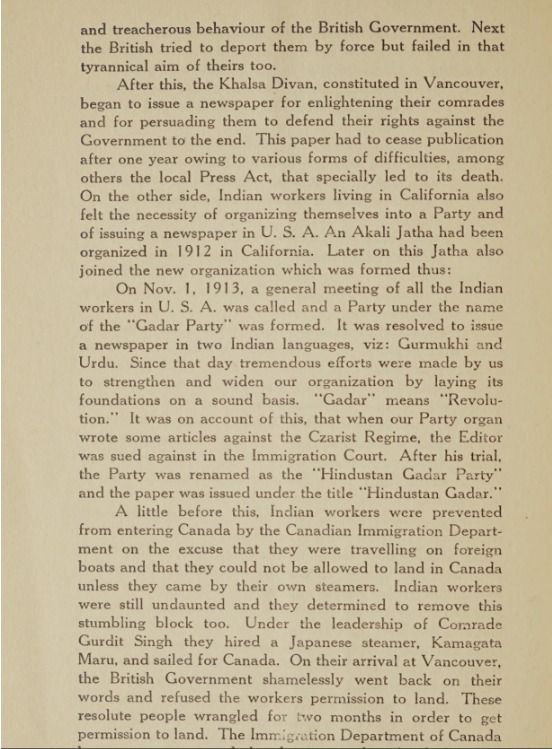
A news clipping informing about the Komagata Maru ship accident in Vancouver’s harbor
On 1 November 1913, they launched Hindustan Ghadar, first in Urdu, then in Punjabi. Its masthead didn’t mince words: “Enemy of the British Raj.” This wasn’t journalism. It was a revolution in print.
The newspaper carried searing editorials, defiant poetry, and eyewitness accounts of British cruelty. Its mission was clear:
- To inform Indians abroad about the suffering back home
- To unite Hindus, Muslims, Sikhs, and Christians under one cause
- To incite a global revolt against imperialism When the Komagata Maru tragedy unfolded, Hindustan Ghadar filled its pages with rage and resolve. One headline declared: “The blood of the passengers has dyed the Pacific Ocean red.”
From Ink to Action
The massacre radicalized the diaspora. Seamen, students, and laborers pledged to return to India — not to live quietly, but to fight. Each copy of Hindustan Ghadar became a passport to rebellion, passed hand to hand across continents.
Then came World War I. In August 1914, with Britain stretched thin, the Ghadar Party saw its chance. The newspaper urged Indian soldiers to turn their guns against the Empire. Its language was raw and stirring — invoking the heroes of 1857, calling British rule slavery, and demanding unity beyond caste and creed.
Bundles of the newspaper were smuggled into India, Southeast Asia, and East Africa. Volunteers risked arrest to carry their message. By late 1914, thousands had returned to India, ready to rise.
The Betrayal and the Trials
The uprising was set for 21 February 1915. Revolutionaries like Kartar Singh Sarabha, Ras Behari Bose, and Vishnu Ganesh Pingale coordinated with sympathetic soldiers. But betrayal struck. A police informant leaked the plan. The rebellion was crushed before it began.
The British responded with brutal force. In the First Lahore Conspiracy Case, 82 were charged with sedition. Twenty-four were sentenced to death — including Kartar Singh Sarabha, just 19 years old. Over 300 were sent to the dreaded Cellular Jail in the Andamans.
More trials followed. In San Francisco, Ghadar leaders were prosecuted under the Hindu–German Conspiracy Trial. The gallows of Lahore became altars of sacrifice. The ink of Hindustan Ghadar had become blood.
Legacy That Refused to Die
Though the rebellion was crushed, its spirit lived on. Bhagat Singh, India’s iconic revolutionary, carried Sarabha’s photo in his pocket. The Ghadar Party’s ideals — secular unity, armed courage, and self-reliance — shaped the Hindustan Socialist Republican Association in the 1920s.
After independence, India finally honored the movement it once feared. In 1969, the Ghadar Memorial Hall was built in San Francisco. In 2013, the National Archives of India celebrated its centenary. During Azadi Ka Amrit Mahotsav (2021–2023), Hindustan Ghadar was hailed as a symbol of national pride.
Its slogans still echo: “Whoever wants freedom, let them come and create rebellion.” “Hindustan is ours; we are its masters.” “Don’t look at religion or sect — unite India.”
From Ship to Press, From Pain to Power
The Komagata Maru tragedy exposed the cruelty of colonialism. Hindustan Ghadar transformed that pain into power. What began as the cry of stranded passengers became a transcontinental movement that shook the British Empire.
This wasn’t just a newspaper. It was a lifeline for the oppressed, a rallying cry for the brave, and a blueprint for revolution. A century later, its ink still bleeds red — with the passion of those who dared to dream of an independent India, and turned that dream into action.
.png)
.jpg)