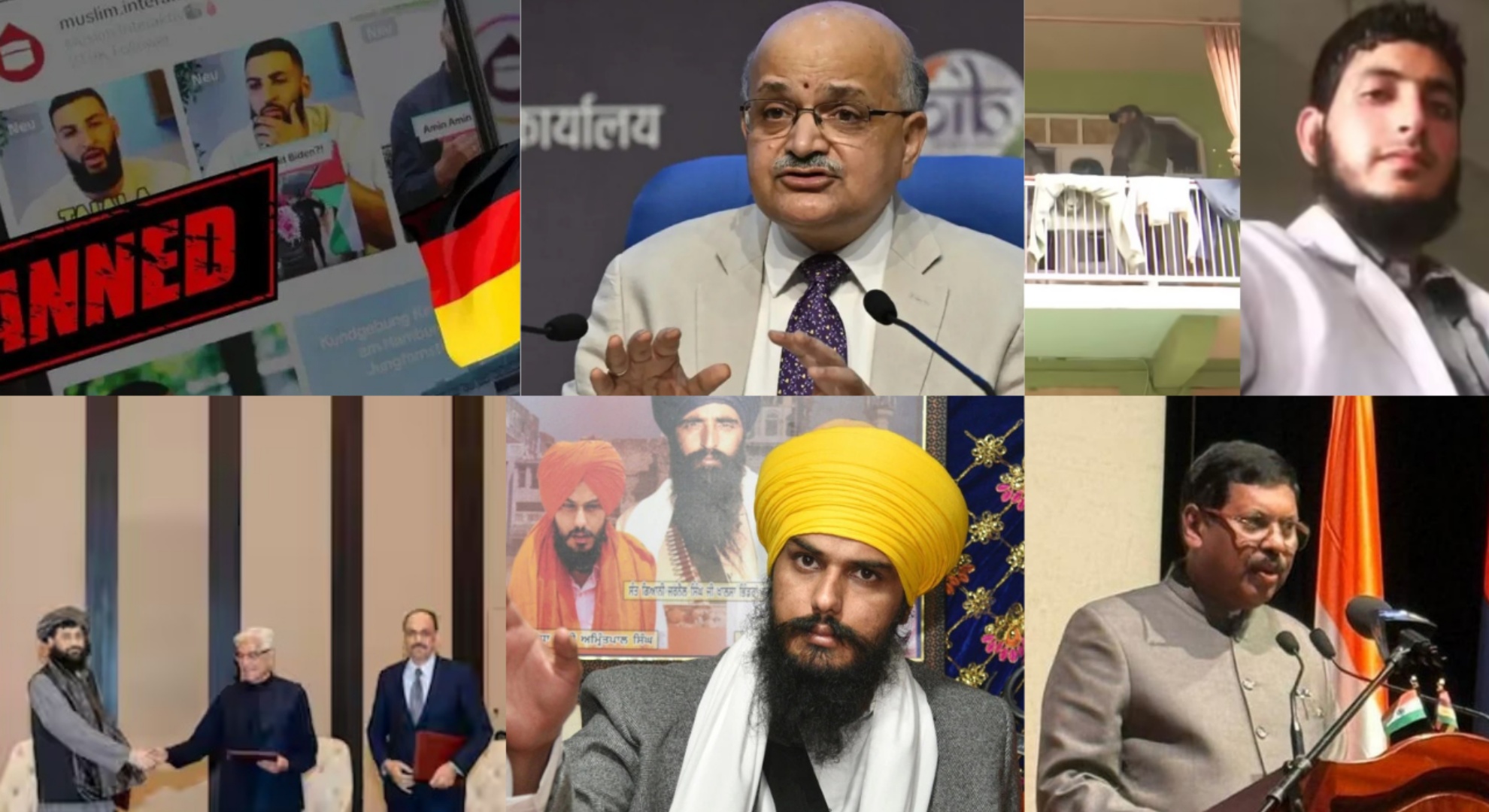
Top News: Profiling Al-Qaeda Offshoot AGuH, Germany Cracks Whip on TikTok Islamism, Opposition Moves SC Against SIR

1. Germany Cracks a Whip on ‘TikTok Islamism’, Bans Islamist Groups for Radicalising Youngsters, Promoting “Caliphate”
The German government has taken stern action against Islamic extremist groups that had been using social media platforms like TikTok, Instagram, and YouTube to spread radical ideas among young people. Groups such as the Islamic Centre Hamburg (IZH) and Muslim Interactive were found promoting the idea of a global Islamic caliphate and encouraging people to reject democracy. By using short, catchy propaganda videos, they attempted to radicalise teenagers by claiming that Western democracy is against their religion, prompting a ban.
Authorities said such activities have become a serious threat to German society, adding that these radical messages spread hatred, divide communities, and can push young people towards violence and terrorism. The growing trend of what officials call “TikTok Islamism” is especially dangerous because it uses modern digital tools to spread extremist views quickly. The German government has banned several such groups, seized their assets, and shut down their online channels in the past as well, including Hizbut Tahrir (HuT), which was banned in 2003. Meanwhile, certain other groups like Generation Islam and Reality Islam are being put under strict monitoring, but have not yet been banned.
Officials stress that religion should not be misused for politics or extremism and that these radical movements harm peace, unity, and the safety of society.
2. Afghanistan Blames Pakistan’s ‘Unrealistic Demands’ After Peace Talks Failure in Istanbul
Talks between Pakistan and Afghanistan have collapsed after the Taliban government rejected Islamabad’s demands during recent discussions in Istanbul. Afghanistan’s acting Foreign Minister Amir Khan Muttaqi blamed Pakistan’s “unrealistic and stubborn” approach, saying Pakistan wanted the Taliban to guarantee peace inside Pakistan and take action against the Tehreek-i-Taliban Pakistan (TTP). Muttaqi said such demands were impossible as Pakistan’s internal security problems were its own responsibility. He also accused Pakistan of violating Afghan sovereignty through airstrikes and drone operations.
Muttaqi said Afghanistan wants peaceful relations with all its neighbours but will not accept interference or pressure. He urged Pakistan to respect Afghan sovereignty and focus on resolving its internal security issues.
3. Netizens Urge NCW, Human Rights Body to Act Against Influencer Divija Bhasin for Glorifying, Normalising Slur Targeting Women
Several social media users have been tagging the National Commission for Women (NCW) and the Human Rights Body to flag contentious posts and narratives being propagated by digital influencer Divija Bhasin. Outraged by her content, netizens have urged the NCW and Human Rights Body member Priyank Kanoongo to take action against Bhasin for glorifying and normalising a slur that denigrates women.
X handles like Hindutva Knight and Voice of Hindus have written to the NCW and Priyank Kanoongo, urging them to take strict action against Bhasin. According to them, her post glorifies and normalises female-objectifying slurs, calling it a “disturbing trend” that could misguide young audiences. The complainants have appealed to authorities to take the matter seriously, saying such content harms public decency and sets a dangerous example for impressionable viewers.
The controversy began when digital media influencer Bhasin encouraged her young female followers to label, flaunt, and identify themselves as “Proud R*nd,” a derogatory Hindi slur used for prostitutes. Many others have condemned Bhasin’s approach, adding that many involved in the flesh trade are victims of kidnapping, exploitation, or coercion.
4. “Seen Morphed Video Of Us”: CJI BR Gavai Flags Dangers Of AI-Generated Videos
Chief Justice of India BR Gavai on Monday said he was aware of a morphed video circulating on social media that falsely showed a shoe-throwing incident inside his courtroom. The CJI made this remark while hearing a petition seeking guidelines to regulate the use of Artificial Intelligence (AI) in the Indian judiciary. The bench, also comprising Justice K Vinod Chandran, has posted the matter for further hearing after two weeks.
The petitioner argued that the growing use of Generative AI in judicial processes could be risky due to “data opaqueness” and “systemic bias.” The plea said AI systems often work like “black boxes,” where even creators may not fully understand how results are generated, which could lead to false or biased outcomes. It warned that unregulated AI use could cause errors such as fake case laws or inaccurate court observations, affecting fairness, transparency, and citizens’ right to information.
5. Supreme Court Refuses to Hear Separatist Extremist and MP Amritpal Singh’s Plea Against NSA Detention
The Supreme Court on Monday refused to entertain Punjab MP and separatist extremist Amritpal Singh’s plea challenging his detention under the National Security Act (NSA). The bench of Justices Aravind Kumar and N.V. Anjaria, however, allowed him to approach the jurisdictional High Court for relief. The bench also directed the High Court to decide the matter within six weeks, considering his prolonged detention. The order will be issued after hearing the counsel representing the Central government.
6. Supreme Court to Hear Pleas from West Bengal, Tamil Nadu on Election Commission’s Special Revision of Voter Rolls
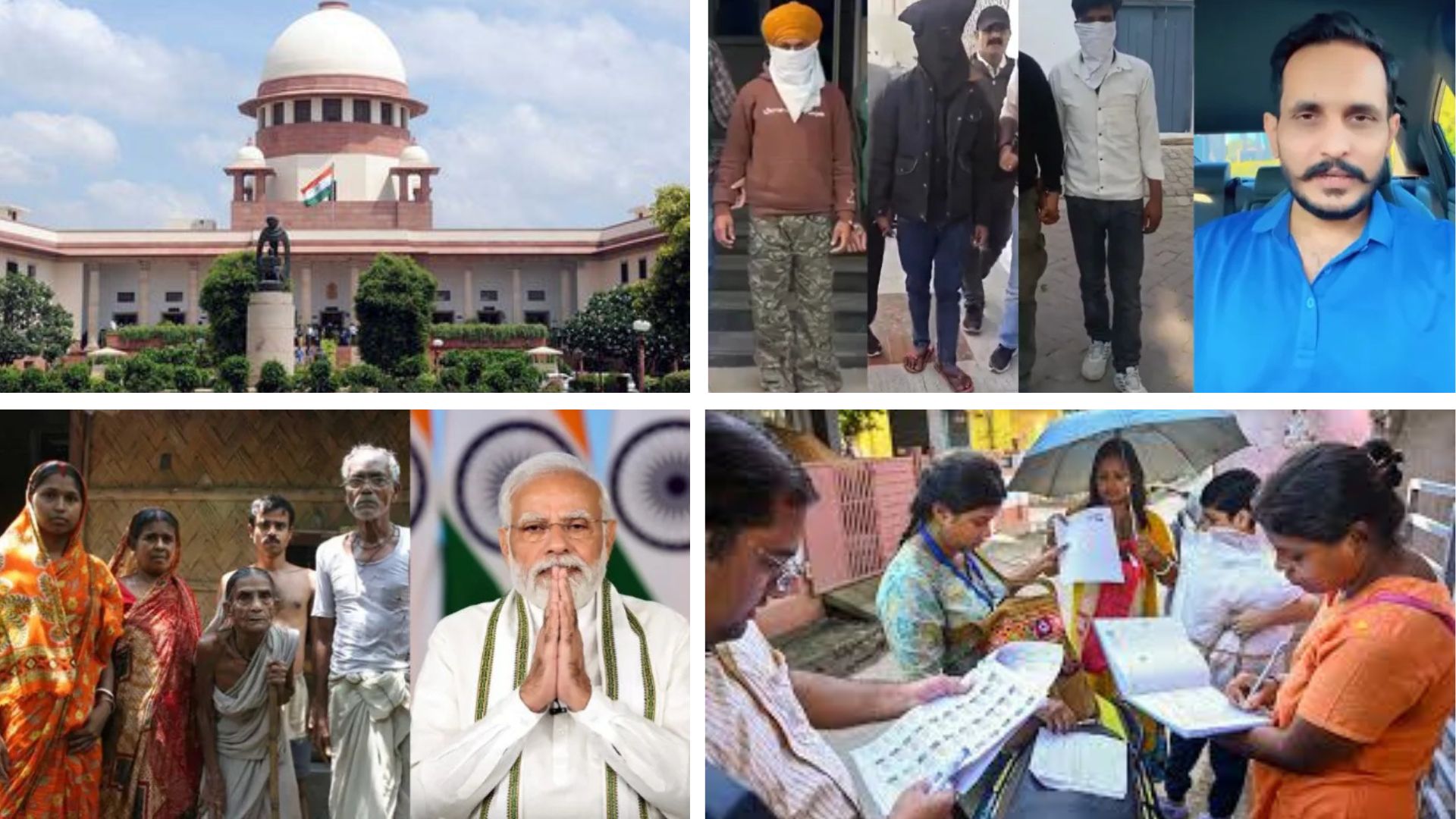
The West Bengal Congress Committee has moved the Supreme Court seeking directions regarding the Election Commission’s ongoing Special Intensive Revision (SIR) of electoral rolls in the state. The matter was mentioned before a bench of Justices Surya Kant and Joymalya Bagchi, who noted that the bench is already dealing with the Bihar SIR matter. A Public Interest Litigation (PIL) on the same issue is also pending before the Calcutta High Court, where the petitioner has requested an extension of the SIR deadline and supervision of the process to ensure smooth implementation.
In Tamil Nadu, the Supreme Court is set to hear petitions filed by the CPI(M) and DMK concerning the SIR exercise tomorrow. These petitions seek clarity on procedural aspects and timelines, while the Election Commission has maintained that the Special Intensive Revision aims to ensure accuracy and inclusiveness in the voter lists. The West Bengal plea may also be taken up subsequently, as similar issues are being examined across multiple states.
7. India Begins First Pre-Test for 2027 Census; Nation to Witness Its First Digital Population Count
The Central Government has launched the first pre-test for the upcoming 2027 Census starting today (November 10). The exercise will continue from November 10 to November 30, 2025, across selected regions of the country, beginning from Anupshahr. The main objective of the pre-test is to assess the accuracy and effectiveness of the two-phase Census process to be conducted later. Notably, this will be India’s first digital Census, where citizens’ caste-related information will also be recorded. The full Census is scheduled to take place between April 1, 2026, and February 28, 2027.
8. India’s Bioeconomy Projected to Touch $300 Billion by 2030, Says NITI Aayog Report
India’s bioeconomy, which includes agriculture, fisheries, forestry, aquaculture, and biotechnology, is projected to reach $300 billion by 2030, according to NITI Aayog’s new study, “Reimagining Agriculture: A Roadmap for Frontier Technology-Led Transformation.” The report emphasises that integrating technology into agriculture and bio-based industries is essential for ensuring food security, sustainable growth, and national sovereignty. It highlights that India’s progress toward becoming a developed nation by 2047 will depend largely on how effectively it uses biological resources and modern technologies like biotechnology, genomics, precision farming, and AI-driven analytics.
At the report’s launch, NITI Aayog CEO B.V.R. Subrahmanyam and Gujarat Chief Minister stressed the importance of digital adoption in farming to improve productivity and profitability. The roadmap identifies key challenges such as fragmented agricultural data, limited digital literacy, and inadequate funding for agri-tech startups, while calling for stronger public-private partnerships and support for region-specific innovations. The report envisions India’s bioeconomy as a driver of rural prosperity and global competitiveness through sustainable, technology-led growth.
10. J&K Police Bust Major Terror Module Linked to JeM and Ansar Ghazwat-ul-Hind, 7 Arrested; Huge Cache of Explosives Seized
The J&K Police have busted a major inter-state and transnational terror module linked to Jaish-e-Mohammad (JeM) and Ansar Ghazwat-ul-Hind (AGuH). The module involved radicalized professionals and students connected to handlers in Pakistan and other countries. Raids were carried out across Srinagar, Anantnag, Ganderbal, Shopian, Haryana’s Faridabad, and Uttar Pradesh’s Saharanpur, leading to the arrest of seven people, including two doctors and an imam. Police also recovered arms, ammunition, and 2900 kg of IED-making materials, exposing a dangerous white-collar terror network operating within India.
11. Jammu Kashmir Terror Module Bust Springs Al-Qaeda Offshoot Ansar Ghazwat-Ul-Hind In Spotlight: Details
In a major crackdown on terror infrastructure, Jammu & Kashmir Police recently busted an inter-state and transnational terror module linked to the banned terrorist organizations Jaish-e-Mohammad (JeM) and Ansar Ghazwat-ul-Hind (AGuH). The operation, conducted across Srinagar, Anantnag, Ganderbal, Shopian, Faridabad, and Saharanpur, led to the arrest of seven people, including two doctors and an imam. Authorities also seized arms, ammunition, and an alarming 2,900 kg of materials used to make improvised explosive devices (IEDs), exposing a dangerous white-collar terror network operating within India.
While terrorist outfits like JeM, Lashkar-e-Taiba (LeT), and Al-Qaeda are notorious for their violent activities in Kashmir and beyond, few are aware of Ansar Ghazwat-ul-Hind (AGuH), one of the most radical and dangerous terror outfits in recent years. Formed in 2017 by Zakir Musa, a former commander of Hizbul Mujahideen, AGuH represents Al-Qaeda’s official branch in the Indian subcontinent (AQIS). Unlike Pakistan-backed groups such as JeM or LeT, which often claim to fight for Kashmir’s “freedom,” AGuH pursues a global jihadist ideology, aiming to establish a Sharia-ruled Islamic state in Kashmir.
Zakir Musa broke away from Hizbul Mujahideen after accusing Pakistan’s intelligence agency, ISI, of betraying the Kashmiri cause. Rejecting nationalism, democracy, and any peace initiatives, Musa declared that AGuH’s mission was purely religious jihad, targeting all who oppose its extremist ideology. He even claimed his group would ensure Muslim unity across sects, while promising protection to Kashmiri Pandits under Islamic law.
Despite Zakir Musa’s death in 2019, AGuH continues to radicalize cells and recruits through online networks. Its operatives maintain connections with foreign handlers, use encrypted communication, and collaborate with Pakistan-based groups for logistics and funding. The recent J&K Police operation proves that the group’s extremist ideology still survives underground, posing a serious threat to regional peace and national security.
In the past, AGuH militants have carried out violent incidents, including the December 4 raid on the Noorpora branch of Jammu & Kashmir Bank in Pulwama’s Tral area, where three armed militants, including Musa, decamped with around Rs 1 lakh. Locals confronted the attackers with stones, forcing them to retreat after firing aerial shots.

.jpg)