Kanchan Prabha Devi: When a Lone Queen Crushed Palace Conspiracy and Foiled Pakistan’s Plot

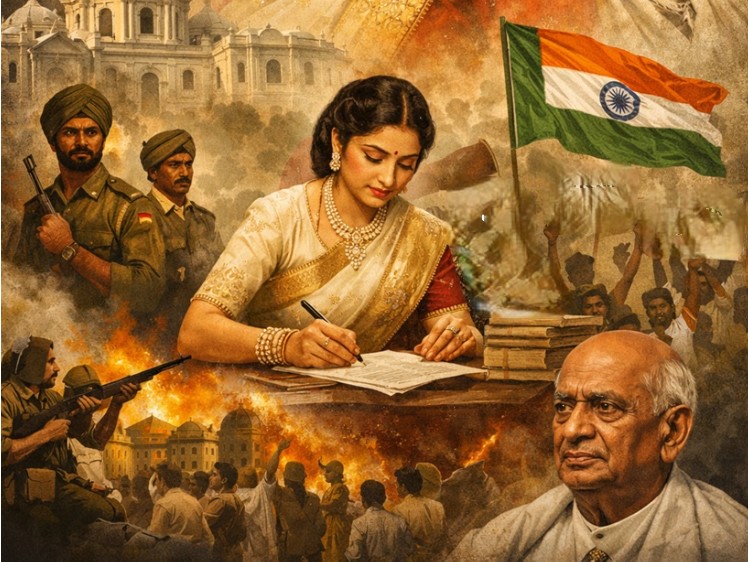
What would the picture of Northeast India look like today if Tripura had become part of Pakistan? This isn’t some fictional tale, but a true turning point in Indian history, orchestrated by a young queen, Kanchan Prabha Devi. The sudden death of Maharaja Bir Bikram Kishore Debbarman, a minor heir, palace intrigue for power, and a Pakistan-backed conspiracy from outside; all conspired to push Tripura away from India, but the queen rewrote the story entirely.
The Throne Suddenly Changes Hands, Internal Feud Begins
In 1947, as the country grappled with the tragedy of Partition, Tripura’s Maharaja Bir Bikram Kishore Debbarman died suddenly that same year, leaving behind his minor son Kirti Bikram and Queen Kanchan Prabha Devi. By tradition, the queen assumed regency responsibilities, but holding power was far less regal than it sounds. Within the royal palace itself, another force was rising: That of the Maharaja’s stepbrother, Durjoy Kishore, who dreamed of the throne. At the same time, the Muslim League’s politics outside, proximity to East Pakistan, and border vulnerabilities placed Tripura at a sensitive juncture, where a single misstep could alter the state’s direction.
Palace Intrigue: Durjoy Kishore and Gedu Miyan’s Game
Durjoy Kishore realized that toppling a lone queen required more than palace maneuvers; he needed external political muscle. Here, he met the influential local Muslim trader and leader of Anjuman-e-Islamia, Abdul Barik alias Gedu Miyan, backed by the Muslim League, who was actively laying the groundwork to link Tripura with East Pakistan. The plan was clear: Prevent Tripura’s merger with India, fuel demands for union with Pakistan, and strengthen Durjoy Kishore’s claim amid the political chaos, so power would tilt in his favor within the palace. Gradually, this alliance reached the Regency Council, where some ministers fell under the influence of Durjoy Kishore and the pro-Pakistan lobby. Had it fully succeeded, Tripura’s official voice might have opposed merger with India, steering the story in a completely different direction.
The Queen’s Masterstroke: Ministers Out, Borders Sealed
When word reached Kanchan Prabha Devi that some members of her own Regency Council were siding with Durjoy Kishore and Gedu Miyan, she faced two paths: Stay silent and slowly lose power, or risk open confrontation with a direct strike. She chose the latter, and it proved her greatest masterstroke. The queen forced resignations from council ministers linked to the pro-Pakistan lobby, effectively showing the palace conspirators the door. She then banned entry and political activities in Tripura for select individuals actively inciting the public and fostering a pro-Pakistan atmosphere.
Voice Echoes to Delhi: Direct Message to Sardar Patel
The queen knew this battle couldn’t be won within Tripura’s borders alone, so she took the next step of confiding directly in the Center. Through the Bengal Congress Committee, she sent a clear message to Sardar Vallabhbhai Patel that pro-Pakistan forces were active in Tripura, pressure was mounting from within the palace, and without immediate attention, this princely state could slip away from India.
Sardar Patel took the information seriously, instructing Assam Governor Akbar Hydari to keep a close watch on Tripura’s situation, and for security reasons, the queen was briefly housed in Shillong, but her stance remained unwavering. Ultimately, through sustained political dialogue, public will, and the queen’s firm line, the Merger Agreement was signed on September 9, 1949, and on October 15, 1949, Tripura officially became part of India, defying the very plot designed to push it toward Pakistan.
Kanchan Prabha Devi’s story reveals that behind the grand maps of history’s borders often stands a single, difficult decision, the courage for which not everyone possesses. A young widow, mother to a minor son, regent of a border princely state, surrounded by threats from inside and out, these could have weakened her greatly, but she risked it all not to cling to power, but to secure the state’s future: Removing ministers, stopping conspirators, and choosing dialogue with the Center. Today, Tripura is an integral part of India’s map, owing not just to military might, diplomacy, and the Constitution, but also to one queen’s political acumen, courage, and timely decision, a contribution often overlooked in mainstream history.
.png)