From 1972 Munich to 2009 Lahore: When Terror Turned Sports Field Into Battlefields

Sporting events embody global unity and national pride, but their massive visibility turns them into magnets for Islamist terrorists craving worldwide attention and disruption. As we approach the 17th anniversary of the Lahore attack on March 3, 2009, this March 2026, the 1972 Munich Olympics massacre and that assault on the Sri Lankan cricket team tell eerily parallel tales of extremists shattering these symbols of goodwill to sow fear and fracture international bonds.

1972 Munich Olympics massacre
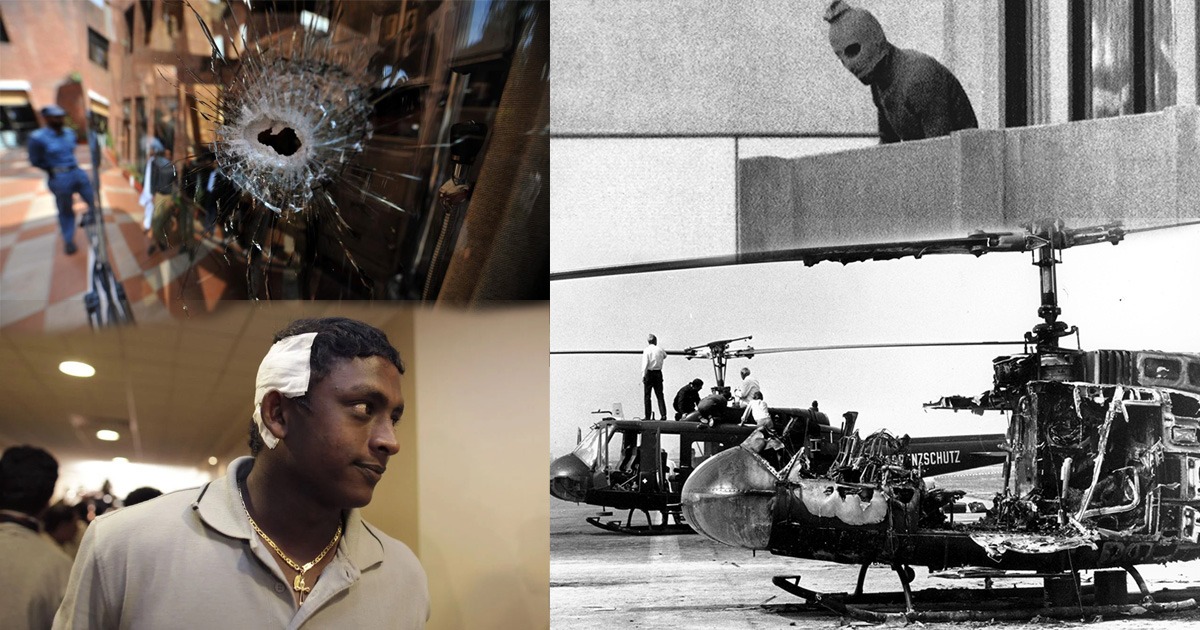
The Munich horror erupted on September 5, 1972, as eight Black September militants — fueled by Palestinian nationalist rage intertwined with Islamist ideology — breached the Olympic Village fence before dawn and stormed the Israeli athletes’ apartments. They shot wrestling coach Moshe Weinberg and weightlifter Yossef Romano during fierce resistance, then seized nine hostages, demanding prisoner releases and safe passage in a standoff broadcast live worldwide. A bungled German rescue at Fürstenfeldbruck airfield ended in slaughter: Gunfire and a grenade explosion inside a helicopter claimed all nine hostages, one policeman, and five attackers, hijacking the Games’ message of peace into a grim global spectacle of terror.
Nearly four decades later, on March 3, 2009, a similar ambush shattered the morning calm in Lahore as the Sri Lankan cricket team’s bus approached Gaddafi Stadium for day three of a Test match against Pakistan. Twelve Lashkar-e-Jhangvi gunmen, linked to Sunni extremism and possibly Tehrik-i-Taliban, unleashed a barrage of AK-47 bullets, RPGs, and grenades on the convoy despite Pakistan’s promises of VIP security — assurances given after the 2008 Mumbai attacks scared off other nations.

Images before the terror attack on the Sri Lankan cricket team’s bus
Players like Mahela Jayawardene, Kumar Sangakkara, and Thilan Samaraweera suffered shrapnel wounds amid chaotic banter, turning to panic; the heroic bus driver sped 500 meters to safety while six policemen and two civilians died, leaving the attackers to escape on motorcycles and cricket exiled from Pakistan for over a decade.
Pakistan’s empty security promises triggered global isolation and forfeited the 2011 World Cup games, much like Munich forced an overhaul of Olympic safeguards—exposing how terror exploits weak states while sport’s resilient spirit endures despite such betrayals.
.png)