15 Explained Points on the Interim Government of India (1946) – From Political Deadlock to Independence Transition

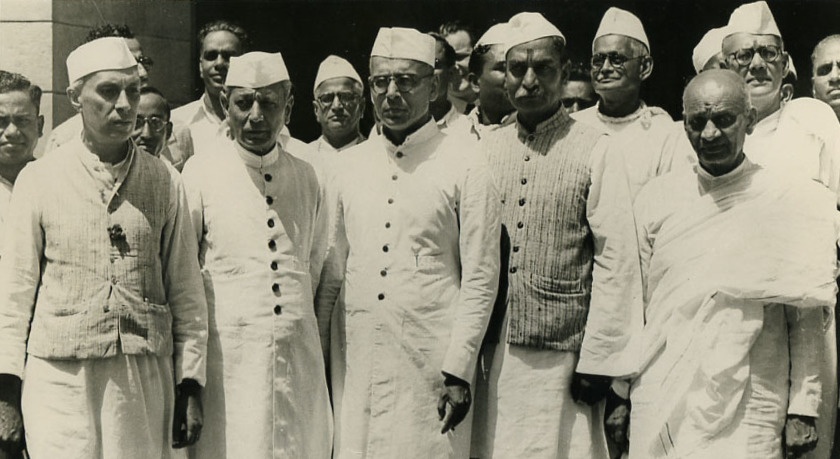
In Indian history, 1946 turns out to be the point of division. As of September 2, 1946, the Interim Government was in place. India made an undisputed advancement on its path to independence. For the first time, an entirely Indian leadership took over the country’s duties and responsibilities, yet Britain’s dominance remained unchallenged in all respects overall. This document explains the history, need, importance, creation, issues, and legacy of the Indian Interim Government of 1946
1. What were the political and historical circumstances that led to the formation of the Interim Government in India on 2 September 1946?
The political deadlock between the Muslim League and the Indian National Congress over the nation’s future, which grew more intense following World War II and the Quit India campaign, led to the formation of the Interim Government of India on September 2, 1946. The 1946 Cabinet Mission, which proposed a federal system and a Constituent Assembly, was appointed by the British government in an effort to facilitate a peaceful transition of power. Despite early opposition from the Muslim League, elections gave Congress a majority, which resulted in the establishment of an indefinite government to oversee the country’s transition from British rule to independence.
2. Who were the major Indian political parties involved in the Interim Government, and what were their initial reactions to the proposal?
The All-India Muslim League and the Indian National Congress were the two main Indian political parties that participated in the Interim Government. At first, there was disagreement over the structure of the Interim Government and concerns about the Cabinet Mission Plan. The Muslim League objected to Congress nominating Muslim members and requested equal representation with Congress, both of which Congress denied. Congress consequently joined the Interim Government on September 2, 1946, without the League, which objected by conducting a “black day.” After more discussions, the Muslim League finally joined the government on October 26, 1946.
3. What role did the Cabinet Mission Plan of 1946 play in the creation of the Interim Government?
The establishment of the Indian Interim Government was significantly influenced by the Cabinet Mission Plan of 1946. A provisional coalition government including members from the Muslim League, the Indian National Congress, and other parties was to be formed, according to the proposal. Until the Constituent Assembly could finalize the constitution, this interim government was entrusted with running the nation’s daily operations. The plan prepared the way for India’s transition to independence and the creation of a constituent assembly that created the country’s Constitution, even though it eventually failed to stop division.
ALSO READ: “Rajiv Gandhi Jayanti: 7 Decisions That Tarnished His Political Image”
Key Features of the Interim Government:
- Representatives from the Muslim League, Congress, and other parties comprise the composition. The task is to oversee daily operations until the Constituent Assembly completes the constitution.
- Significance: Made it easier for India to become independent and set the stage for the creation of a constitution.
4. Who were the key members of the Interim Government, and what positions did they hold (e.g., Jawaharlal Nehru, Sardar Patel, etc.)?
Leading figures from the Indian National Congress and later the Muslim League were part of the Interim Government, which was established on September 2, 1946, and was led by Jawaharlal Nehru, who served as Vice President of the Executive Council and de facto Prime Minister. Important participants included:
- Jawaharlal Nehru – External Affairs and Commonwealth Relations
- Sardar Vallabhbhai Patel – Home, Information and Broadcasting
- Dr. Rajendra Prasad – Food and Agriculture
- C. Rajagopalachari – Education and Arts
- Jagjivan Ram – Labour
- Baldev Singh – Defence
- Asaf Ali – Railways and Transport
- Liaquat Ali Khan (Muslim League) – Finance
- Abdur Rab Nishtar (Muslim League) – Communications
These leaders played a significant role in managing India’s transition toward independence.
5. When and why did the Muslim League initially refuse to join the Interim Government, and what changed their decision later?
In September 1946, the Muslim League first declined to join the Interim Government due to differences over the Cabinet Mission Plan’s implementation, particularly with regard to the government’s structure and the Congress’s rejection of the League’s demand for exclusive nomination of Muslim members and equal representation. In July 1946, feeling marginalized, the League withdrew its acceptance of the Plan and demanded Direct Action after objecting to the Congress’s nomination of Muslims. Later, on October 26, 1946, the League joined the Interim Government in order to safeguard its interests and advance its internal demand for Pakistan.
6. How did the majority of leaders view the formation of the Interim Government, and what role did he play in influencing Congress leaders?
Many politicians, particularly in the Indian National Congress, saw the establishment of the Interim Government as an important milestone toward self-governance and independence. By promoting participation in the Constituent Assembly and the Interim Government, Jawaharlal Nehru, the Vice President of the Executive Council and de facto Prime Minister, helped to shape Congress’s strategy and influenced other Congress leaders to back this change. Nehru’s leadership strengthened the Congress’s position in the last stages of British withdrawal by ensuring the party’s strong participation in government in spite of intercommunal conflicts and Muslim League rejection.
7. What were the reactions of the local Indian population, both urban and rural, to the formation of this new government structure?
When the Interim Government was established in 1946, the Indian populace had a range of responses, all of which were significantly impacted by the ongoing intercommunal conflicts. Thousands of people suffered fatalities and there was general insecurity during this time due to unprecedented communal rioting and violence in cities like Calcutta, Bombay, and Noakhali. People from both urban and rural areas expressed their displeasure with British rule and took part in large-scale demonstrations and hartals, particularly in favor of the Indian National Army trials and more widespread calls for independence, despite this instability. Anxiety about communal divisions and optimism for self-governance were also evident in the overall atmosphere.
8. What were the global reactions, especially from Britain, the USA, and the USSR, to India’s Interim Government in 1946?
In order to resolve the political impasse and enable a peaceful turnover of power, Britain saw the Interim Government as an essential step. This showed its intention to remove imperial impact and focus on the constitutional transition. As part of their larger backing for anti-colonial activities during World War II, the USA and USSR accepted the action, viewing it as a step toward Indian self-rule and decolonization. Foreign nations kept a careful eye on the internal communal conflicts and political rivalry that accompanied the changeover, but they also acknowledged the formation as a major turning point in India’s path to independence.
9. What were the contributions of the Interim Government to India’s governance before independence (e.g., foreign policy, industry, railways)?
The Interim Government of India (1946-1947) significantly shaped India’s governance before independence. Key contributions include:
- Constitution Drafting: The Indian Constitution was adopted in 1950 as a result of the Interim Government’s efforts to write a new constitution.
- Integration of Princely States: To guarantee a single country, the government effectively incorporated princely states into the Indian Union.
- Foreign Policy Initiatives: The Interim Government took an active role in forming diplomatic ties, influencing India’s foreign policy, and defending the right to independence of colonized nations.
- Economic Rehabilitation: To address post-war economic difficulties and displaced refugees, the government implemented initiatives.
- Administrative Reforms: The Indian Administrative Service (IAS) and other crucial services were established by the Interim Government.
- Independence Transition: The Interim Government made it easier for India to leave British domination and become an independent nation.
- Encouraging Intercommunal unity: The administration resolved intercommunal conflicts and encouraged interfaith unity.
10. What were the major controversies surrounding the working of the Interim Government, especially between the Congress and Muslim League ministers?
The main cause of the major issues surrounding the Interim Government of 1946 was the stark ideological differences between the ministers of the Muslim League and the Congress. Among the main concerns were:
- Communal Tensions: Following Direct Action Day (August 16, 1946), communal riots in Bengal, Bihar, and Punjab widened the gulf and undermined mutual trust between the two parties.
- Deadlock in the Finance Ministry: Liaquat Ali Khan of the Muslim League is accused of exploiting the budget to thwart Congress proposals and favor League-dominated areas, resulting in an administrative standstill.
- Lack of Cooperation: Ministries functioned independently, and League ministers declined to frequently attend cabinet sessions or acknowledge Nehru’s authority.
- Policy Sabotage: Both sides accused the other of being obstructionist; the Congress felt the League advocated partition through non-cooperation, while the Muslim League thought the Congress wanted a Hindu-majority India.
11. How did the Muslim League’s participation in the Interim Government contribute to communal tensions and violence?
The Muslim League’s participation in the Interim Government of 1946 significantly contributed to communal tensions and violence in India. Here are some key factors that led to this outcome:
- Obstructionist Approach: The Muslim League, led by Liaqat Ali Khan, adopted an obstructionist approach in the Interim Government, refusing to attend informal meetings and restricting the efficient functioning of other ministries. This created an atmosphere of mistrust and hostility between the League and the Congress.
- Direct Action Day: The Muslim League’s call for Direct Action Day on August 16, 1946, led to brutal communal riots in Calcutta, followed by killings in Noakhali, Bihar, and Punjab. This violence further intensified communal tensions and paved the way for partition.
- Demand for Pakistan: The Muslim League’s demand for a separate Muslim state, as outlined in the Lahore Resolution of 1940, created a sense of unease among Hindus and contributed to the growing communal divide.
- Communal Politics: The Muslim League’s communal politics, fueled by the Two-Nation Theory, created an “us versus them” mentality, making it difficult to find common ground with the Congress. This ultimately led to the partition of India and the creation of Pakistan.
- Failure of Constitutional Negotiations: The failure of constitutional negotiations, such as the Cabinet Mission Plan, further exacerbated communal tensions. The plan’s collapse led to the League’s Direct Action Day and ultimately contributed to the partition of India.
- The Muslim League’s participation in the Interim Government, therefore, played a significant role in escalating communal tensions and violence, ultimately contributing to the partition of India.
12. What were the critics by contemporary historians and political thinkers on the effectiveness and limitations of the Interim Government?
The Interim Government’s inefficiency has been criticized by modern historians and political analysts, mainly because of the hostile relationship between Congress and the Muslim League and the high levels of religious conflict. The most serious critique was that it was unable to control or stop the worrying increase in Hindu-Muslim violence, including the Great Calcutta Killings and the riots that followed in Noakhali and Bihar. Conflicts between League ministers, particularly Finance Minister Liaquat Ali Khan, and Congress over fiscal choices and policy implementation sometimes led to administrative gridlock. The administration was viewed by many as a pathetic, late compromise that could neither stop Partition nor foster enduring unity.
13. What positive outcomes or developments are attributed to the functioning of the Interim Government before Indian independence?
Prior to independence, the Interim Government had a number of beneficial effects:
- Transition to Self-control: It supervised the administrative shift from British colonial control to sovereignty for both India and Pakistan, signaling the start of Indian self-governance.
- Constitutional Progress: The government laid the groundwork for the eventual Indian Constitution by supporting the Constituent Assembly’s work.
- Initiatives in Foreign Policy: It improved India’s standing internationally by establishing diplomatic ties with other nations and joining the UN.
- Integration Efforts: In order to foster national unity, the Interim Government tried to integrate princely states.
- Economic and Administrative Reforms: It took action to handle vital portfolios including communications, railroads, and defense as well as to solve economic issues.
14. In what ways did the Interim Government prepare India for full independence and transition into a sovereign republic?
The Interim Government prepared India for full independence and transition into a sovereign republic in several key ways:
- Indian Self-Rule was established, which signaled the beginning of Indian leaders taking charge of the government, lowering British influence, and gaining governing experience.
- Established Constitutional Foundations: The Constituent Assembly started creating the Constitution that would govern an independent India when the government made it easier for it to operate.
- Integrated Princely States: In order to maintain national cohesion and a strong Indian Union, attempts were undertaken to diplomatically merge princely states.
- Developed Foreign Policy: The Interim Government affirmed India’s standing internationally by establishing diplomatic ties and securing India’s admission to the UN.
- Economic and Administrative Reforms: It stabilized the economy, handled post-war economic issues, and prepared the way for planned development.
15. How is the legacy of the Interim Government viewed today in academic and political discourse, heroic, flawed, or transitional?
Many academics and political commentators consider the legacy of the Interim Government to be transitional. In addition to laying the foundation for the Constitution, uniting princely states, and establishing foreign ties, scholars acknowledge it as a crucial period that guided India from colonial rule to independence. Its failure to control the humanitarian catastrophe of Partition and stop intercommunal violence, however, is also subject to criticism. In addition to highlighting the advantages and disadvantages of early Indian leadership, the event revealed the difficulties of coalition politics in a divided society. As a result, its legacy is regarded as crucial yet nuanced—neither entirely heroic nor entirely wrong.
.png)