India’s War Policy Under Lal Bahadur Shastri: 3rd September 1965, A Bold Stand, Strategic Blunders, and Congress Legacy

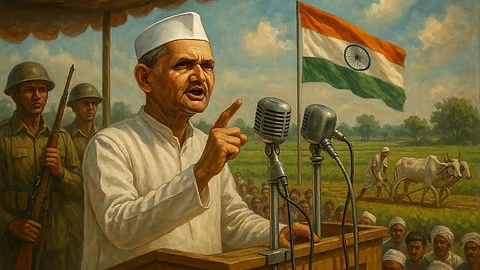
Who was Lal Bahadur Shastri?
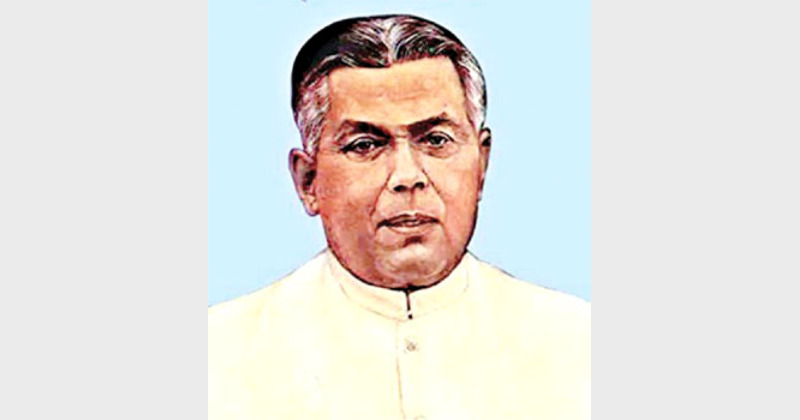
Lal Bahadur Shastri was the second Prime Minister of India, serving from 1964 to 1966. Known for his simplicity, integrity, and leadership during challenging times, he led the nation during the 1965 Indo-Pak war. His firm response to Pakistani aggression and his powerful slogan “Jai Jawan Jai Kisan” inspired both soldiers and farmers, reinforcing national unity. Shastri emphasized self-reliance and defended India’s sovereignty without compromise. Despite his short tenure, he left a lasting legacy. His sudden death in Tashkent after signing a peace agreement with Pakistan remains controversial and a subject of debate in Indian political history.
Background of the Indo-Pak Conflict (1947–1965)
Kashmir dispute origins
At Partition in August 1947, Maharaja Hari Singh delayed accession. Facing tribal invasion backed by Pakistan and internal revolt, he signed India’s Instrument of Accession, prompting Indian military aid. The United Nations intervened, introducing a cease‑fire line and UN resolutions for a plebiscite that never materialized.
1947–48 war outcome
The first Indo‑Pak war (1947–49) ended in a stalemate. A UN‑mediated cease‑fire (January 1949) divided Kashmir—India held ~55%, Pakistan ~30%, along the “Karachi Agreement” line. A promised plebiscite never occurred, leaving deep mistrust and shaping subsequent bilateral tensions.
Events leading to the 1965 war (Operation Gibraltar)
In August 1965, Pakistan launched Operation Gibraltar, a covert infiltration of Azad Kashmir Regular Force personnel into Indian Kashmir to incite rebellion. The mission failed; infiltrators were discovered, sparking Indian military retaliation. This covert operation triggered the wider 1965 war.
What happened in August–September 1965
August 1965 saw skirmishes escalate: India captured positions such as Haji Pir Pass by late August. Pakistan responded on 1 September with Operation Grand Slam aiming to cut Indian supply lines, igniting full-scale war. The conflict spread across Kashmir and the international border.
Pakistani infiltration into Kashmir
Under Operation Gibraltar, Pakistani troops disguised as locals (5–7,000 strong) crossed the Cease‑Fire Line in early August 1965. Their goal: sabotage, insurgency, seizure of key terrain. Most were detected by Indian forces; the operation failed to trigger an uprising.
Indian response: crossing the international border on 1 Sept
Following the failure of infiltration, Indian forces pursued infiltrators across the Cease‑Fire Line. On 1 September 1965, India formally crossed into Pakistan‑administered territory, capturing strategic positions like Haji Pir Pass and opening a new front, transforming the conflict into a conventional war.
Escalation into full‑scale war
What began as covert infiltration escalated when both sides deployed large-scale conventional forces. The conflict spread beyond Kashmir to Punjab and Rajasthan, involving major tank and air battles. A 17‑day war ensued until a UN‑brokered cease‑fire on 23 September 1965 halted the fighting. Washington Post
Key statement by PM Shastri on 3 September 1965
On 3 September 1965, PM Shastri declared that India would “fight for peace with the same courage and determination as we fought against aggression.” He emphasized that Indian territory would never be surrendered, reinforcing national unity and resolve.
India will not yield to aggression
Shastri firmly stated: “If Pakistan has any ideas of annexing parts of our territory, she should think afresh…force will be met with force.” This unequivocal stance deterred further intrusions.
Defense of Indian territory is supreme
In Parliament, he asserted that any aggression must be faced with full national resources, saying “the threat to our freedom is real, continuing and immediate…with all our might.” India is prepared to defend every inch of its soil.
No compromise on Kashmir through war
Shastri refused to negotiate Kashmir under duress. Though open to diplomacy, he declined any ceasefire that didn’t restore the pre‑incursion status quo, signaling wariness toward premature peace.
Position on Ceasefire and Peace
While open to peace, Shastri insisted it must uphold India’s dignity. He reminded the UN that Pakistan’s aggression forced India’s military response, rejecting any ceasefire that equated aggressor with victim.
Areas Where Lal Bahadur Shastri, Gone Wrong
Tashkent Agreement: Strategic Blunder
Shastri returned all captured territories, including the strategic Haji Pir Pass, without securing firmer guarantees. Critics called it a diplomatic surrender, with no accountability for Pakistan’s aggression.
Failure to Internationalize Pakistan’s Aggression
Shastri did not press the UN to formally label Pakistan as aggressor. India failed to galvanize global support, allowing the USSR to shape terms at Tashkent.
Lack of Long‑Term Military Planning
Post‑1962, India delayed modernizing its military. During 1965, emphasis remained on conventional strikes. After Tashkent, Pakistan rapidly rearmed while India lagged in strategic depth.
Economic Fallout Ignored
War resources diverted from food crisis and inflation. Though Shastri popularized “Jai Jawan Jai Kisan,” no structural economic or agricultural reforms were implemented during wartime.
Poor Intelligence Handling
India’s IB and military failed to anticipate Operation Gibraltar. Delayed response to Pakistani infiltration compromised Indian positions in Kashmir, weakening initial defense
Did Not Exploit India’s Victory
Despite post-war superiority, Shastri made no diplomatic push to isolate Pakistan or leverage global opinion. Tashkent returned advantages to Pakistan, diminishing India’s strategic leverage.
Indian response to Pakistan’s Operation Grand Slam
When Pakistan launched Operation Grand Slam on 1 Sept to seize Akhnur, India reacted swiftly. IAF strikes halted advancing Pakistani armor. By 6 Sept, Indian Army crossed the international border, opening a new front in Punjab, diverting Pakistan’s focus and relieving pressure in Kashmir.
Role of Indian Armed Forces in Punjab, Rajasthan & Kashmir sectors
In Kashmir, 19 Infantry Division captured Haji Pir Pass end‑August. In Rajasthan, defensive positions were held. In Punjab, XI Corps advanced toward Lahore and Sialkot from 6 September. Coordinated operations across three theatres showcased defensive depth aligned with offensive thrust.
Key military leaders involved
General J.N. Chaudhuri (COAS) led broader strategic counter‑offensives into Punjab. Air Chief Marshal Arjan Singh directed quick air support. Lt‑Gen Harbaksh Singh and Lt‑Gen Dhillon commanded sectoral operations, reinforcing key fronts and sustaining momentum.
General J.N. Chaudhuri (Army Chief) COAS since 1963, Chaudhuri oversaw swift deployment under Operation Ablaze and later offensive thrusts. His push into Lahore‑Sialkot alleviated Kashmir pressure. His leadership merged strategic foresight with bold counter‑attacks. indiandefencereview.com
Air Chief Marshal Arjan Singh (IAF)
Arjan Singh mobilized air operations within an hour of Grand Slam’s start. Under his direction, IAF balanced aggressive sorties and dogfights, deploying Gnats to counter PAF Sabres, reclaiming air parity within 72 hours.
Non‑Alignment Under Stress
Shastri’s adherence to non-alignment strained India’s diplomatic flexibility. While failing to decisively side or distance, India remained diplomatically isolated. The USSR remained “studiedly neutral,” and NAM allies like Egypt and Yugoslavia urged ceasefire rather than rally behind India’s cause
Global Reaction: U.S. and USSR Positions
The U.S. imposed an arms embargo on both sides to forestall Chinese intervention, while the USSR endorsed UN ceasefire resolutions and mediated Tashkent. Both pressured India to set aside battlefield gains, reflecting limited backing.
UN’s Call for Ceasefire
UN Secretary‑General U Thant intervened, and the Security Council urged a ceasefire by mid‑Sept. India, under Shastri and Congress guidance, acquiesced rapidly, yielding momentum and strategic leverage.
Support from Other Countries
Key NAM states like Egypt, Yugoslavia, and Indonesia leaned toward ceasefire over backing India. Pakistan netted political, financial, and military aid unseen from India’s allies, magnifying New Delhi’s isolation.
Impact on Indo‑US Relations
The U.S. arms embargo and neutrality alienated India, undermining bilateral trust. Rising suspicion of American bias toward Pakistan hardened Indian Congress policy and drove a closer tie with the USSR.
Impact on Indo‑Soviet Relations
Shastri leaned on Soviet diplomacy, but Moscow insisted on status quo ante and neutrality, even sharing intelligence with China. The USSR actively brokered a ceasefire, dictating terms at Tashkent, curbing India’s diplomatic freedom.
Public response to Shastri’s leadership
Indian citizens rallied behind Shastri’s decisive stance in 1965. Political consensus across party lines and widespread praise in Parliament lifted national morale. The Hindu noted an “electrifying effect” in Lok Sabha, recognizing his firm, determined leadership during crisis.
Role of the media and All India Radio
Shastri delivered regular radio addresses via All India Radio, bringing citizens together and strengthening communal resolve. With limited TV and radio, villagers tuned in collectively. Airwaves had become vital platforms for wartime messaging and unity.
Rising nationalism
The 1965 war saw a surge in national pride. Independent media coverage portrayed a unified India standing firm, while port workers in Bombay halted Pakistani cargo. Civic activism reflected the national mood of resistance and solidarity.
Call to citizens: “Jai Jawan Jai Kisan” slogan
Shastri coined this slogan on 23 Sept 1965 to energize soldiers and farmers simultaneously. It became an enduring rallying cry, linking defence and agriculture to national survival.
Civil Defence Measures, Rationing, etc.
Shastri launched austerity drives: skip-a-meal campaigns, gold‑bond and defence‑loan schemes to redirect civilian resources to war needs. These measures helped mount self-reliant defence while tackling concurrent food shortages.
Shastri’s Leadership Style and Philosophy
Comparison with Nehru’s soft diplomacy
Nehru’s “middle path” diplomacy earned India global respect and influence through principled non-alignment. Shastri’s more aggressive stance, including crossing the border, risked alienating global allies and provoking Cold War powers, sacrificing long-term diplomatic capital for battlefield gains.
Shastri’s firm but balanced approach
Critics argue his wartime firmness fostered a jingoistic climate, veering away from principled leadership. C. Rajagopalachari, also known as Rajaji, warned of “fire-eaters” in Delhi, concerned that Shastri prioritized political optics over sober decision-making, fueling populist militarism.
Moral and ethical dimensions of war according to Shastri
Shastri leveraged Gandhian ethics rhetorically but subordinated moral restraint to nationalist zeal. His wartime messaging emphasized sacrifice, not restraint. Rajaji criticized his moral posture, lamenting the growing “war hysteria” he believed undermined ethical governance.
Personal simplicity but political firmness
While Shastri’s austere lifestyle earned admiration, detractors argue his modesty masked political inertia. A critical blogger described him as “too timid” after Nehru, lacking Nehru’s bold vision and drive to push India forward beyond wartime administration.
Legacy and Historical aspect of Shastri’s policy
Impact on India’s military modernization
The 1965 war revealed India’s military weaknesses post-1962. Shastri oversaw army expansion and accelerated IAF upgrades, yet Congress resisted long-term restructuring and modernization beyond conventional forces. The reforms remained incomplete, delaying true transformation until later decades.
Long‑term influence on India‑Pakistan relations
The war deepened mistrust and accelerated the arms race. Though Tashkent restored the status quo, it failed to resolve Kashmir. Congress avoided a long-term strategy, cementing enduring hostility and setting the stage for future conflicts instead of a diplomatic settlement.
Shastri’s popularity post‑war
Shastri’s image soared as a “war hero”, bolstered by “Jai Jawan, Jai Kisan.” But Congress failed to leverage this unity into systemic reforms. His sudden death at Tashkent cut short potential reforms, allowing Congress to revert to status quo politics.
Criticism or praise in historical scholarship
Modern analysis credits the 1965 war for restoring military morale but criticizes Congress for neglecting strategic depth, modern capabilities, and joint warfare. Scholars argue Shastri’s initiatives were reactive and short-lived, exposing the limits of Congress’s post-war military vision.
.png)