1965 India–Pakistan War: From Covert Infiltration to Ceasefire – A Complete Timeline, Battles, Blunders & Legacy

Timeline
The 1965 India–Pakistan War was the second full-scale war between the two nations, fought mainly over the Kashmir region.
- April 1965 – Rann of Kutch skirmishes begin: Minor border clashes take place in the Rann of Kutch (Gujarat). UK brokers a ceasefire by June.
- 5 August 1965 – Operation Gibraltar launched by Pakistan: Thousands of Pakistani infiltrators cross into Jammu & Kashmir to incite insurgency. The plan fails.
- 15 August 1965 – India responds militarily: Indian Army begins counter-infiltration operations in Kashmir.
- 1 September 1965 – Pakistan launches Operation Grand Slam: Aimed at capturing the vital town of Akhnoor in Jammu. Full-scale war begins.
- 6 September 1965 – India opens western front: Indian Army crosses the international border near Lahore and Sialkot. The official start of the full-scale war.
- 22 September 1965 – UN-brokered ceasefire comes into effect: UN Security Council Resolution 211 is accepted by both sides.
- 10 January 1966 – Tashkent Agreement signed: India and Pakistan formally agreed to withdraw to pre-war positions and restore peace.
Start: 6 September 1965
End: 22 September 1965
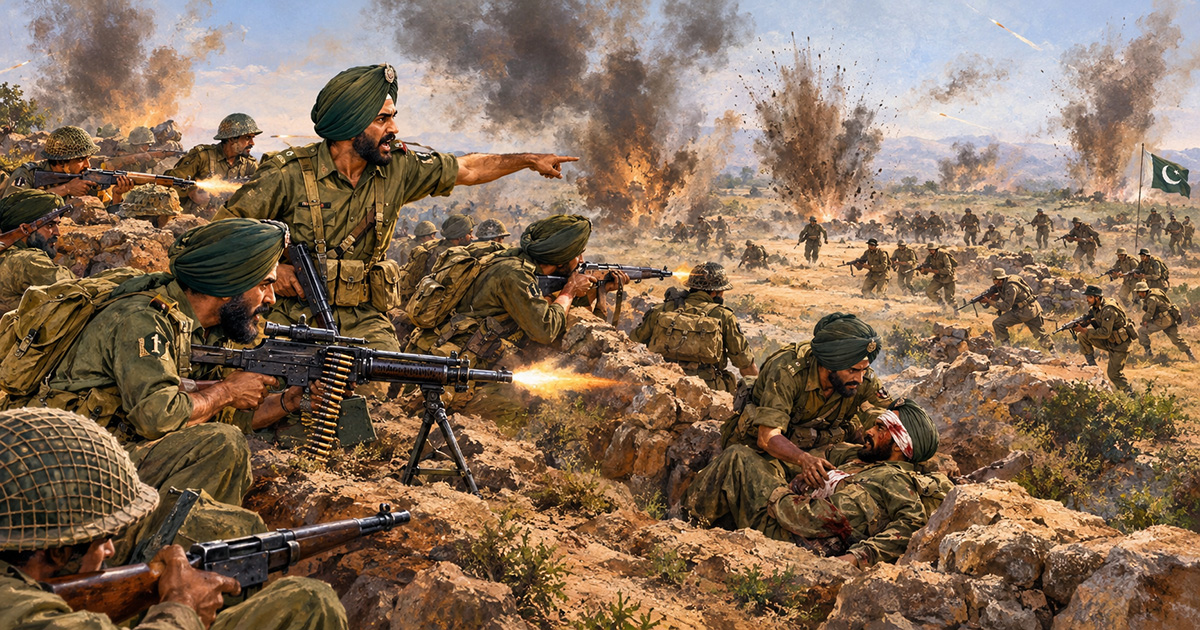
In August–September 1965, India and Pakistan fought their second Kashmir war. It began after Pakistan’s covert Operation Gibraltar, which aimed to trigger an uprising in Kashmir. When the plan failed, both nations launched full military offensives, drawing international concern and leading to a UN‑brokered ceasefire.
Operation Gibraltar
Pakistan secretly deployed irregular forces into Kashmir starting in August 1965, expecting a local revolt. This operation misjudged public sentiment, faltered by mid‑August, and escalated into full-scale war, highlighting Pakistan’s flawed assumptions and intelligence failures.Operation Grand Slam Following Gibraltar’s collapse, Pakistan launched Operation Grand Slam on September 6, aiming to capture Akhnur. It failed due to strong Indian defense and IAF strikes, triggering a larger war across the western front.
Battle of Asal Uttar From September 8–10 near Khem Karan, India blocked Pakistan’s Patton tanks. The clash became one of post‑WWII’s largest tank battles, and Indian forces inflicted heavy armored losses, marking a major turning point.
India’s Air Force in 1965 The IAF rapidly mounted counter‑strikes from September 1, deploying Vampires, Mystères, and Gnats. Mythic “Sabre Slayers” downed enemy jets, achieving air parity despite numerical inferiority.
Tashkent Agreement Signed on January 10, 1966, in Tashkent under Soviet mediation, India and Pakistan agreed to withdraw to pre-war positions, restore diplomats, and pursue diplomacy. Its controversial concessions sparked domestic criticism and shaped post-war politics.
CORE WAR NARRATIVE CATEGORIES
What Triggered the 1965 War? The Roots of Conflict in Kashmir Post‑1947 Kashmir saw enduring strife, and UN resolutions failed to resolve its status after the 1948 war. In August 1965, Pakistan launched Operation Gibraltar, expecting Kashmiri Muslims to rebel. Their silence and Indian counter‑operations escalated the conflict into a full war.
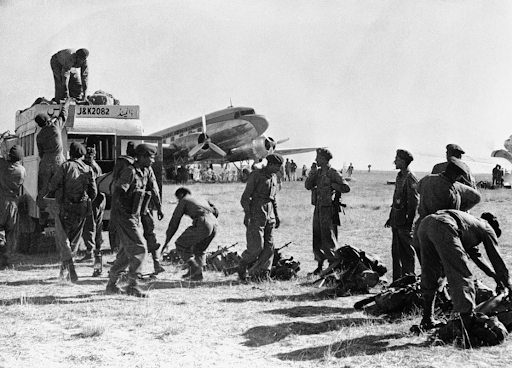
1947-1948 Indo-Pak War
Operation Gibraltar
Operation Gibraltar & Operation Grand Slam: Bold or Blunder? Operation Gibraltar (Aug 1965) infiltrated irregulars into Kashmir to provoke rebellion, a failed gambit. With local apathy and rapid Indian response, Operation Grand Slam launched on September 6 to seize Akhnur. It too faltered due to strong resistance and IAF action.
Battle of Asal Uttar: The Turnaround That Stunned the World
From Sept 8–10 near Khem Karan, Indian forces used terrain‑based ambushes, flooded fields, and horseshoe defenses to halt Pakistan’s superior Patton tanks. They destroyed ~97 Pakistani tanks, losing just 14, proving strategic acumen and shifting momentum decisively.
India’s Air Dominance in 1965: Forgotten Chapters of the IAF
The IAF used nimble Vampires, Mystères, and especially Folland Gnats (“Sabre Slayers”), to neutralize Pakistan’s F‑86 Sabres. Pilots like Keelor, Sekhon, and Sandhu achieved kills despite numerical inferiority, maintaining key airspace control.
Inside the Battle of Haji Pir Pass: A Victory India Had to Give Back
By late August, Indian forces captured the strategic Haji Pir Pass, crucial for infiltration routes. They later returned it post‑Tashkent Agreement in January 1966. While tactically meaningful, returning the pass sparked debate over diplomacy vs. strategic gains.
STRATEGY, DIPLOMACY & GEOPOLITICS
The Tashkent Agreement: Peace or Political Compromise?
Signed January 10, 1966, in Tashkent under Soviet Premier Kosygin’s mediation, the agreement mandated mutual withdrawal to August 5, 1965 positions, prisoner exchanges, and resumption of diplomatic relations. Though it halted hostilities, critics argued it was a political compromise, offering limited strategic gains.
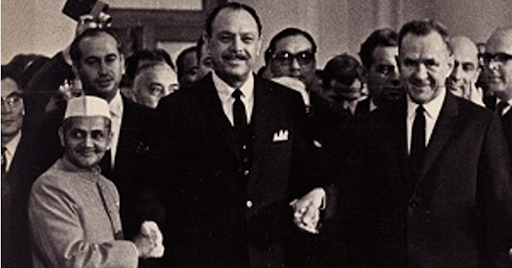
The Tashkent Declaration was a peace agreement signed between India and Pakistan on January 10, 1966, following the Indo-Pakistani War of 1965.
Why Was Tashkent Signed? International Pressures
International stakes, chiefly from the USSR, USA, and UN, pressed India and Pakistan toward a settlement after 23 days of war and mounting casualties. A U.N. ceasefire resolution and Cold War tensions made de-escalation imperative to avoid regional escalation.
Soviet Role & Political Fallout in India
The USSR hosted peace talks, elevating its role in South Asian diplomacy. Indian PM Shastri died in Tashkent, triggering controversy and conspiracy theories at home. Many in India criticized the government for conceding without pressuring Pakistan on Kashmir, fueling domestic unrest.
Cold War Context: How the US & USSR Shaped the Outcome
Both superpowers feared the conflict spiraling into full-scale confrontation. The U.S. halted arms shipments to both, while the USSR pushed for mediation, aiming to maintain regional stability and prevent Chinese or U.S. influence from dominating South Asia.
China’s Role: Silent Observer or Strategic Threat?
After the 1962 Sino-Indian war, China backed Pakistan financially (~US$60 million) and militarily, but refrained from direct conflict. New Delhi, mindful of China’s border threats and potential second front, exercised restraint, preventing broader escalation.
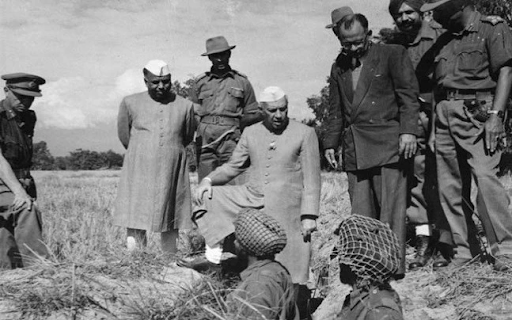
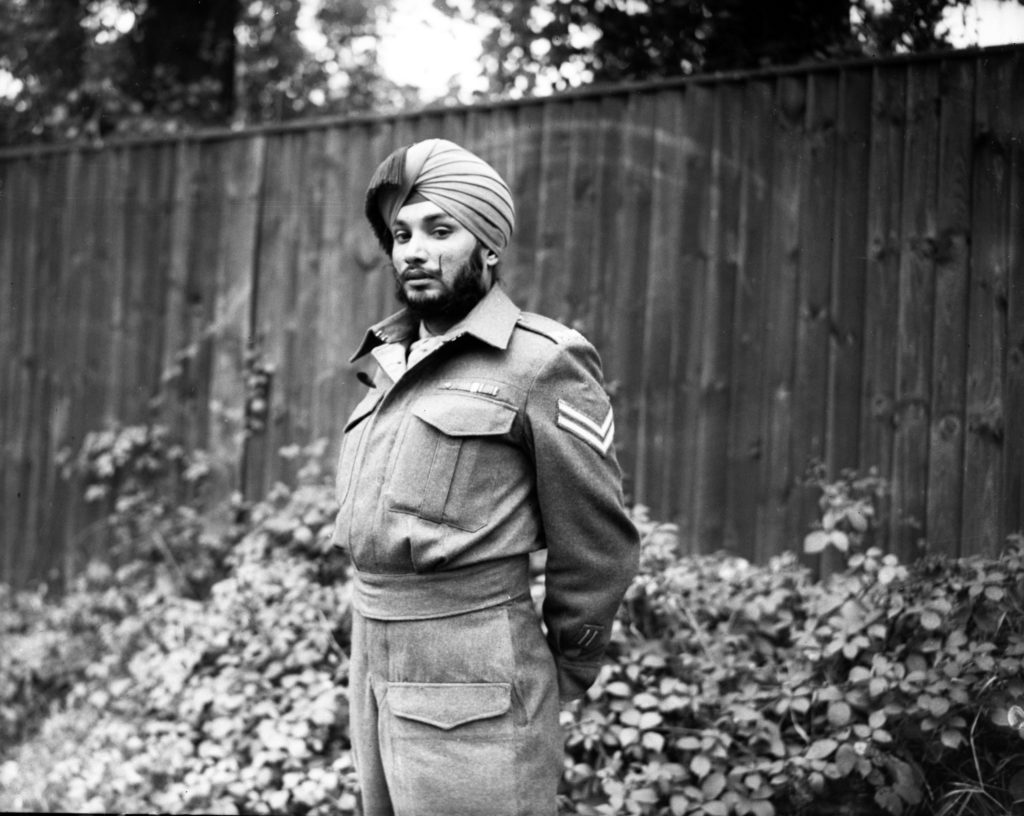
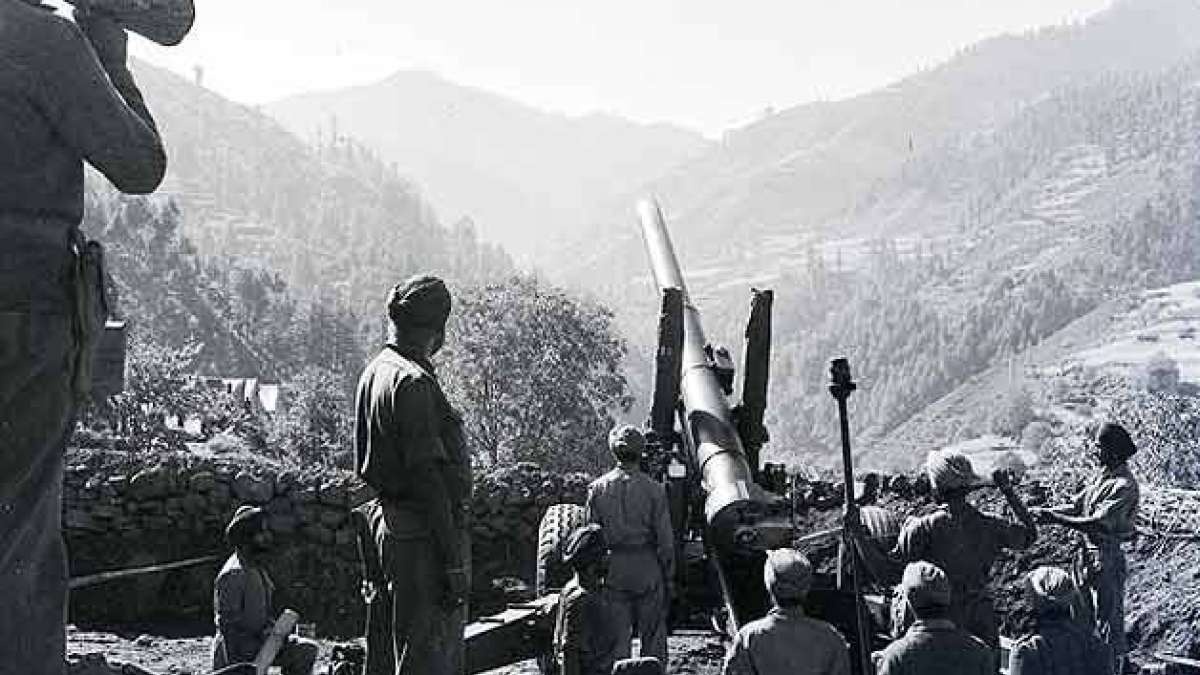
Former Prime Minister Pandit Jawaharlal Nehru at the forward position where he met jawans of the Sikh unit in November 1962.
UN’s Role in Ceasefire: Neutral Intermediary?
UN Security Council Resolution 211 (Sept 20, 1965) demanded a ceasefire and withdrawal. Supported widely, including by the Netherlands and Jordan, it pressured both nations equally, emphasizing the restoration of positions and supervision by the UN. Many viewed it as unbiased and effective.
INTELLIGENCE, PROPAGANDA & PSYCHOLOGICAL WARFARE
Failures in Intelligence: Misreading Each Other
Both ISI and RAW severely misjudged the scale of the other’s intentions. Pakistan underestimated Kashmiri apathy, while India missed the early Pakistani artillery buildup. ISI’s covert plans lacked coordination and faulty communications, while RAW failed to flag Ghazi infiltrations, information echoing mutual intelligence negligence.
War Propaganda on Radio: AIR vs Radio Pakistan
AIR and Radio Pakistan engaged in propaganda warfare. AIR broadcast captured infiltrator testimonies, patriotic programs like ‘A Nation Prepared’, and countered misinformation. Radio Pakistan aired exaggerated war victories and exercises in moral policing. Both aimed to shape public morale and international narratives.
CIVILIAN & SOLDIER PERSPECTIVES
Stories from the Border: How Civilians Survived the 1965 War
Civilians in Punjab, Rajasthan, and Kashmir endured shelling, crop destruction, and mass displacement, with 83,000 Muslims and 9,000 Hindus/Sikhs fleeing Poonch–Rajouri. Many households lost everything, later finding no compensation. Despite losses, survivors adapted with resilience and moved forward.
Letters from Soldiers: A Human Look at the Brave Hearts
Soldiers wrote letters and diaries from the frontlines and diplomatic missions. One Jammu civilian family detailed trench life and nightly air raids, while Indian officers in Karachi burned classified files to protect comrades. These personal accounts showcase courage, daily sacrifice, and the human face of war.
POWs and War Ethics: Treatment of Prisoners in 1965
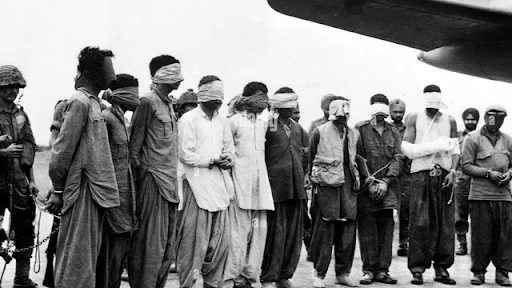
Indian POWs in Pakistan, including Lt Col Baldev Singh Chahal, faced poor initial conditions but received humane treatment later under Red Cross oversight. Captives were interrogated, fed minimal rations, and repatriated in Feb 1966. This largely complied with the Geneva Convention protocols.
AFTERMATH & LEGACY
Who Won the 1965 War? A Neutral Strategic Assessment
India seized more territory, suffered fewer casualties than Pakistan (~3,000–3,700 vs 1,500–3,800 killed), and captured strategic positions toward Lahore. Pakistan claimed tactical gains, but most analysts label it a stalemate with a psychological edge over India.
ALSO READ: “Rajiv Gandhi Jayanti: 7 Decisions That Tarnished His Political Image”
Impact on India’s Defence Doctrine
The 1965 war exposed gaps revealed by China’s ’62 defeat, prompting modernization: early-warning radar, enhanced Army-Air coordination, and service reforms. It seeded the “Cold Start” doctrine decades later, boosting readiness and joint operations.
How the War Changed Pakistan’s Internal Politics
Ayub Khan’s prestige crumbled post-war. Economic strain and unmet military expectations fueled public dissatisfaction. Zulfikar Ali Bhutto emerged as the voice of disillusionment. His rise culminated in a challenge to Ayub’s regime and set the stage for the 1971 turmoil.
War Economy: Economic Costs for India & Pakistan
India’s GDP growth slumped from ~7.6% to below 2% in 1965 due to a military spending spike. Pakistan doubled its defence budget, from ~5% to nearly 10% of GDP, with lasting strain. The war disrupted agriculture, infrastructure, and spurred inflation and fiscal deficits.
MEDIA & HISTORICAL MEMORY
How Indian and Pakistani Newspapers Reported the War
In India, Sainik Samachar portrayed Pakistan as a “cunning aggressor,” celebrating Indian heroism and suppressing setbacks under tight censorship. State-run AIR issued controlled bulletins; the Press Information Bureau restricted coverage under Defence rules. In Pakistan, nationalist headlines emphasized “Defence Day” valor, bolstering domestic unity and morale.
Compare Headlines, Editorials & Censorship
Indian press used triumphalist language: “Pak troops on the run,” while media self-censorship hid operational failures. Pakistani outlets similarly amplified patriotic narratives. Both sides downplayed Costs and civilian suffering. Censorship under Defence Rules ensured headlines served morale over truth.
War Memorials & Cultural Representations: Remembering 1965
Golconda-centred Indian “commemorative carnival” events and mock Operation Haji Pir reenactments sparked Pakistani criticism for triumphalism. An Indian Express editorial advocated a sober memorial over a celebration. Pakistan observes Defence Day on 6 Sept with parades, exhibitions, patriotic songs, a cultural script reinforcing national heroism.
How the War Is Remembered & Taught Today
India’s collective memory remains celebratory yet fragmented, lacking a unified national memorial until recently. Public discourse oscillates between triumphalist narratives and muted mourning. Pakistani memory centers around Defence Day, emphasizing military defense over political reflection. Textbooks on both sides simplify, with scant attention to civilian costs or diplomatic nuance. Livemint
.png)