Swami Ramananda Tirtha’s Bond with Balgangadhar Tilak: How Young Vyankatesh Bunked Exams to Attend a Tilak Rally

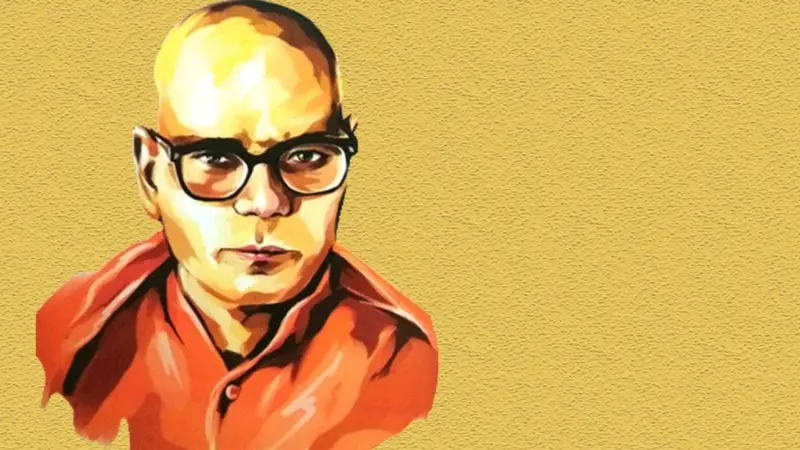
Vyankatesh Bhavanrao Khedagikar, also known as Swami Ramanand Tirtha, was born on October 3, 1903, in Sindagi (now in Karnataka). Every year on this day, his contributions to India’s freedom struggle, the Hyderabad Liberation, and the upliftment of Hindus are widely remembered.
One interesting and unknown fact is that Swami Ramananda Tirtha’s life was shaped by Lokmanya Tilak’s ideas of nationalism and leadership from a very young age. Even though he was also inspired by Gandhi’s Non-Cooperation Movement, he focused specifically on the education and upliftment of Hindus in the erstwhile state of Hyderabad.
That ‘One’ Speech of Tilak that Gave Hyderabad’s Struggle its Commander!
Lokmanya Bal Gangadhar Tilak’s Karma‑yoga and Swami Ramanand Tirtha’s active renunciation are like two radiant coins in the history of India’s freedom movement. Just as Tilak awakened national consciousness in Maharashtra by giving the clarion call “Swaraj is my birthright and I shall have it”, that very flame of thought inspired Swami Ramanand Tirtha to lead the struggle against the Nizam’s oppression in Hyderabad. Tilak’s philosophy of Karma‑yoga and National Education laid the ideological foundation that transformed a young ascetic into the commander of the Hyderabad Liberation Struggle. Today, we reflect upon this profound intellectual bond and Tilak’s enduring legacy.
1920: Resolve of Young Venkatesh to Attend a Tilak Rally in Solapur
It was year 1920. Vyankatesh was in school. It must have been an extremely exciting day in Solapur, Maharashtra, as Balgangadhar Tilak was scheduled to give a speech in the city. But it was also a day of exams. A young Vyankatesh skipped his exam and attended Tilak’s speech. Following the speech, this young boy was resolved to free his motherland from British bondage. The next day, he was punished by angry teachers at Northkot High School, Solapur for missing his exam.
August 1920: Tilak’s Death and Venkatesh’s Great Oath
The same year, news came that deeply pierced Venkatesh’s heart. On 1 August 1920, in Bombay, Lokmanya Bal Gangadhar Tilak passed away. Along with the entire nation, a storm of thought also arose in Venkatesh’s mind. Two paths appeared before him: “Shall I embrace the life of a householder, becoming a husband and father, or shall I remain a brahmachari and dedicate all my energy to the service of the nation?”
Caught in this profound dilemma, he faced the setting sun and, offering water in worship, made a historic vow at that very moment: “From this moment, I dedicate my future life wholly to the service of the motherland. Renouncing all worldly ties, I shall remain a lifelong brahmachari.”
This event makes it clear that Lokmanya Tilak’s fiery words were the very first spark of nationalism within Swami Ramanand Tirtha. Inspired by Tilak’s thought, young Venkatesh took the fundamental and decisive decision to dedicate his life to the nation. In a true sense, the path of Karma‑yoga shown by Tilak became the very foundation of Venkatesh’s future renunciation and leadership.
Concept of ‘Nishkama Karma-yoga’
Through his Gitarahasya, Lokmanya Tilak had expounded the philosophy of Nishkama Karma-yoga—the idea that true renunciation does not mean withdrawing from society, but rather dedicating oneself to active service of the nation without attachment to personal gain. Swami Ramanand Tirtha embraced this very teaching in his life. He accepted renunciation, but not merely for inner spiritual peace; his renunciation was consecrated to the service of his motherland and society. Despite being an ascetic, he emerged as the commander of the struggle for Hyderabad’s liberation.

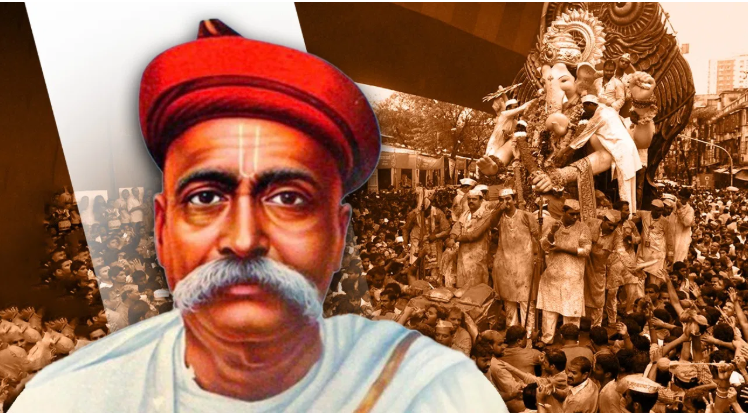
Bal Gangadhar Tilak (PC: History under your feet)
Education for Hindus in an Age When Urdu was the Medium of Instruction
After completing his matriculation from Tilak Maharashtra University, Venkatesh (later Swami Ramanand Tirtha) turned his focus toward national education. This was a direct application of Tilak’s philosophy of Swadeshi and national education. Though he met Mahatma Gandhi in Pune in 1924, the real inspiration for his public work and organizational methods came from Tilak’s model of mass mobilization through public festivals like Ganeshotsav and Shiv Jayanti.
Following the same principle, Swamiji strengthened educational activity in the princely state of Hyderabad, beginning his work at Hippargi school. By 1936, he had earned recognition as a social leader and was appointed secretary of the Maharashtra Parishad.
At that time, the Marathwada region fell under the Hyderabad State. Under Nizam’s rule, Persian had originally been the administrative and judicial language. In 1884, an order replaced Persian with Urdu for official purposes, and by 1886, Urdu had become the language of administration across all departments. This linguistic imposition created hardships for the Hindu population.
Against this backdrop, Swami Ramanand Tirtha took a historic step for the educational upliftment of Marathwada. In 1950, he established the Nanded Education Society for Hindu youth. Under this body, People’s College was founded in the premises of the Osman Shahi Mills. This institution became a vital center of higher learning, opening opportunities to generations of socially and economically weaker sections and enabling them to move towards education and self-reliance.

Swami Ramanand Teerth Marathawada University (PC: Fb- srtmu)
It is also significant to note that on the very day of Tilak’s passing—1st August 1920—Mahatma Gandhi announced the launch of the Non-Cooperation Movement. At the national level, acceptance of Gandhi’s leadership and extending active support to his mass movements were essential for the Hyderabad liberation struggle.
Historical evidence shows Swamiji never opposed Gandhi’s decision publicly. Instead, blending the nationalist inspiration he had absorbed from Tilak with Gandhi’s nationwide movements, Swami Ramanand Tirtha shaped the fight against the Nizam into an extension of India’s broader nationalist struggle.
Tilak’s “Kesari” and “Gitarahasya” Helped During Prison Time
After 1938, when the formation of the Hyderabad State Congress was initiated, Swamiji adopted Tilak’s mantra of struggle in opposing the Nizam’s authoritarian rule. In the very first satyagraha launched for the State Congress, he was arrested and sent to prison. On release, his resolve only deepened—“the prison is my home, and Hyderabad State is my battlefield.” This was the living inheritance of Tilak’s fiery writings in Kesari.
When the crisis in Hyderabad further worsened in 1940 with the rise of the Razakars and escalating atrocities, Swamiji met Gandhi and urged him to prioritize Hyderabad’s liberation. Gandhi advised him to take up an individual satyagraha. Upon returning, Swamiji openly challenged the Nizam’s dream of an Islamic state. For this, he was branded a traitor and once again imprisoned.
This time, he carried with him a copy of the Srimad Bhagavad Gita—on which Tilak had written the Gitarahasya. During his imprisonment, he devoted himself to two pursuits: meditating upon the Bhagavad Gita and studying the Urdu language. In this way, Swami Ramanand Tirtha fully assimilated Tilak’s teaching of Karma-yoga in his own battle against the Nizam’s rule.
The Shared Legacy
Tilak’s principal struggle was against the British in colonial India, whereas Swamiji’s primary mission was against the tyranny of the Nizam in Hyderabad. Though their fields of action differed, Swami Ramanand Tirtha’s inspiration was firmly rooted in Tilak’s legacy. For the values of patriotism, self-awakening, and active struggle, it was the spark of Tilak’s thought that lit the fire of commitment in Swamiji’s life—there remains no doubt about this.
.png)