10 Pathbreaking Facts About Vishnu Narayan Bhatkhande: The Visionary Who Rewrote Indian Music

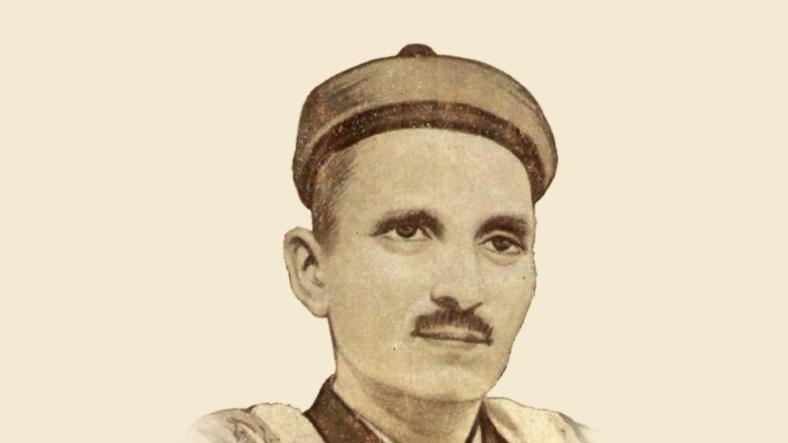
August 10 commemorates the birth of Pandit Vishnu Narayan Bhatkhande (1860–1936)—a name synonymous with the modernization of Hindustani classical music. At a time when music was confined to oral traditions and hereditary lineages, Bhatkhande envisioned a system that could be studied, taught, and expanded across caste, region, and religion.
His contributions included the revolutionary Thaat system for classifying ragas, the first comprehensive notations and textbooks in modern Hindustani music, and the institutionalization of music education through conferences and colleges. Despite facing criticism for alleged cultural biases, his mission was to democratize and document music for generations to come.
This article explores 10 transformative facts that illuminate how Bhatkhande’s life and legacy continue to shape the soundscape of modern India.
1. Early Life & Family Background of Vishnu Narayan Bhatkhande
- Born on 10 August 1860 in Walkeshwar (then Walkeshwar, Bombay), into a Chitpavan Brahmin family whose father encouraged musical education, Although his family wasn’t rooted in music, his father actively supported his early musical upbringing.
- Bhatkhande started studying the sitar at the age of 15, and he also studied music theory by reading Sanskrit musicological pieces.
2. Educational Background
- Bhatkhande completed his B.A. from Elphinstone College in 1885 and earned a law degree from Bombay University in 1887.
- After a brief time as a criminal lawyer, Bhatkhande dedicated his entire life to the study and structuring of music.
- In 1884, he joined the Gayan Uttejak Mandali, a Bombay-based music appreciation society. Through this, he was exposed to performance and vocal traditions like dhrupad and khayal, learning from established maestros of that era
3. Why did Bhatkhande Shift from Law to Music ?
- Though trained in law, Bhatkhande treated music as a passionate pursuit during his legal career. He furthered his understanding through travels across India and deep dives into classical music texts like Natya Shastra and Sangeet Ratnakara.
- A turning moment in Bhatkhande’s life was the death of his wife and child, which prompted him to give up his law practice and focus solely on the systematization and scholarship of music.
4. How did Bhatkhande reform the traditional raga classification system?
- Before Bhatkhande’s reform, ragas were customarily categorized as Raga (man), Ragini (female), and Putra (children) in a symbolic, mythological system that lacked consistency.
- In an effort to give Hindustani music a more logical and structured approach, Bhatkhande created the Thaat system, which consists of ten parent scales and was somewhat influenced by the Carnatic Melakarta framework.
- After noticing that many ragas did not fit their old Sanskrit definitions, Bhatkhande recreated them in simple, understandable terms, improving the system’s usefulness and learner-friendliness.
- Bhatkhande wrote bandishes, which are musical compositions that explain the structure and distinctive features of each raga, drawing on Venkatamakhin’s lakshan geet tradition.
5. What was Bhatkhande’s significant contribution to Hindustani classical music theory?
- Systematizing Hindustani Music: Authored the first modern treatises on Hindustani classical music, transitioning from oral traditions to structured theory.
- He introduced the widely adopted Thaat system (10 parent scales) inspired by the Carnatic Melakarta framework.
6. What notation system and Keywoks did Bhatkhande develop for Hindustani music?
Notation and Texts: Developed a Western-based musical notation system, modified for Indian melodies, spanning 25 years of research.
Key works include:
- Swar Malika (catalogue of ragas)
- Shri Mallakshaya Sangeetam (Sanskrit, under “Chatur‑pandit”) and its Marathi commentary Hindustani Sangeet Paddhati (4 volumes)
- Abhinava Ragamanjari, Talamanjari, among other Sanskrit treatises
7. What conferences did Bhatkhande organize, and what was their significance?
- Between 1916 and 1925, Bhatkhande arranged All-India Music Conferences to unite representatives of different gharanas, academics, and supporters, establishing the groundwork for an institutionalized and unified national music culture in India.
- Key discussions focused on notation uniformity and the Thaat framework, aiming to establish a standardized and teachable system across regions—crucial for national-level music education.
- The All-India Music Conferences played a pivotal role in shaping a Hindu-majority, urban, middle-class music culture by shifting classical music from the exclusive domains of royal courts and individual gharanas to a broader, national audience and institutionalized pedagogy
8. What institutions did Bhatkhande help establish or reorganize?
Bhatkhande was instrumental in reorganizing and founding music institutions, including
- Baroda State Music School
- Madhav Music College in Gwalior
- Marris College of Music (Lucknow, 1926)—now Bhatkhande Music Institute (Deemed University)
9. What recognition did Bhatkhande receive for his contributions to music?
- Vishnu Narayan Bhatkhande received several honors and awards for his contributions to Indian classical music, most notably the title of “Sangeet Martand” (Sun of Music), which recognized his pioneering work in musicology and his efforts to systematize and preserve Hindustani classical music. This title reflects his status as a key figure in revitalizing India’s musical heritage.
- While specific government awards like the Padma awards or Sangeet Natak Akademi Award are not recorded for him (those were instituted after his lifetime), his legacy includes the establishment of formal music education through institutions such as the Marris College of Music in Lucknow (now Bhatkhande Sanskriti Vishwavidyalaya), which stands as a lasting honor to his contributions.
- In summary, the primary recognized honor during his lifetime was the title of Sangeet Martand, acknowledging his monumental impact on Indian classical music.
10. What criticisms have been raised about Bhatkhande’s work?
- According to scholars such as Janaki Bakhle, Bhatkhande’s approach reflected male-centric and nationalist biases and devalued traditional artists, especially those from Muslim gharanas.
- Critics argue that the important contributions made by Muslim artists to Hindustani classical music were undervalued by Bhatkhande’s modernist and textual approach.
- In spite of criticism, Bhatkhande’s main objective was to standardize and secularize music instruction by developing a systematic and approachable curriculum for everyone.
- By creating formal curricula and easily accessible learning environments, Bhatkhande’s reforms placed a strong emphasis on textual documentation and institutional teaching in an effort to advance music education beyond oral tradition.
.png)